Columbia Icefield Parkway/Athabasca Glacier/ Jasper
Aug 30, 2026 – Day 7
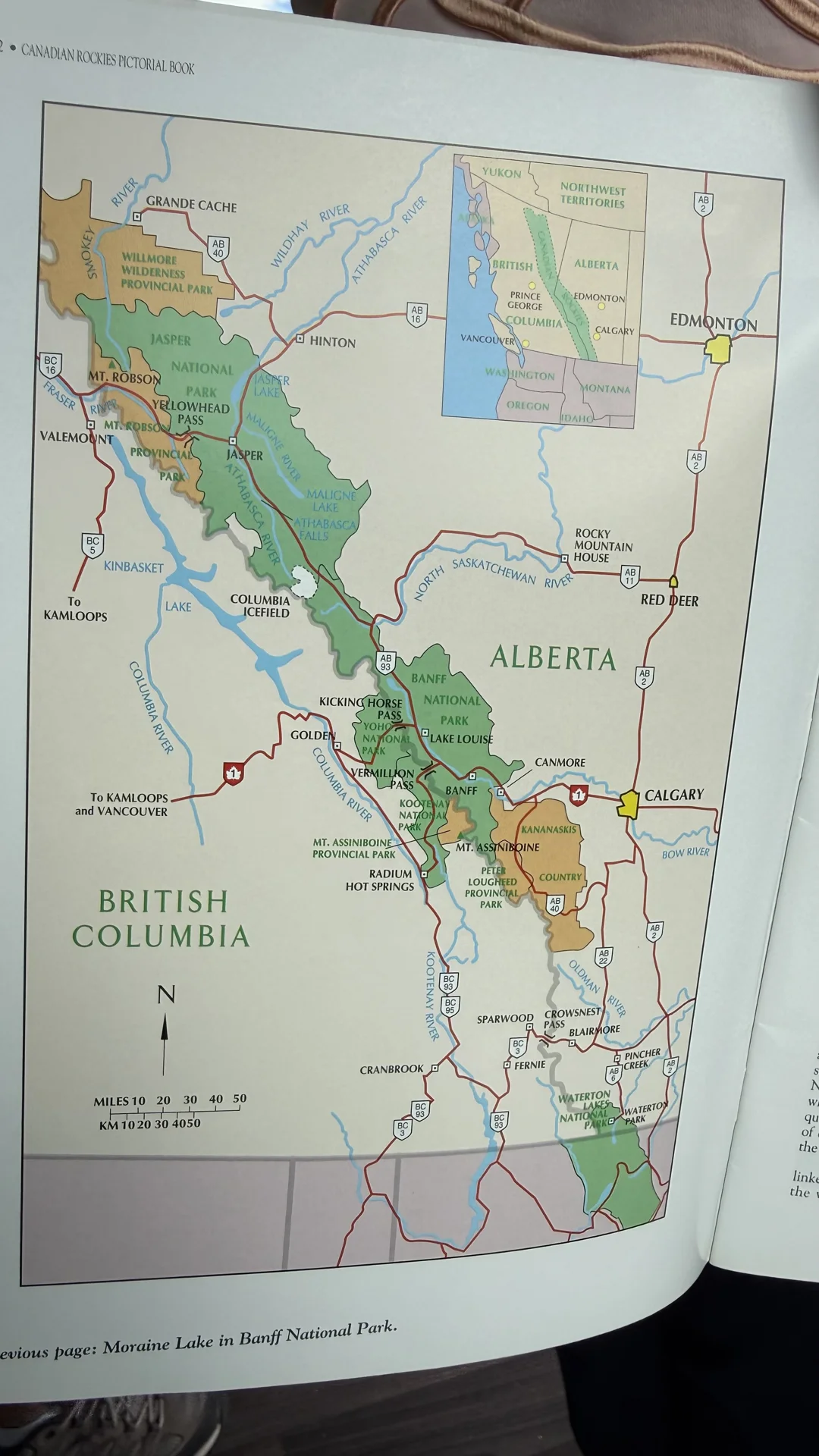
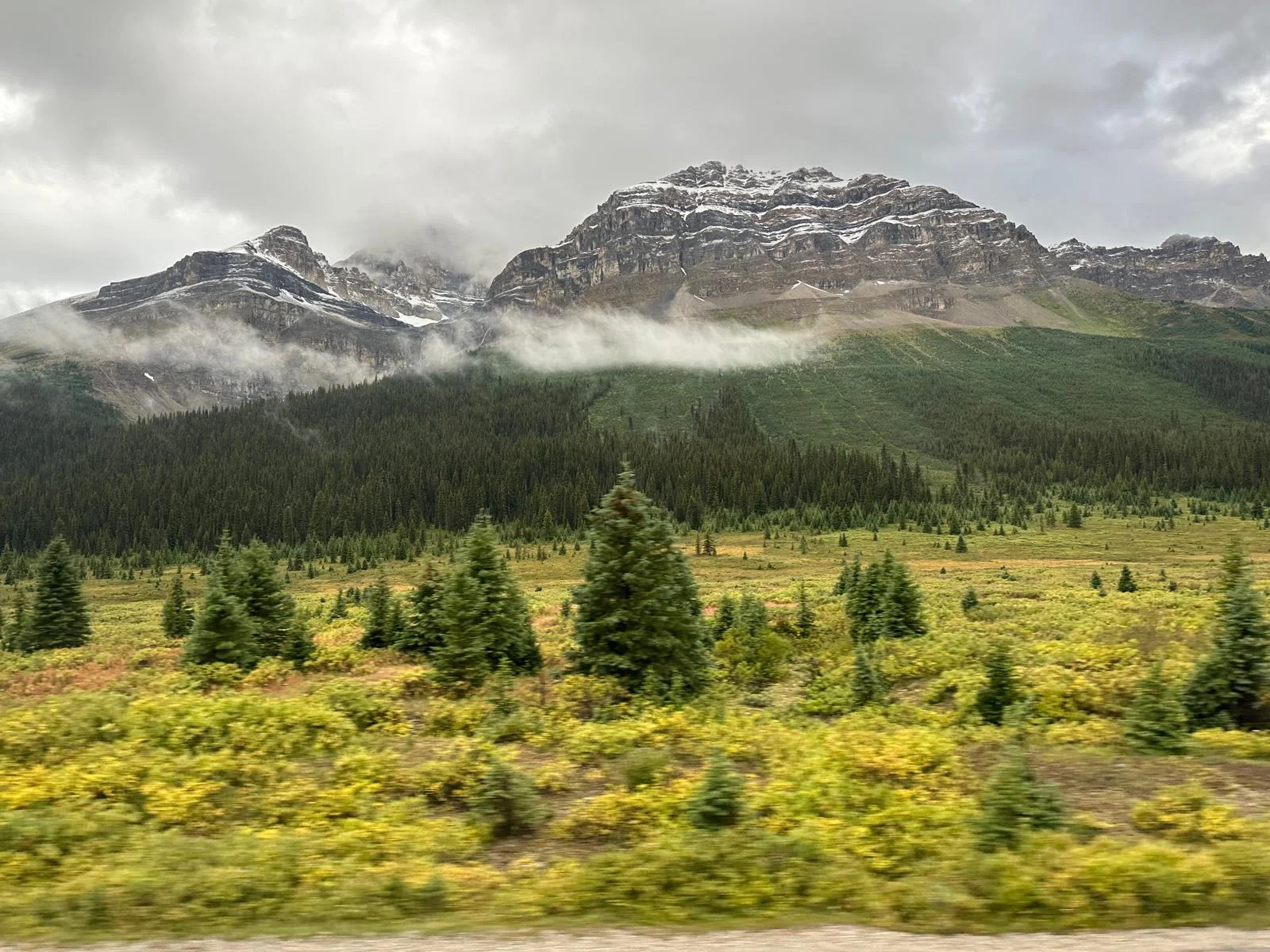
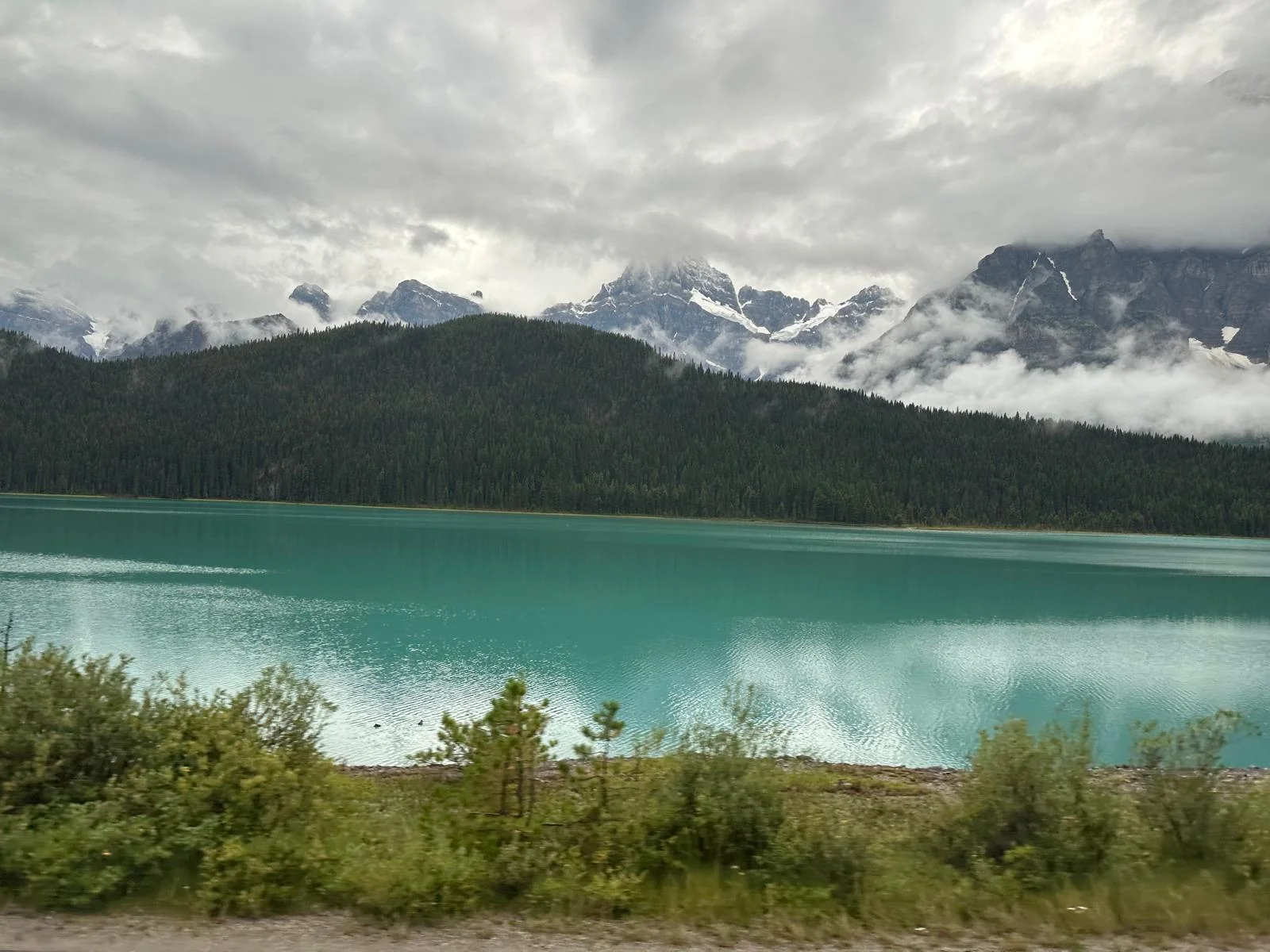
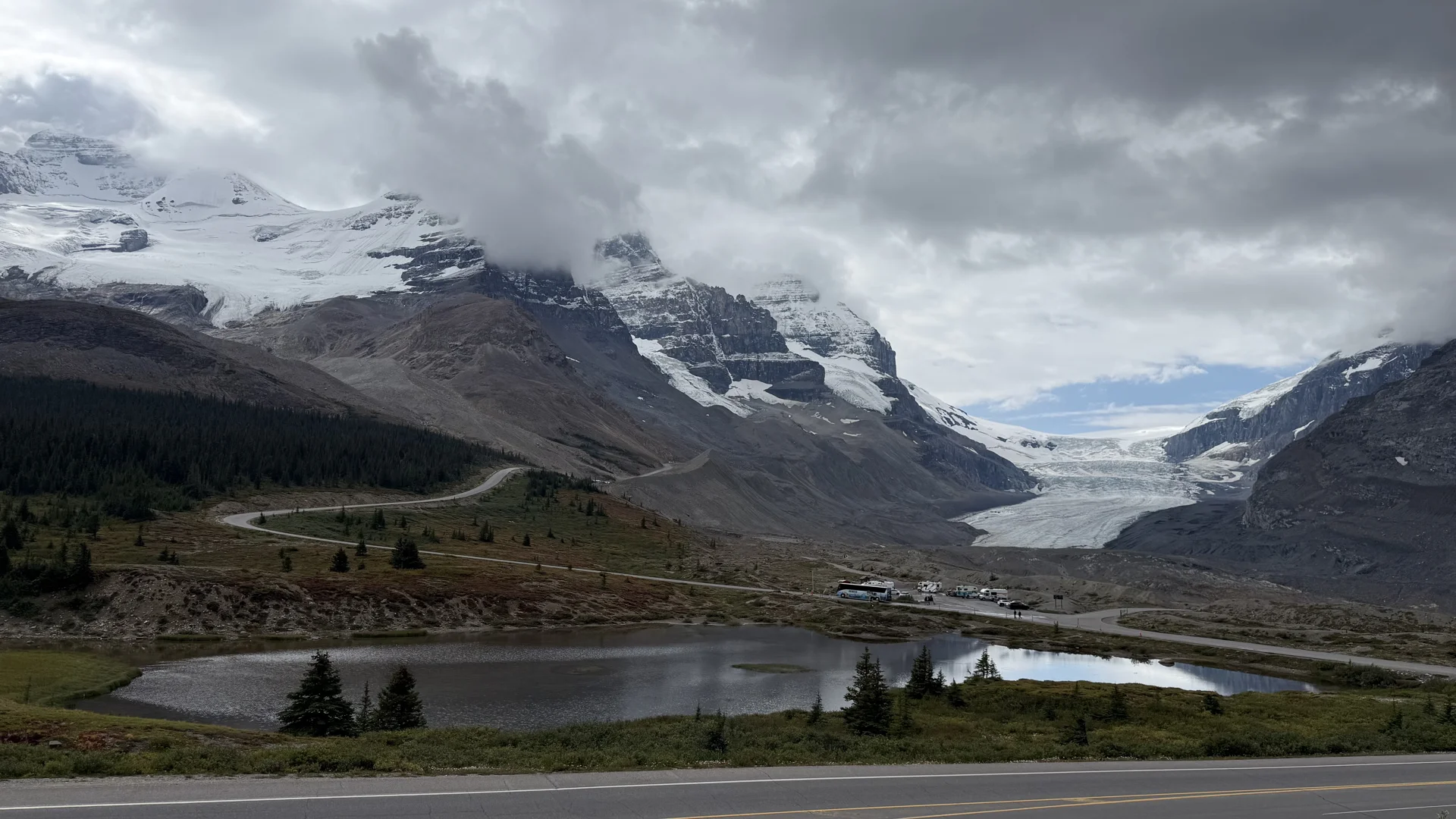
We departed the Columbia Icefield Parkway for the drive to the Columbia Icefield in Banff National Park, a UNESCO site. At an elevation of nearly 10,000 feet, this 125-square-mile tract of snow and ice — up to 1,200 feet deep in places — is the largest ice field in the Rocky Mountains, formed during the Great Glaciation roughly 126,000 to 238,000 years ago. It’s remote enough that Europeans didn’t record it until the 1800s. Interestingly, the Columbia Icefield marks a triple Continental Divide point — meaning waters originating here ultimately flow into the Atlantic, Pacific, and Arctic Oceans. Six major glaciers spill off the icefield, including Athabasca, Columbia, Dome, and Stutfield.


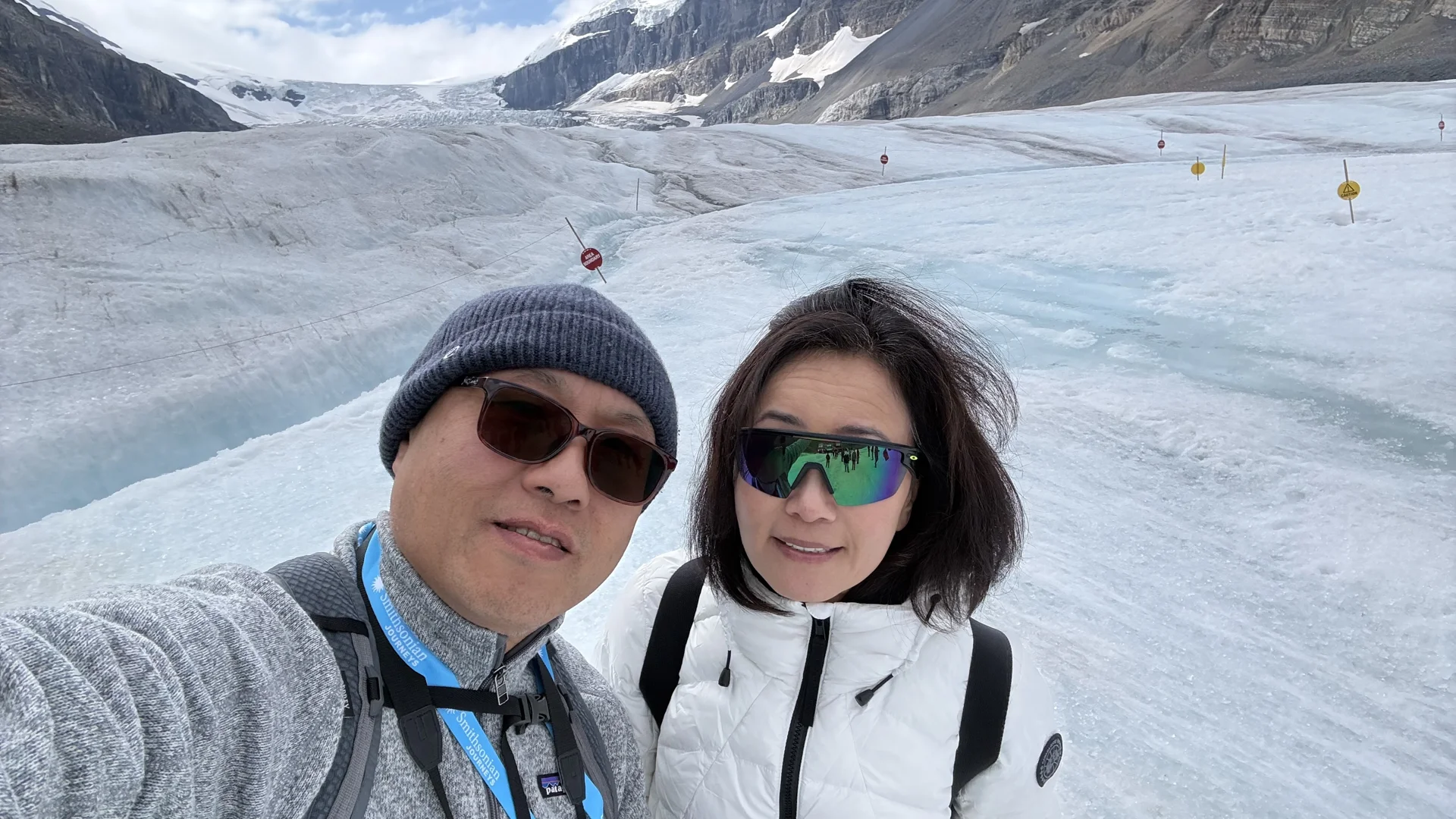
Here came a tour highlight: we bundled up and boarded the Ice Explorer — a monster all-terrain vehicle with tires built specifically to crawl right onto glacier ice — for the ride out to Athabasca Glacier, the most-visited glacier in North America. The glacier itself is 10,000–12,000 years old, though the ice we were actually walking on at the toe was a comparatively young 150–200 years — it takes about two centuries for a snowflake landing on the icefield above to compress into ice, travel the six-kilometer length of the glacier, and finally melt out at the bottom. Once there, we hopped out to explore — keeping an eye out for exposed blue ice, meltwater streams, and crevasses — snap photos, and warm ourselves from the inside out with a shot of Canadian Maple Rye. Along the glacier’s edge we could see the terminal and lateral moraines the ice has left behind as it’s retreated roughly a mile since the mid-1800s.

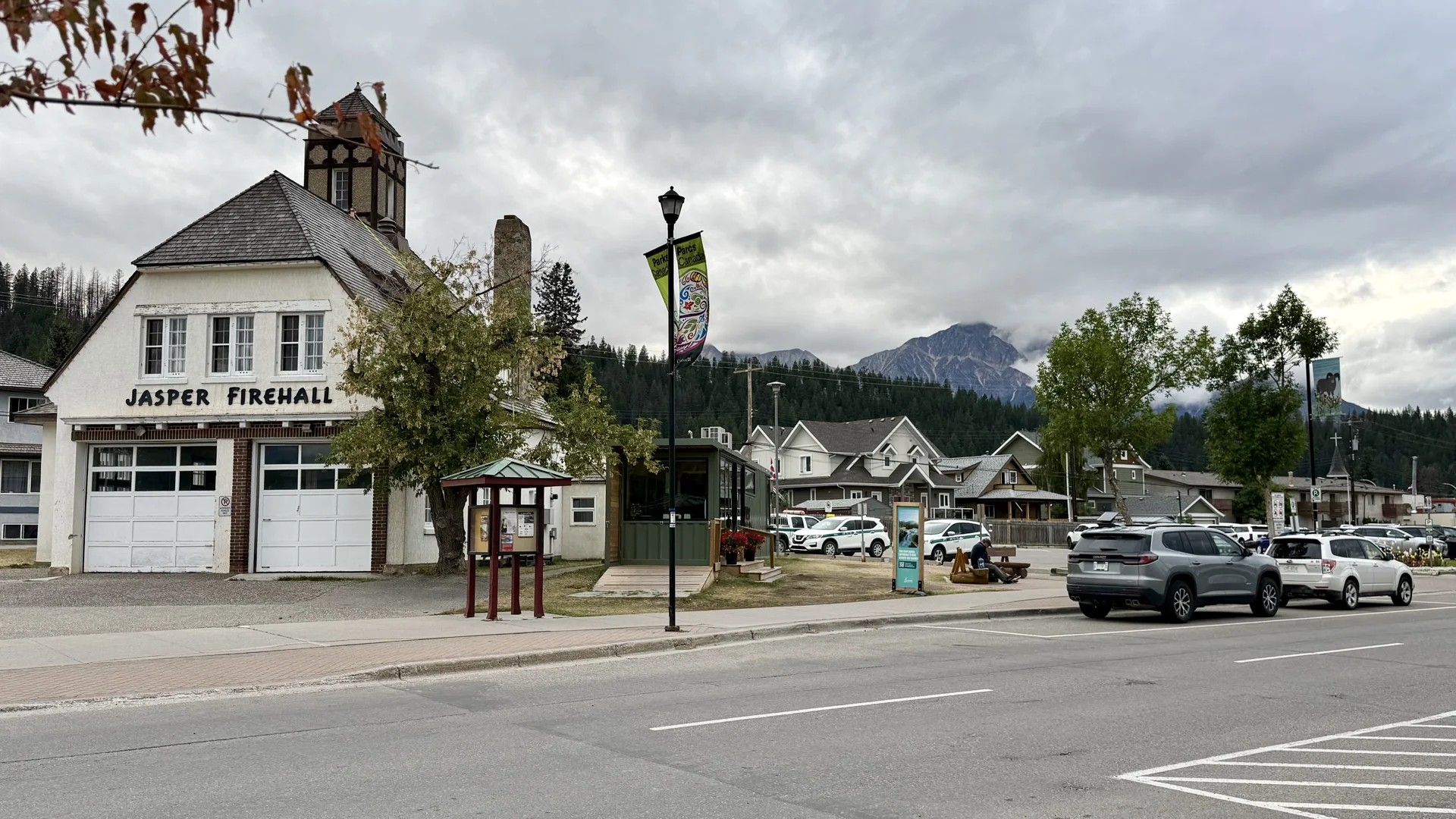
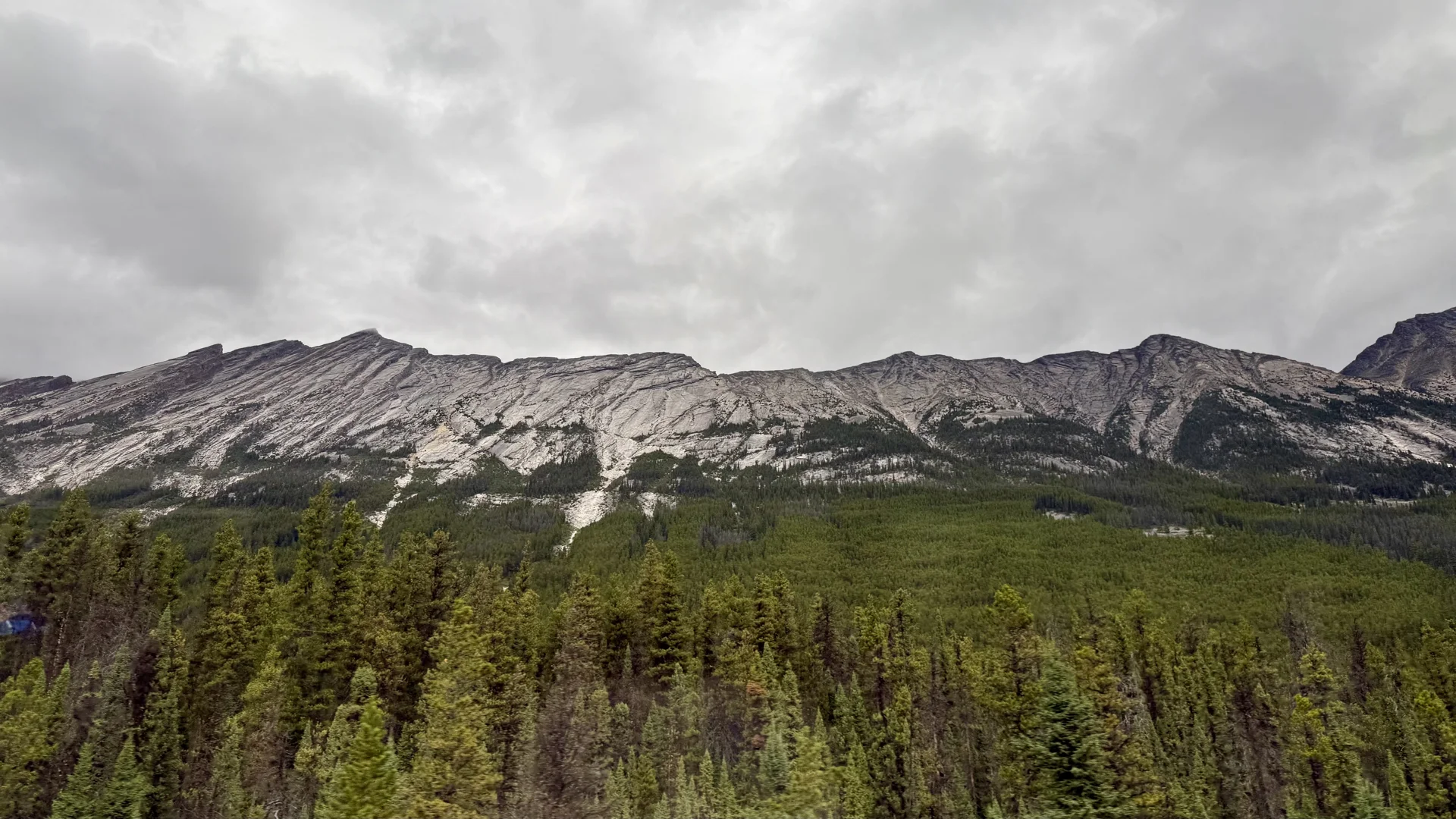
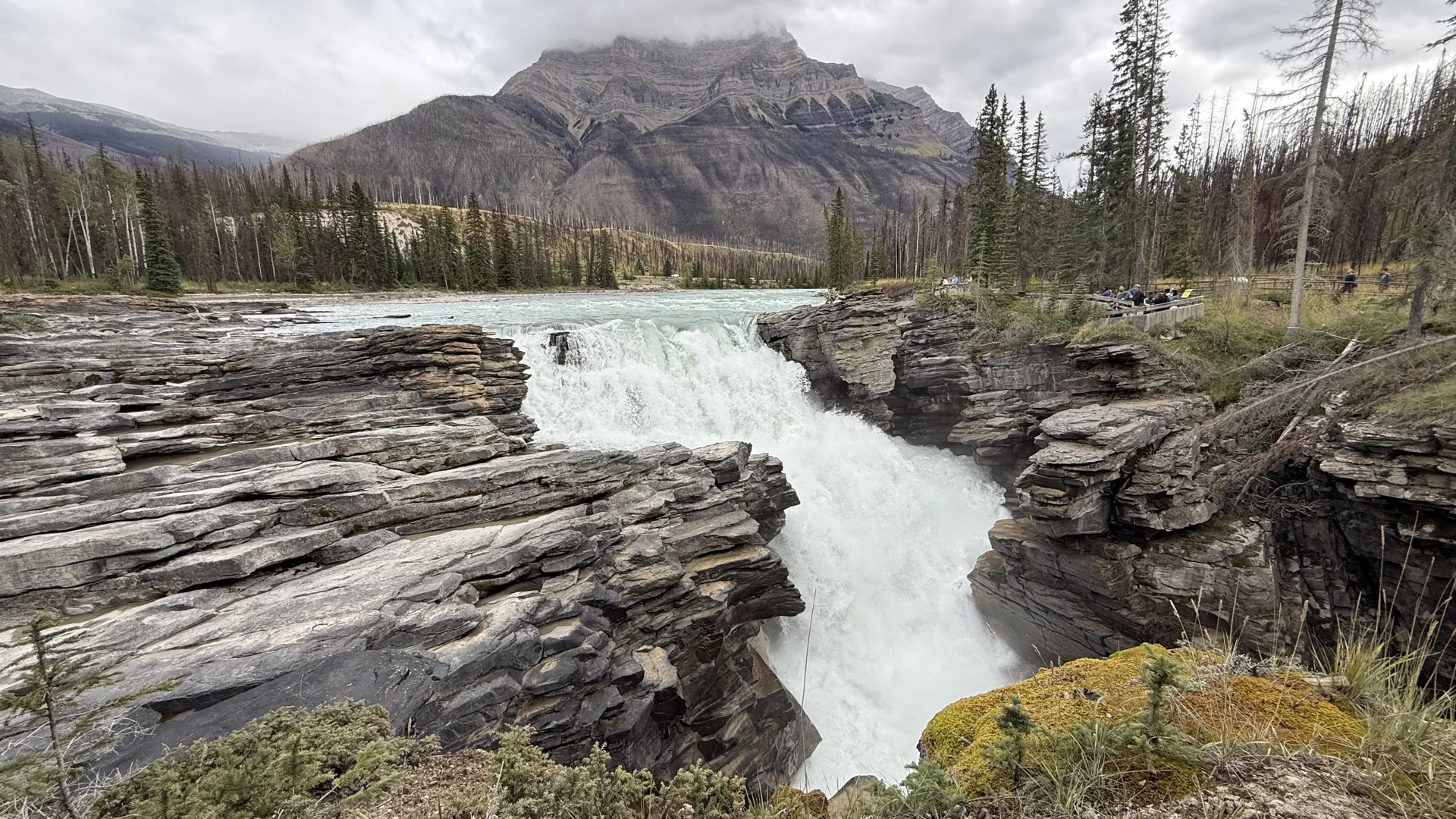
We then descended to the base station for lunch before beginning our drive northward again, visiting breathtaking Athabasca Falls along the way, and arrived at our centrally located hotel in the town of Jasper, within Jasper National Park (also a UNESCO site) — Whistlers Inn.
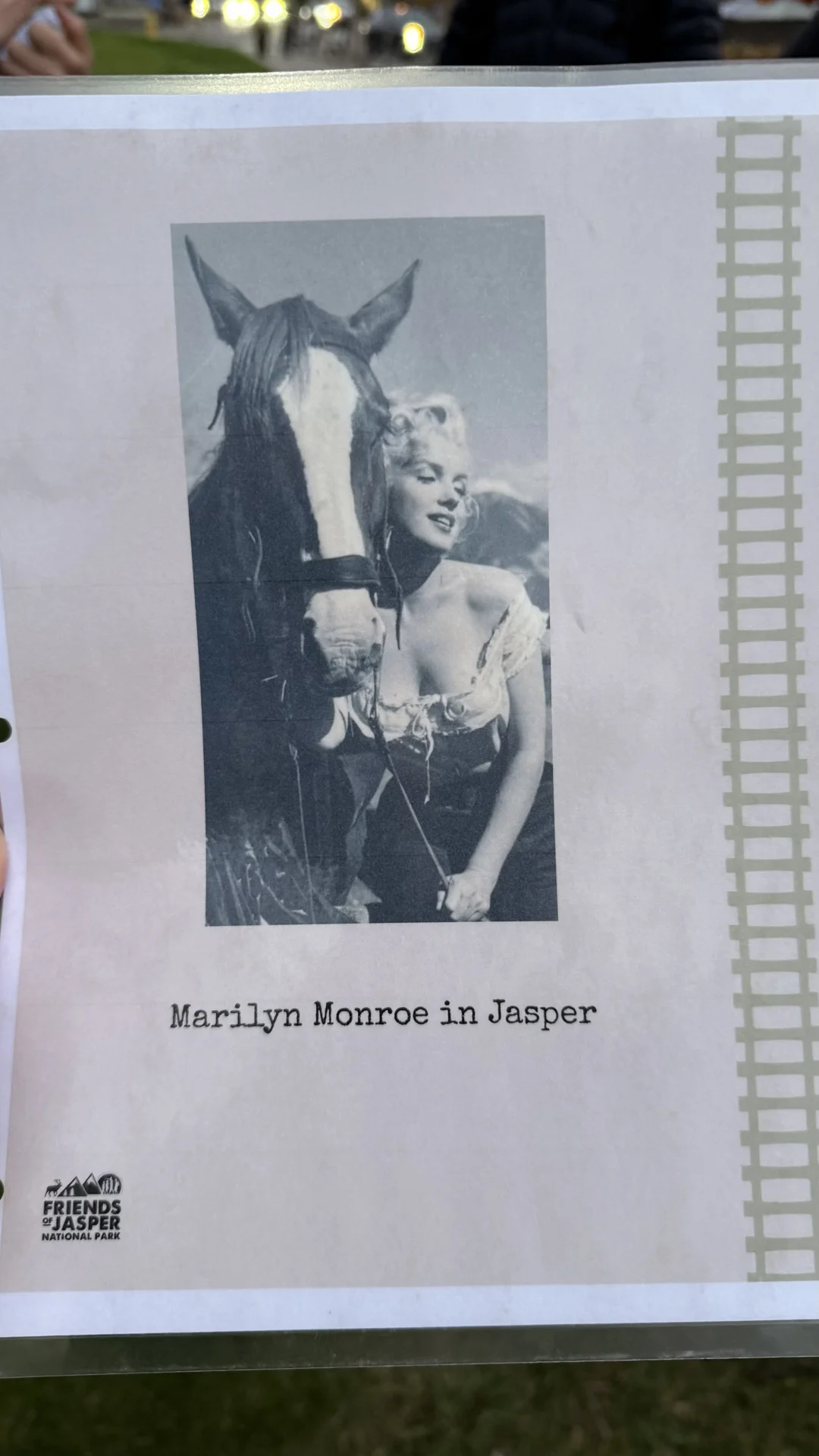
After dinner, we joined a free Jasper walking tour and learned the town’s history, including two Hollywood tales: Marilyn Monroe spent three weeks in Jasper in 1953 filming River of No Return, and famously slipped into the icy Maligne River, spraining her ankle before Robert Mitchum and crew rushed to save her. Bing Crosby, meanwhile, fell so hard for the Jasper Park Lodge golf course while filming The Emperor Waltz in 1948 that he came back the next year just to play in a tournament — and won. One photo on display was a reminder of very different wildlife etiquette back then: Bing casually feeding a bear, something you’d never see (or do) in the park today.