Kyoto (Day 3 morning)
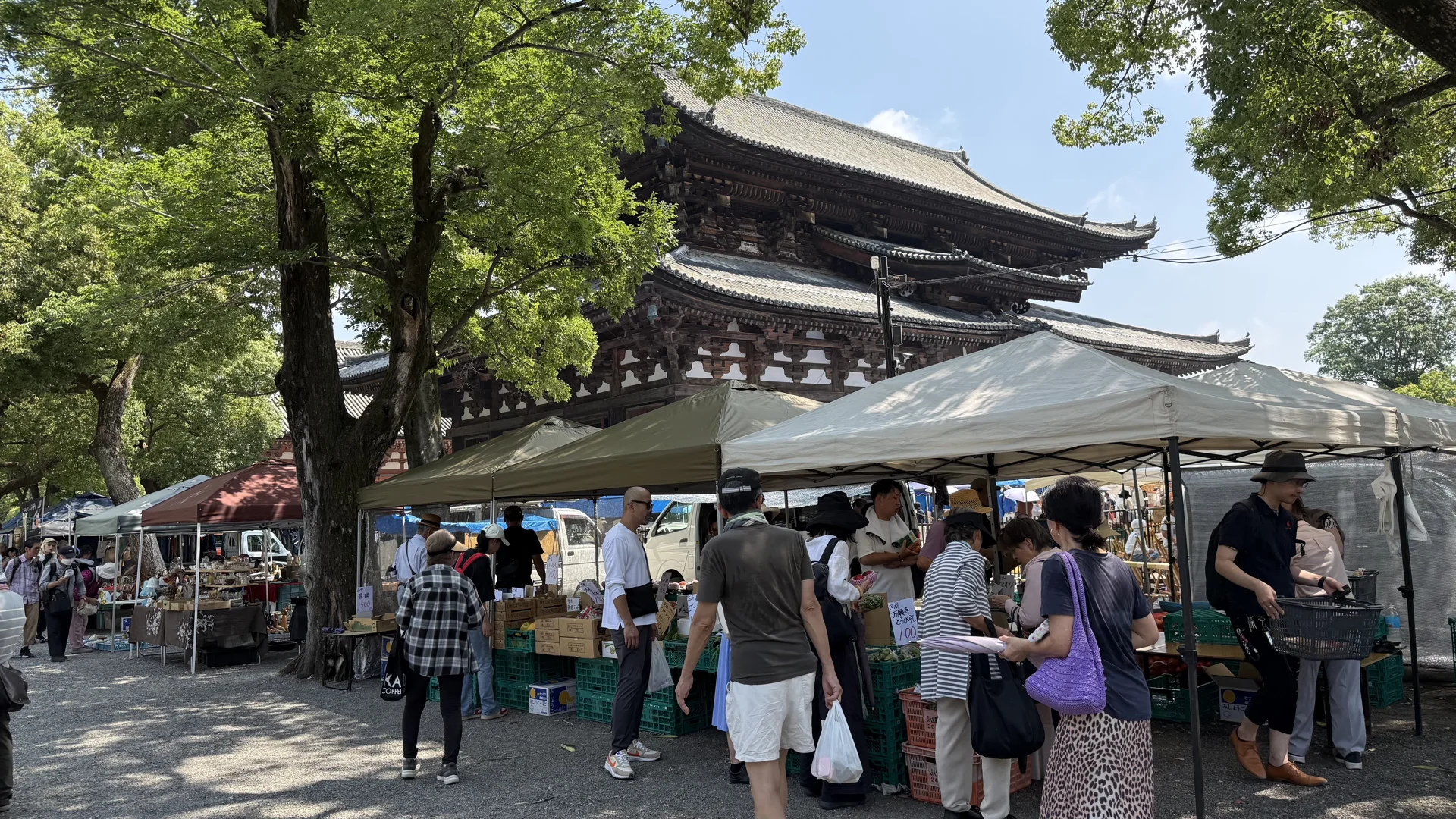
July 21, 2026: The Kobo-ichi Market is a massive flea market held on the 21st of every month at To-ji Temple — over 1,000 stalls of antiques, vintage kimonos, and street food.
Since it doesn’t open until 10am, Jason squeezed in one more mission first: alarm set for 4am, five hours in line, all to have Mr. Hayakawa personally engrave his knife. Turns out, alongside matcha, “Hayakawa Hamonoten” (早川刃物店) has become the latest obsession among young Americans — this legendary Kyoto knife shop has been run by the Hayakawa family for 120 years, and the old master plans to retire and close up shop next year. My son wasn’t even the craziest one there, though — one American had shown up even earlier than him. Jason had three knives engraved with first names in traditional Chinese — one for each of the men in our household (no time left for last names).
Jason met up with us at the flea market around 10:30, grinning and loaded down with a haul of ceramics and a pair of pants for Nari. I scored a nice medium cotton tote with hand-embroidered patterns, and David picked up fresh figs.
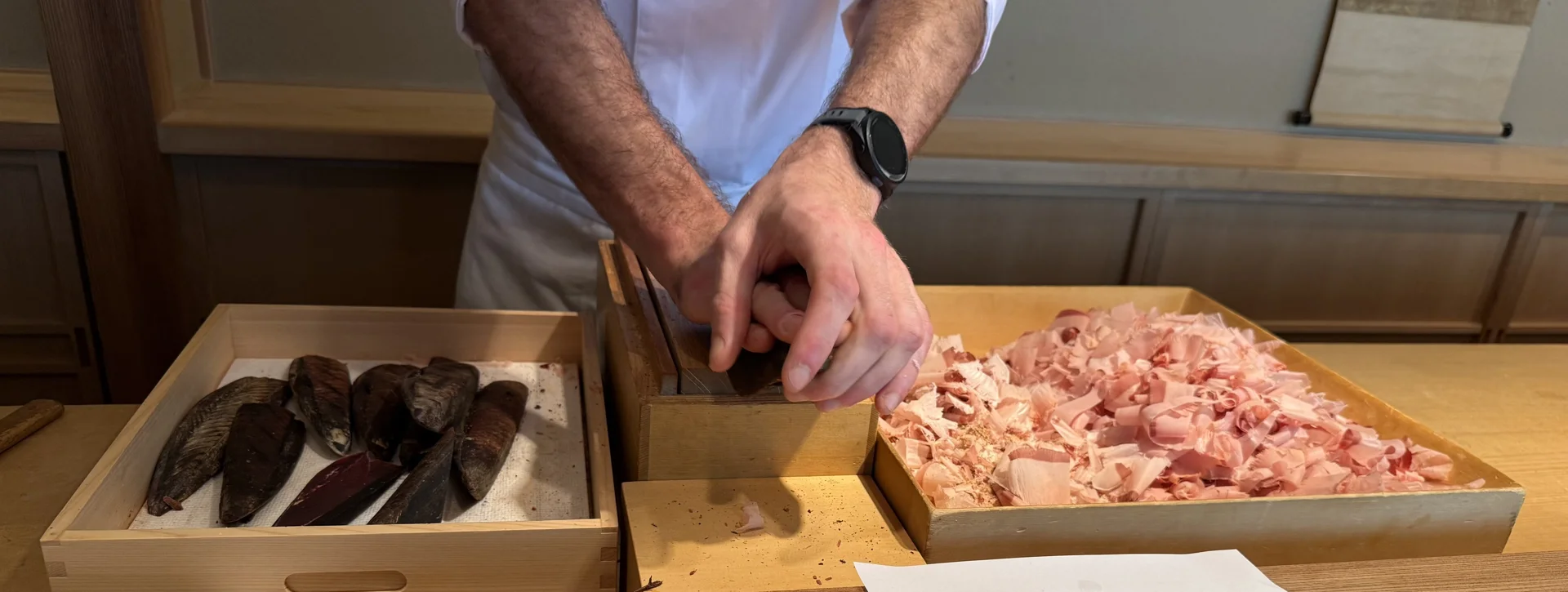
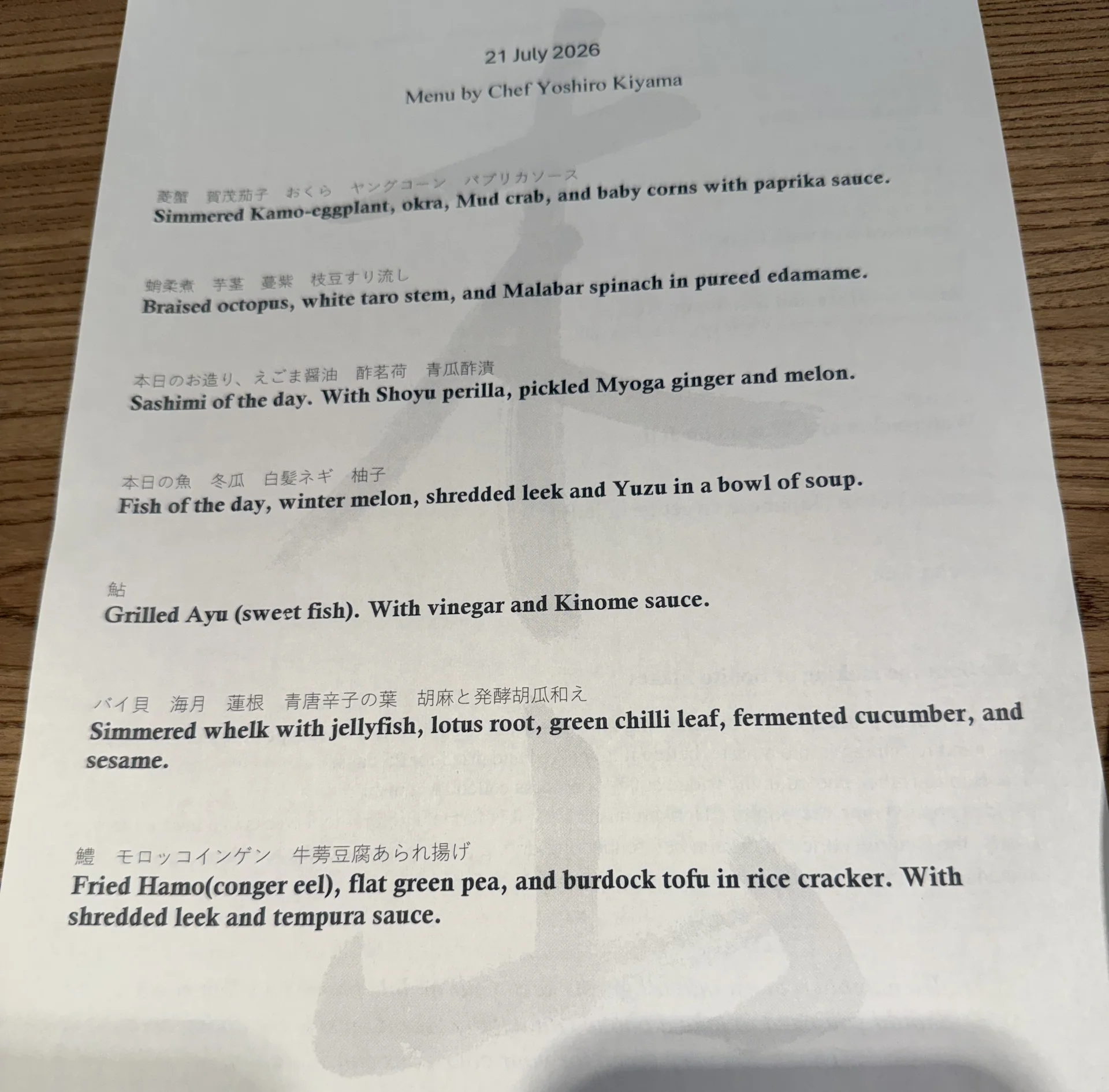
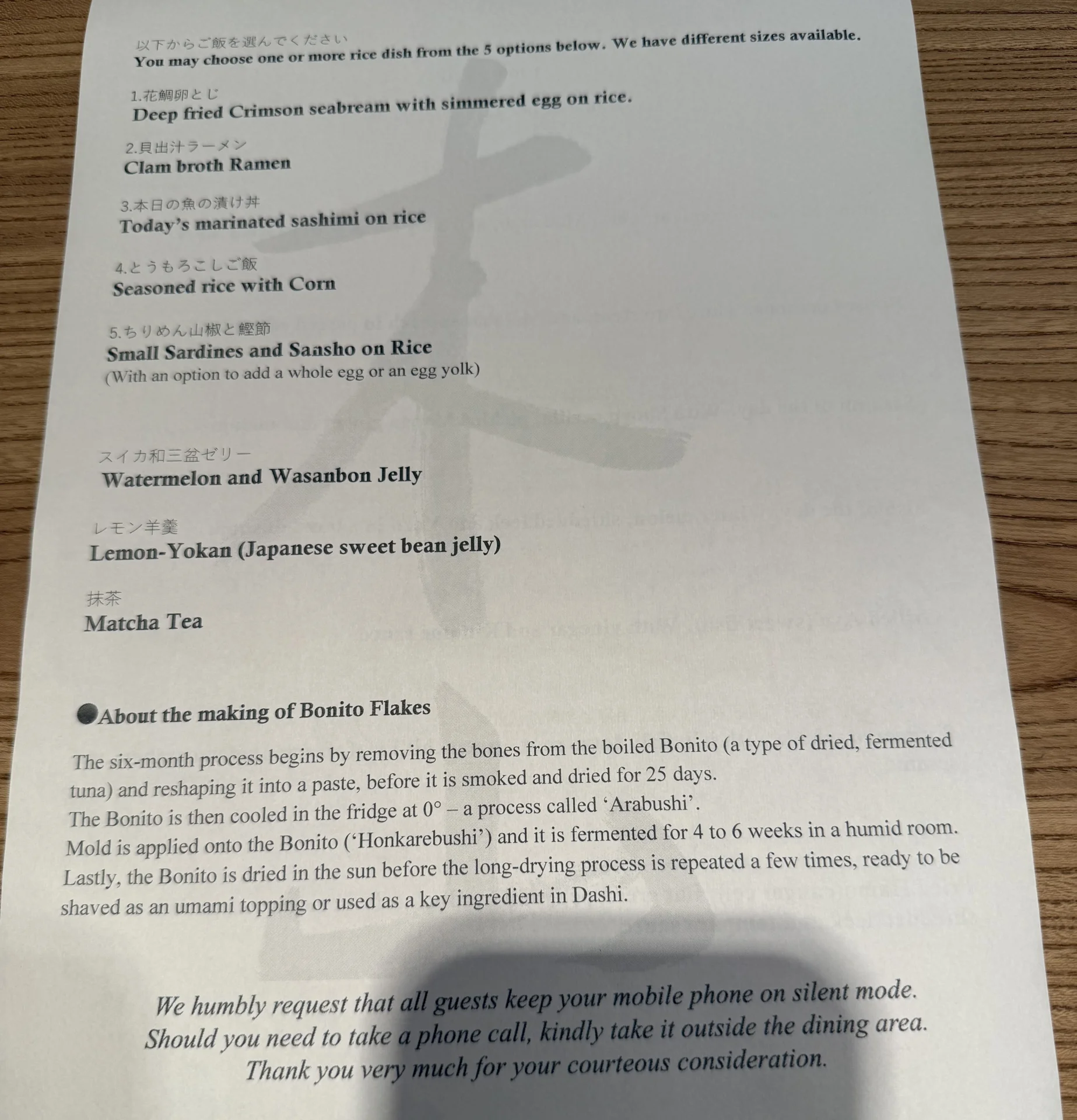
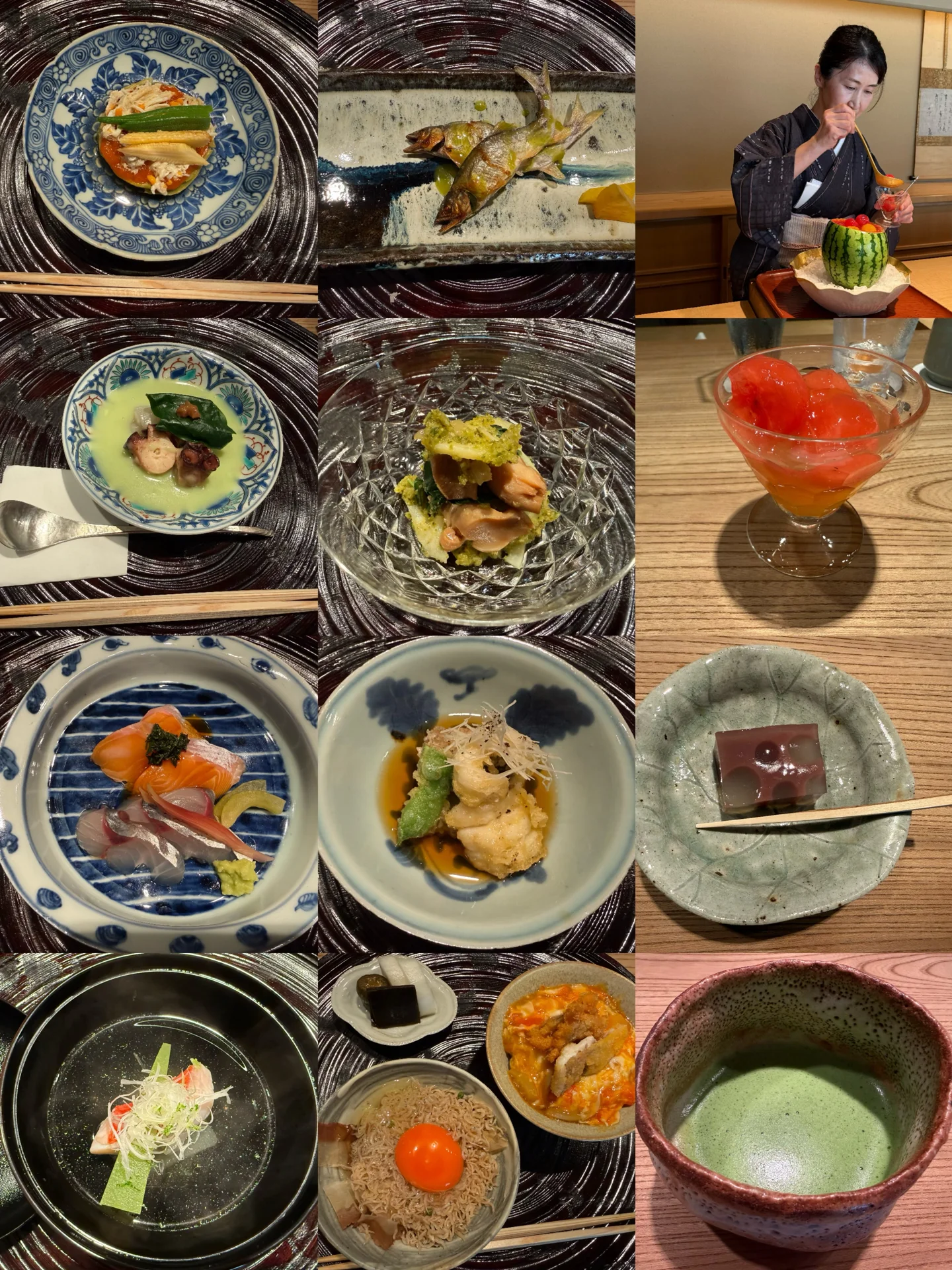
We had lunch at Kiyama (木山) — a one-Michelin-star restaurant, and honestly the best meal of the entire trip. They pump water straight from an on-site well to make dashi, the broth that’s the backbone of Japanese cuisine, and shave bonito flakes tableside — a small ritual that captures a traditional essence of Japanese cooking that’s slowly disappearing elsewhere. Two full hours and course after course of dishes, each one meticulously prepared and perfectly executed. The wasanbon jelly with watermelon was one that actually seems doable at home. The best part? Five different rice dishes, each available in multiple sizes. The guy next to us said “why choose” and went large on all five — absolute rice buffet energy.