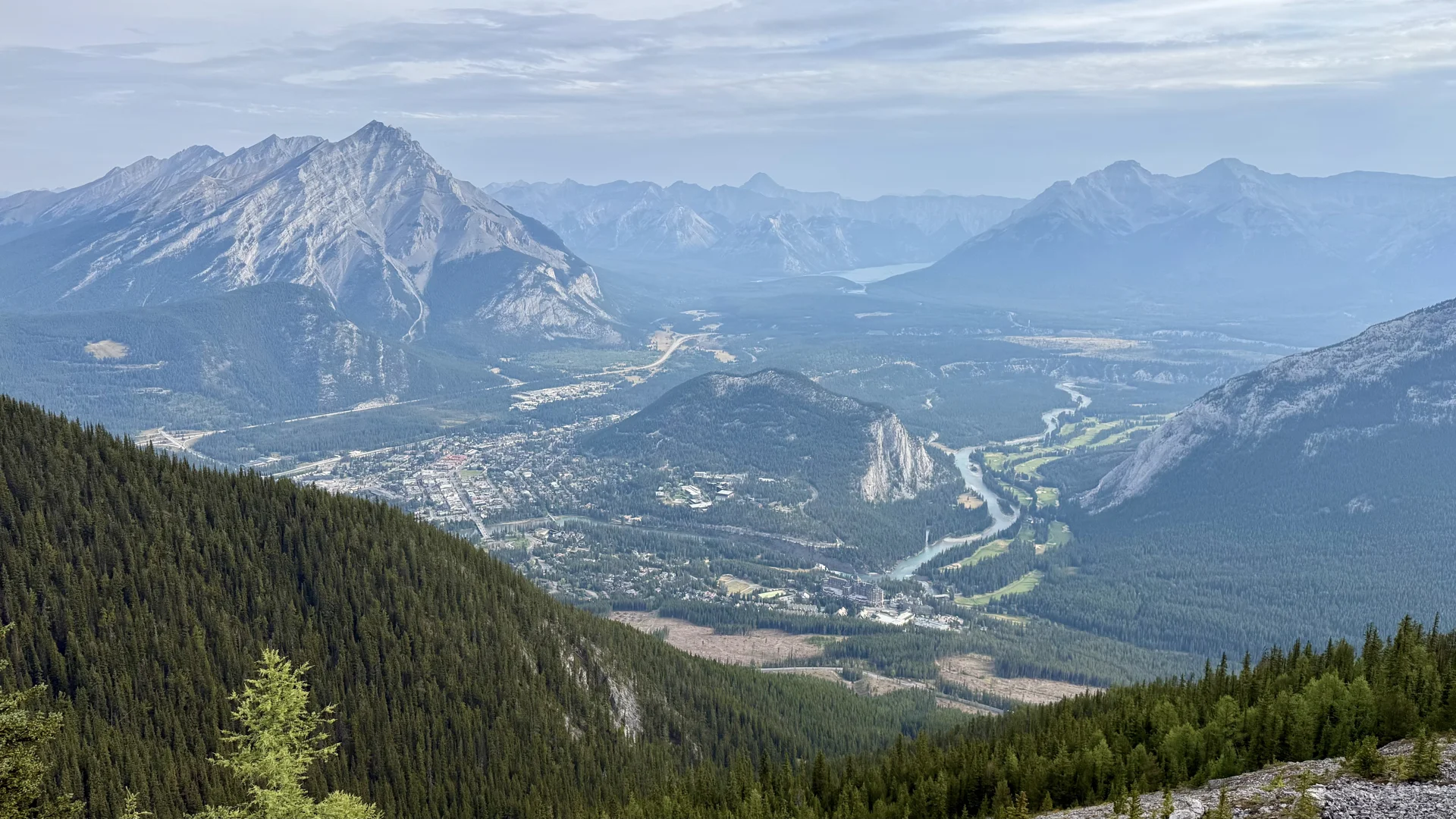
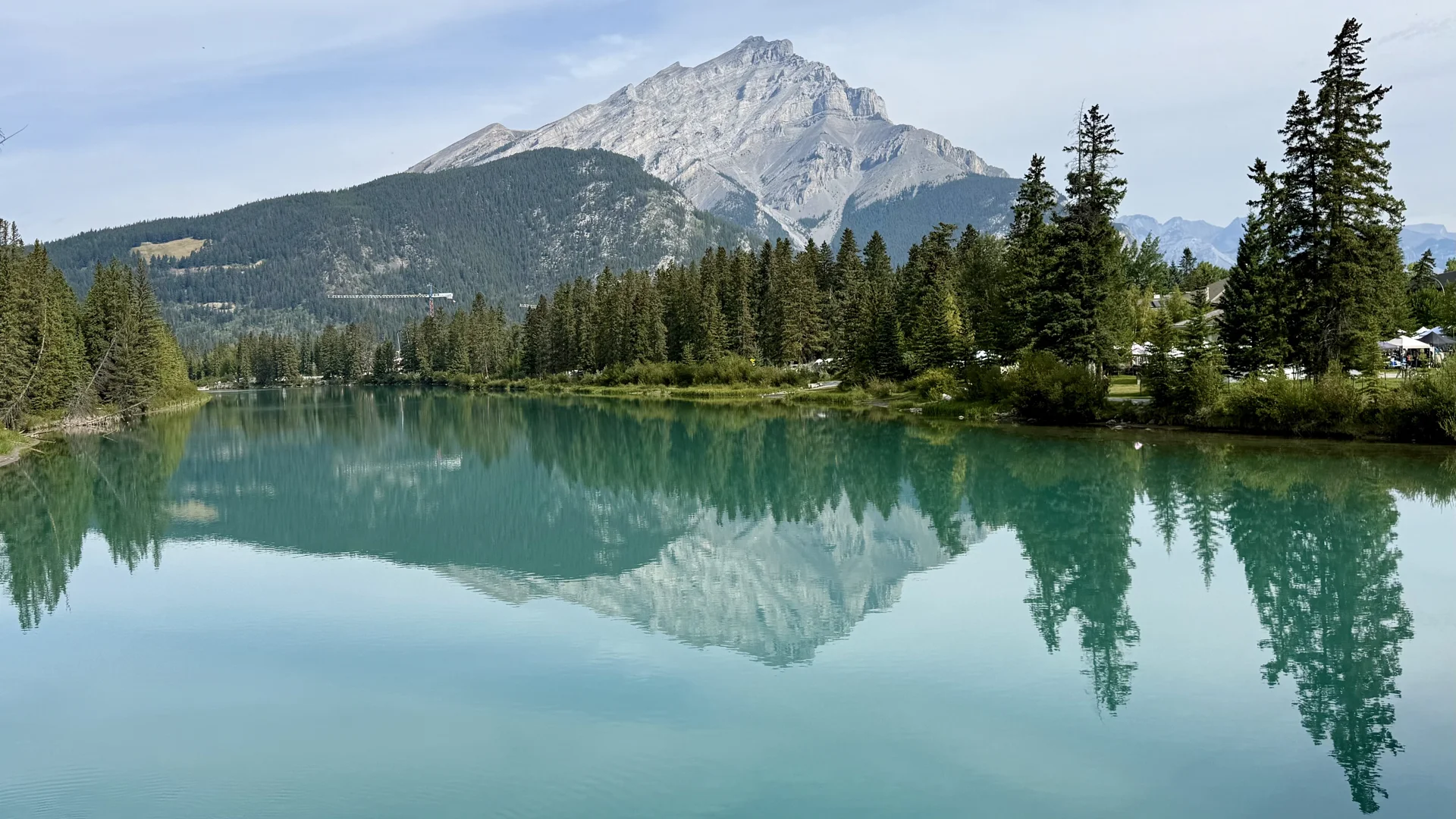
Our last full day in the Canadian Rockies kicked off with a ride up the Banff Gondola to the top of Sulphur Mountain — named for the hot springs bubbling at its base. From this 8,000-foot perch, once home to two research stations (including a 1903 meteorological observatory still standing atop Sanson Peak), we soaked in views of six mountain ranges and watched the town of Banff reveal itself as a tiny bowl ringed by snowcapped giants. Breathtaking barely covers it.
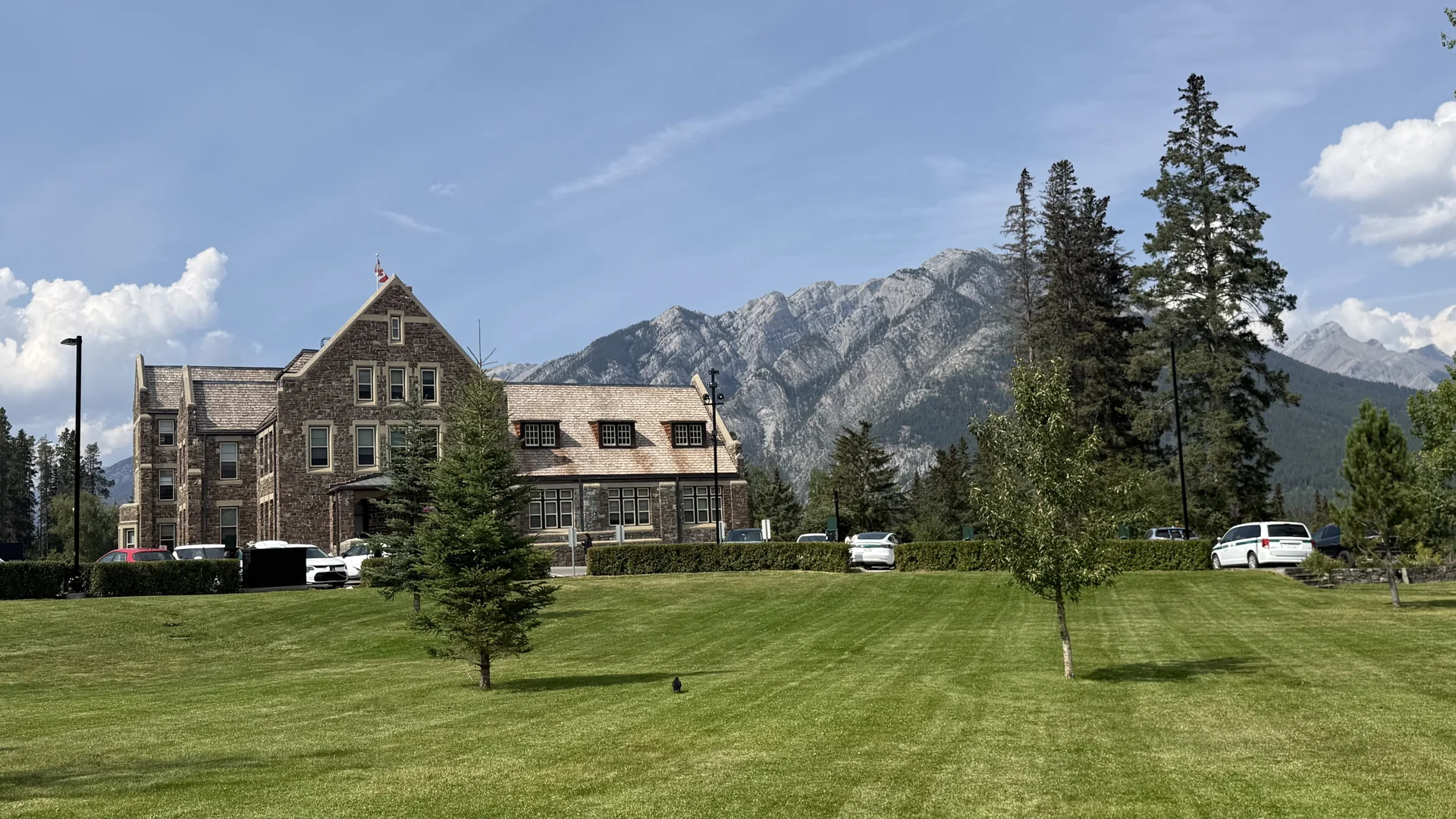
We had a free afternoon exploring downtown Banff, popping into the Whyte Museum and the Luxton Museum before a farewell dinner that evening. What a memorable trip — perfect weather, great company, and the best educators we could’ve asked for in Darcie and Maria!
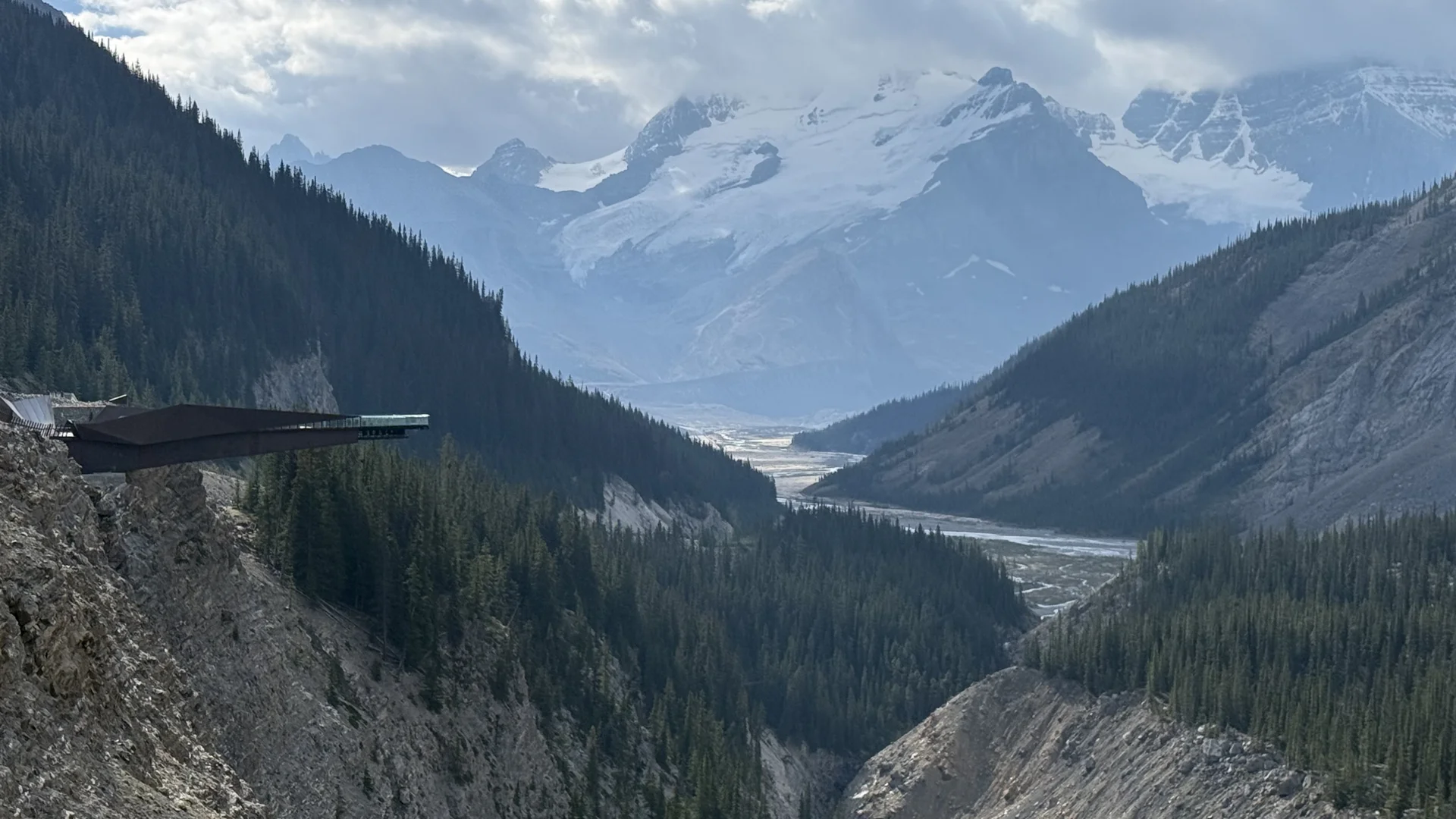
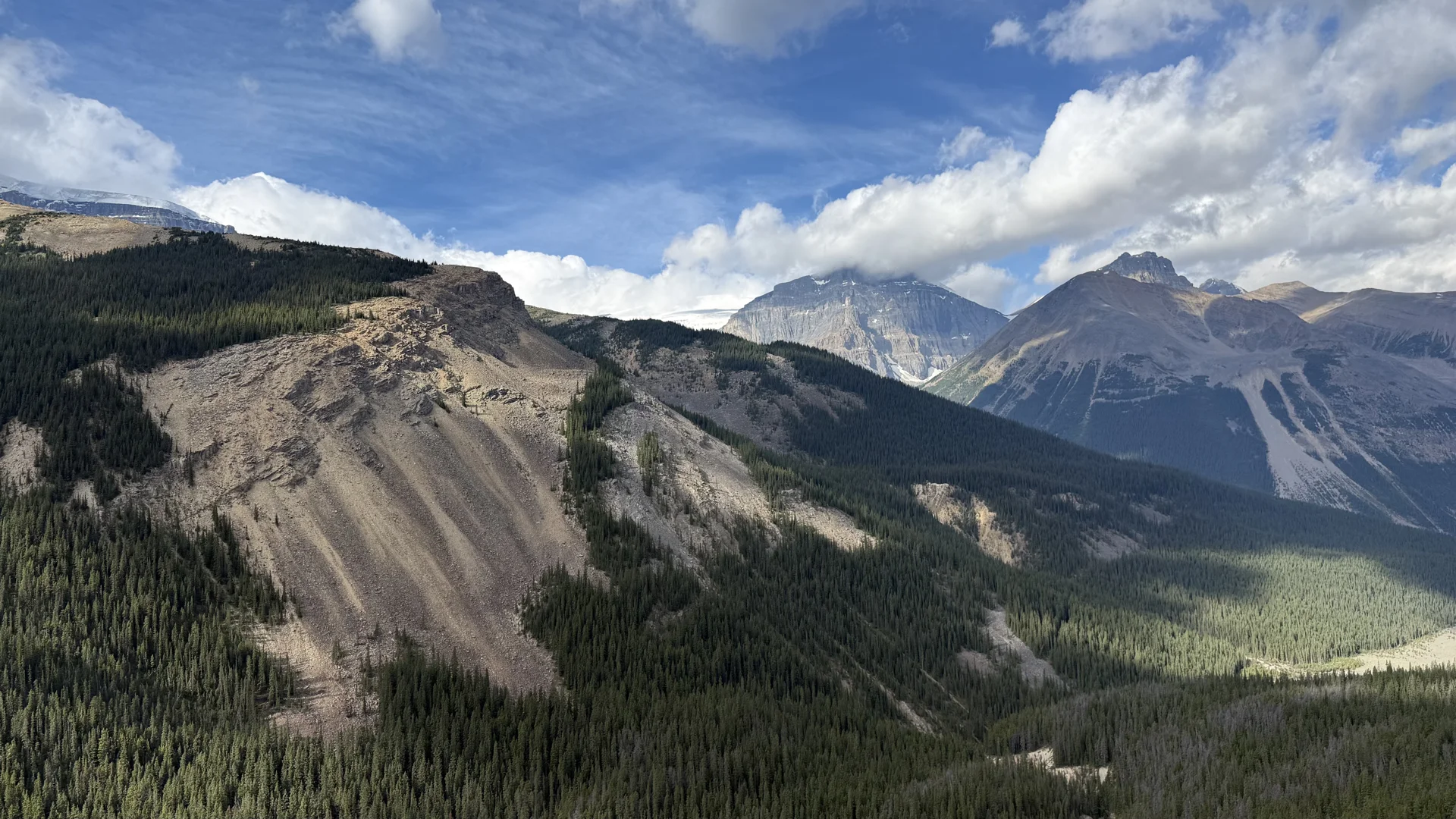
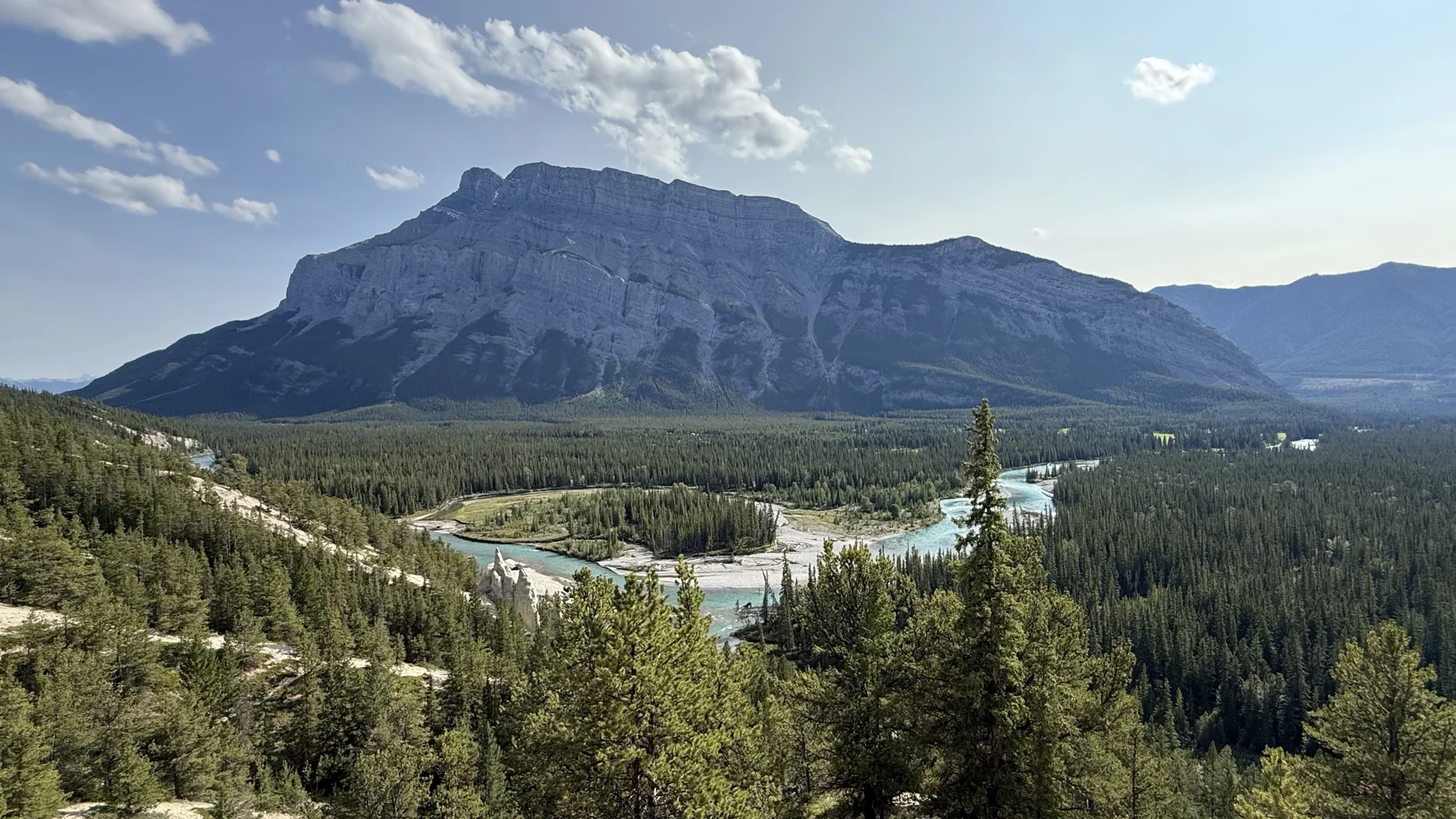
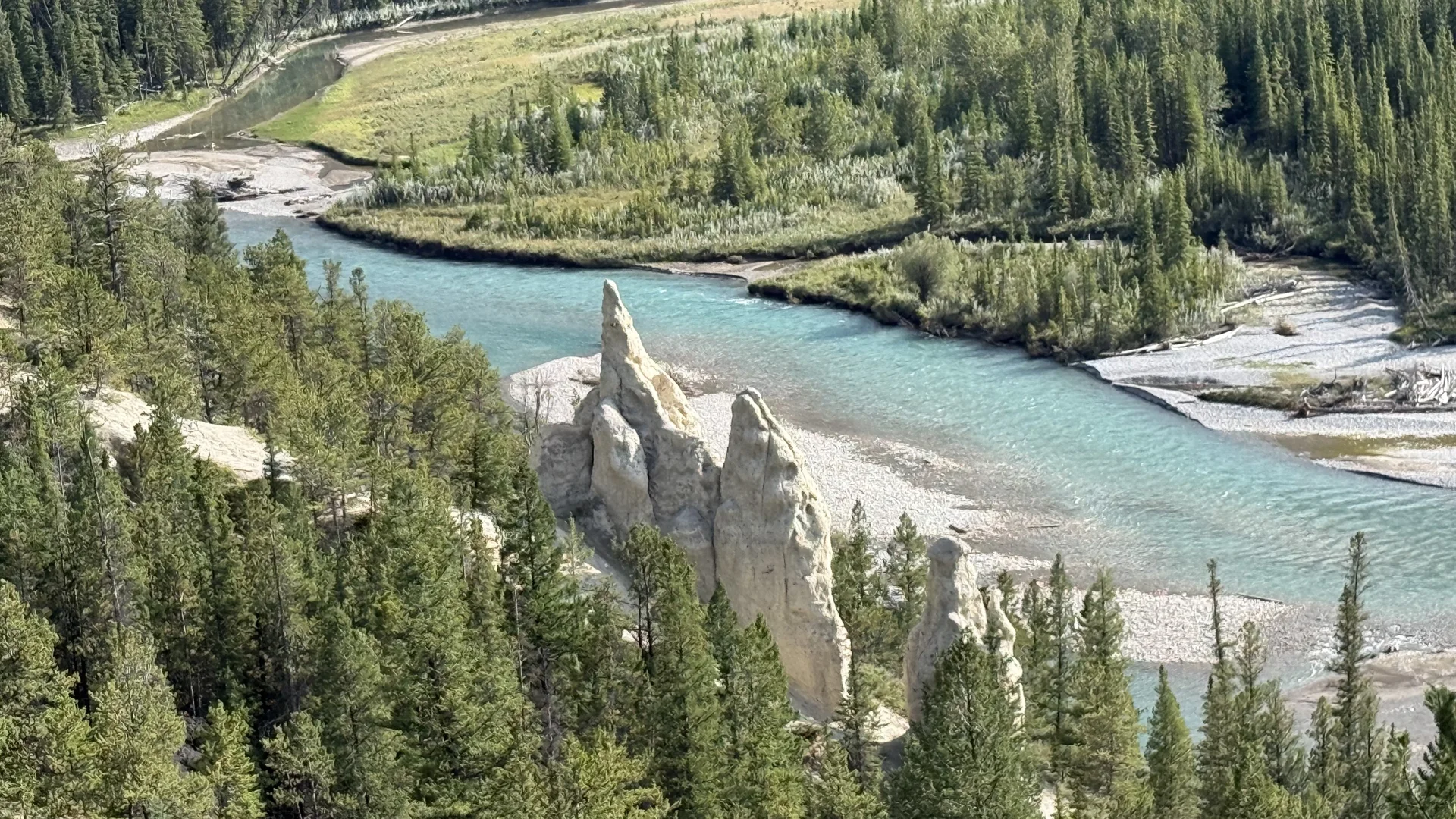
Icefield Parkway, Glacier Skywalk (Jasper) / Peyto Lake, Bow Falls, Hoodoos (Banff)
Sept 1, 2026 – Day 9 (A long day!)
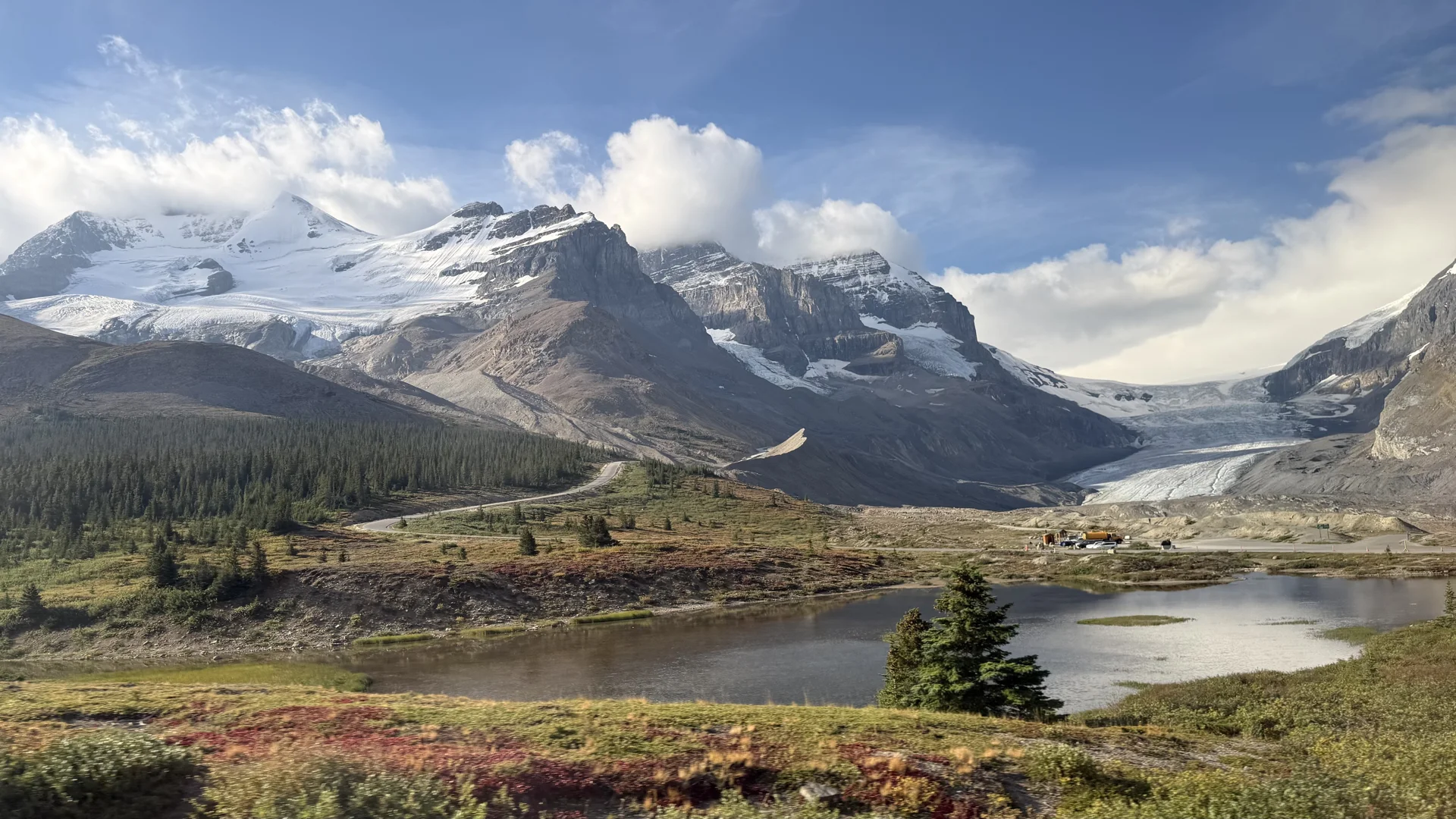
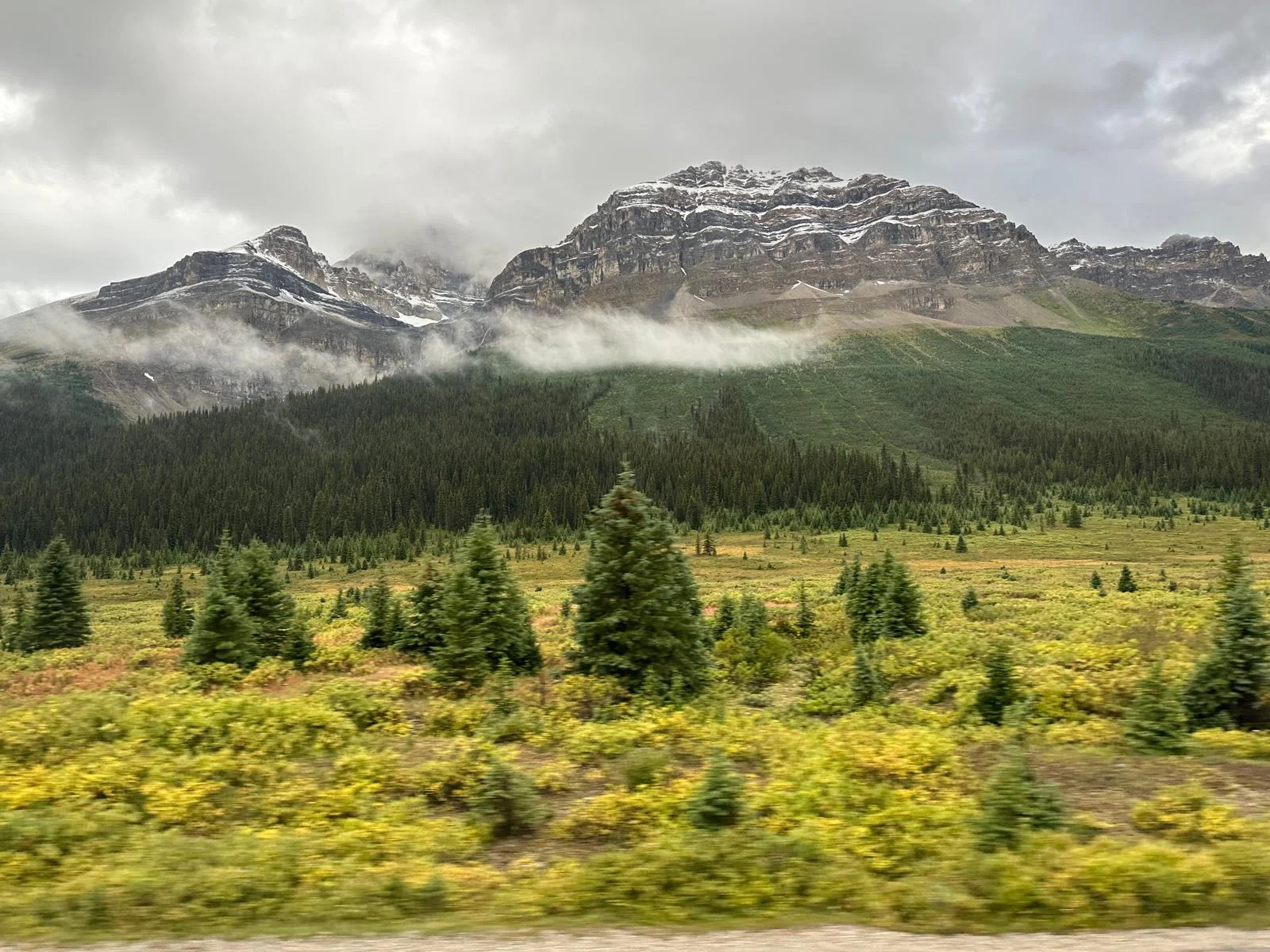
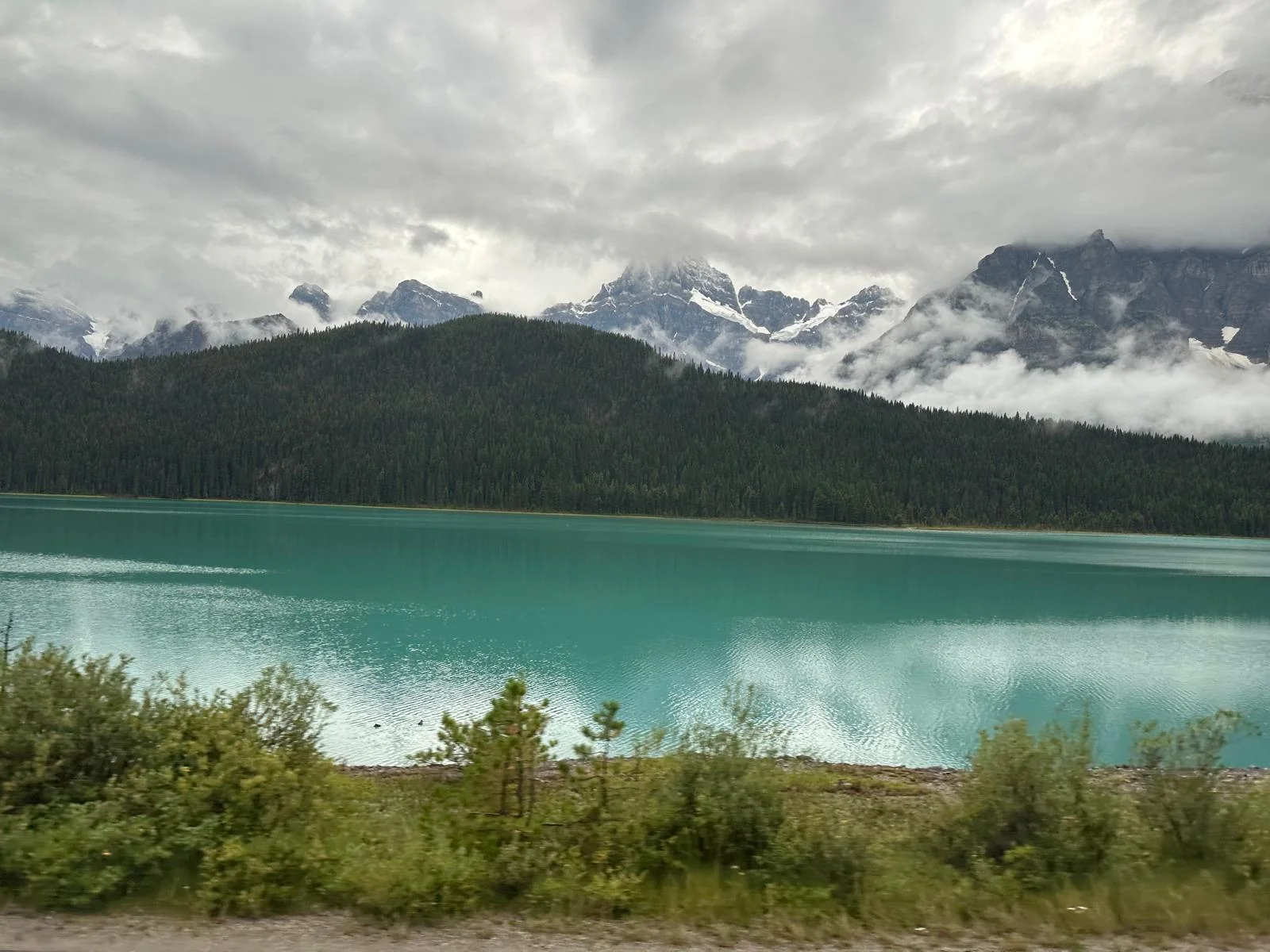
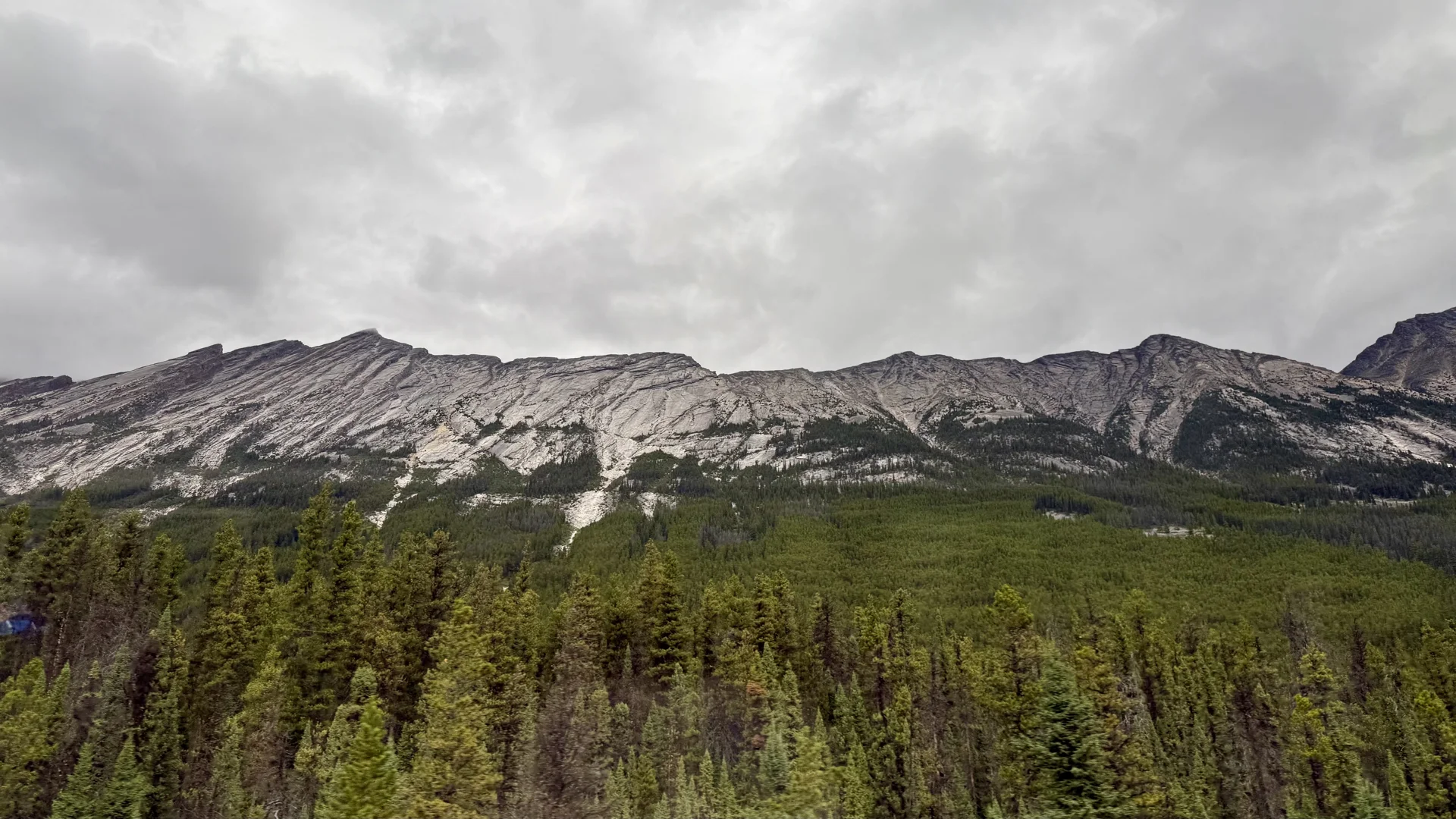
Today we hit the road again — the Columbia Icefield Parkway, or Promenade des Glaciers if you’re feeling fancy. This dramatic highway traces the Continental Divide straight through the heart of Jasper and Banff, stringing together showstoppers like Bow Lake, Peyto Lake, and Sunwapta and Athabasca Falls along the way. It also skirts the massive Columbia Icefield — ice that’s been sitting there since 126,000 to 238,000 years ago — whose Snow Dome pulls off a neat trick: it’s one of only two spots on Earth where meltwater splits three ways, feeding three different oceans.
At midday came the main event: tiptoeing across the Glacier Skywalk, nerves and all. This cliff-edge walkway juts out to a glass-bottomed observation deck hanging nearly 1,000 feet above the valley floor — not for the faint of heart, but easily one of the wildest ways to take in the Canadian Rockies. Exhibits along the way covered waterfalls, fossils, and local wildlife, but let’s be honest, the deck stole the show. Standing where eagles soar below you, with glaciers, jagged peaks, and thundering waterfalls stretching out in every direction, is a view that’s hard to beat.
Peyto Lake looked so absurdly turquoise it seems photoshopped — but the real explanation is even cooler. Credit the Peyto Glacier, which grinds rock into a powder so fine (called rock flour) that it just floats in the meltwater instead of sinking. Add sunlight, and physics takes over: the lake absorbs the reds, oranges, and yellows, bounces back the greens and blues, and the suspended rock flour nudges things further toward green. More flour, more green — nature’s own paint mixer.
The hoodoos were nature’s weirdest rock sculptures. These tapering stone pillars are the survivors of thousands of years of rain, snowmelt, and wind chewing away at glacial rock — each one saved by a lucky cap of sod or harder stone that acted like a tiny umbrella while everything around it eroded into oblivion. Standing among them, it’s easy to see why they’ve spooked and fascinated people for centuries — even the origin of the name “hoodoo” is a mystery. They pop up elsewhere in the Rockies too, like Yoho National Park’s Leanchoil hoodoos, but for the ultimate hoodoo pilgrimage, Alberta’s Badlands are the place to go.
We also swung by Bow Falls — short on height, big on drama. It might not crack any “tallest waterfall” lists, but it’s got serious Hollywood cred: this is where Marilyn Monroe went tumbling down the rapids in River of No Return back in 1954 (stunt double doing the actual tumbling, let’s be honest).
We wrapped up the day at the Rimrock, clinging to the side of Sulphur Mountain like it’s daring you to look down at the Bow Valley. This Four Diamond hideaway practically shares a driveway with the Banff Upper Hot Springs, tucked into pine forest with alpine charm to spare — the perfect landing spot for dinner after a day of glass floors, weird rocks, and impossibly blue lakes.
Maligne Lake & Skytram, Jasper
Aug 31, 2026 – Day 8
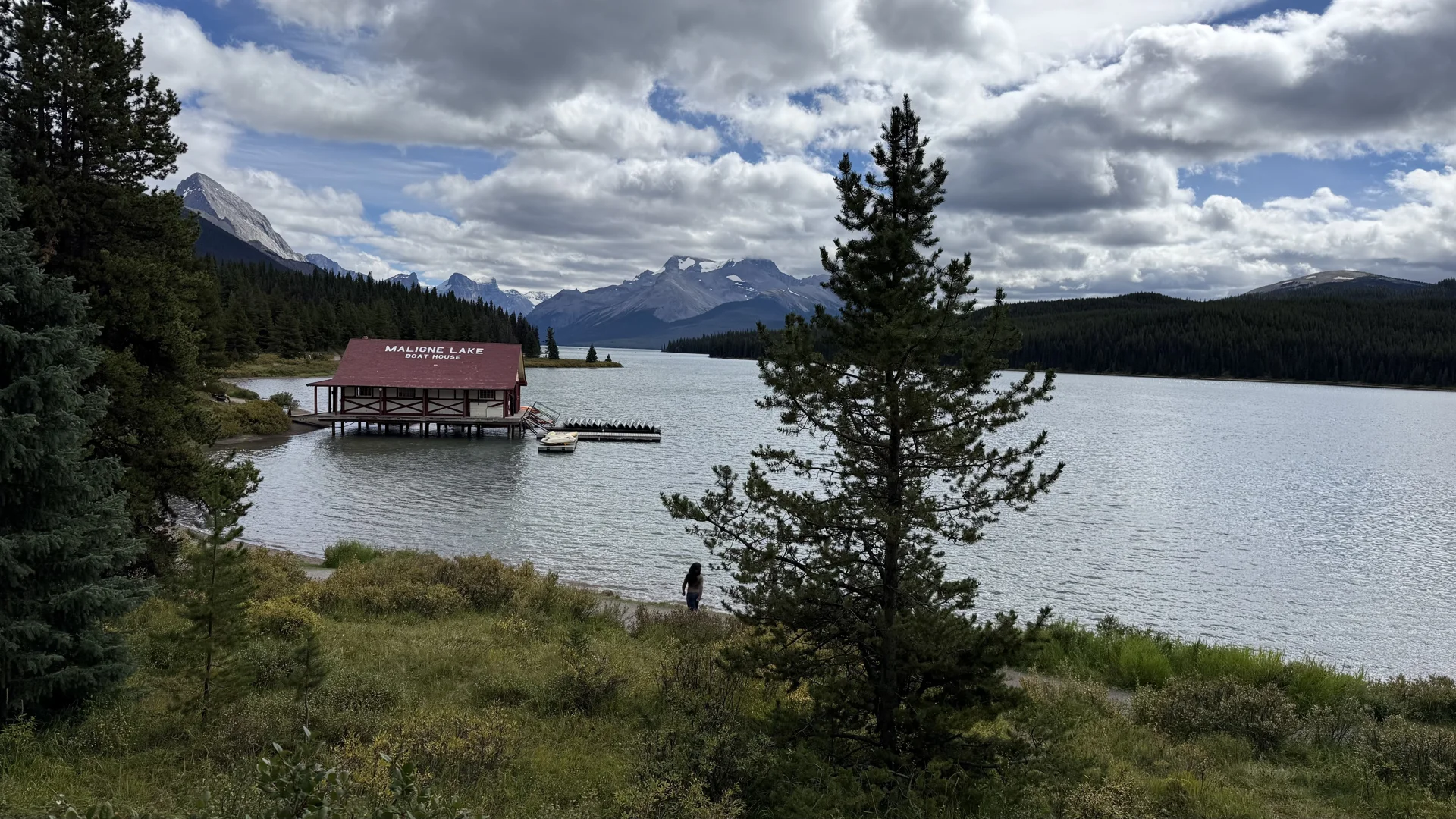
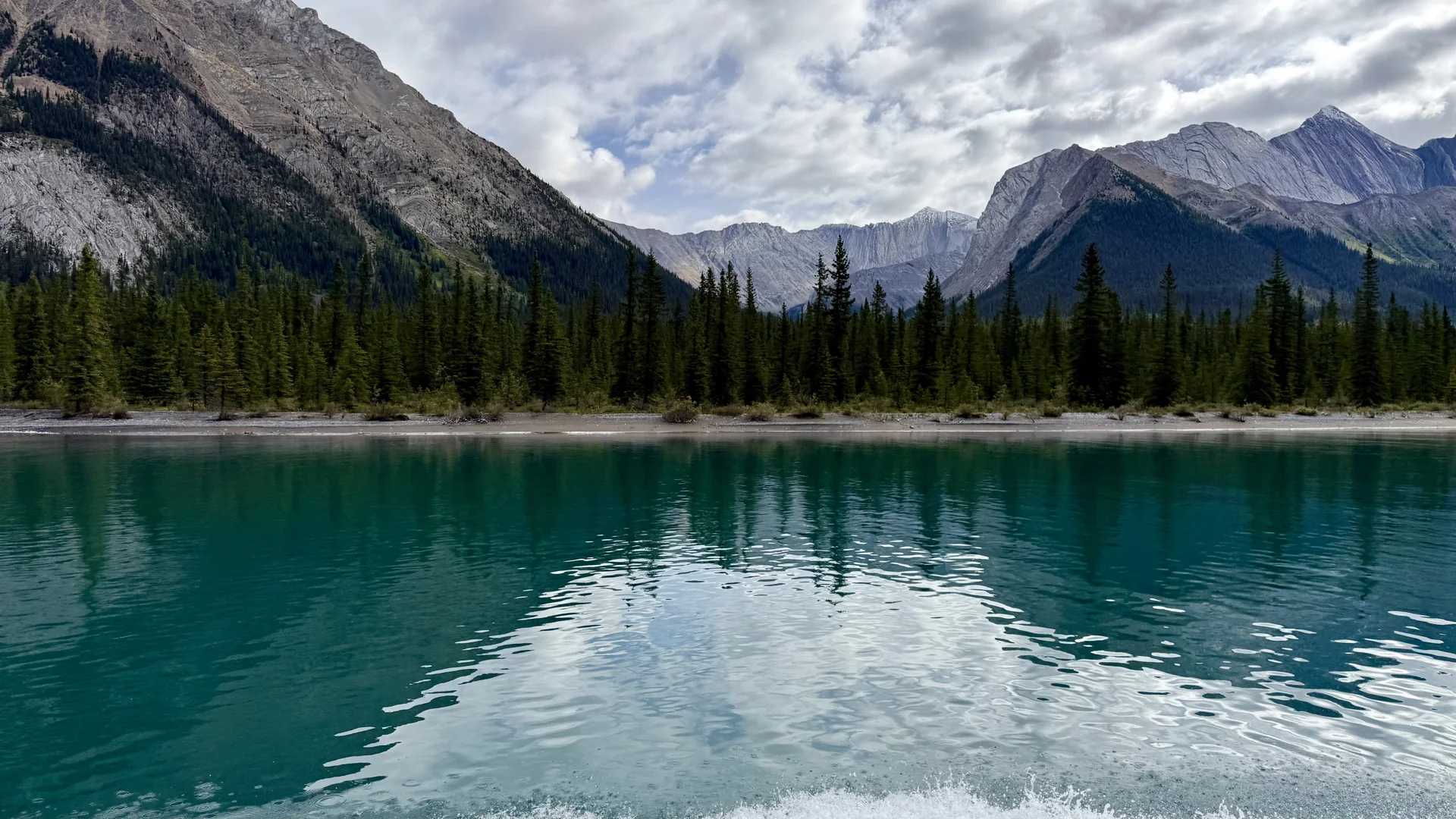
Today’s scenery didn’t just impress — it stole the show. Top billing went to cerulean Maligne Lake, the largest glacially formed lake in the Canadian Rockies, and quieter (many of us thought, better) than its famous cousin, Lake Louise. This 22-kilometer ribbon lake fills a U-shaped valley here in Jasper National Park, carved by glaciers and dammed by an end moraine — the same recipe as Lake Louise, just bigger. The name has a backstory: early French explorers, spooked by the turbulent spring meltwater, dubbed it “malignant,” or wicked — a title that stuck to the lake, river, and canyon alike. Our cruise was anything but wicked: smooth sailing past sky-scraping peaks, dark forests, and the three glaciers still feeding the lake — Charlton-Unwin, Maligne, and Coronet. The grand finale was Spirit Island, a tiny islet that punches above its weight as one of Canada’s most photographed spots.
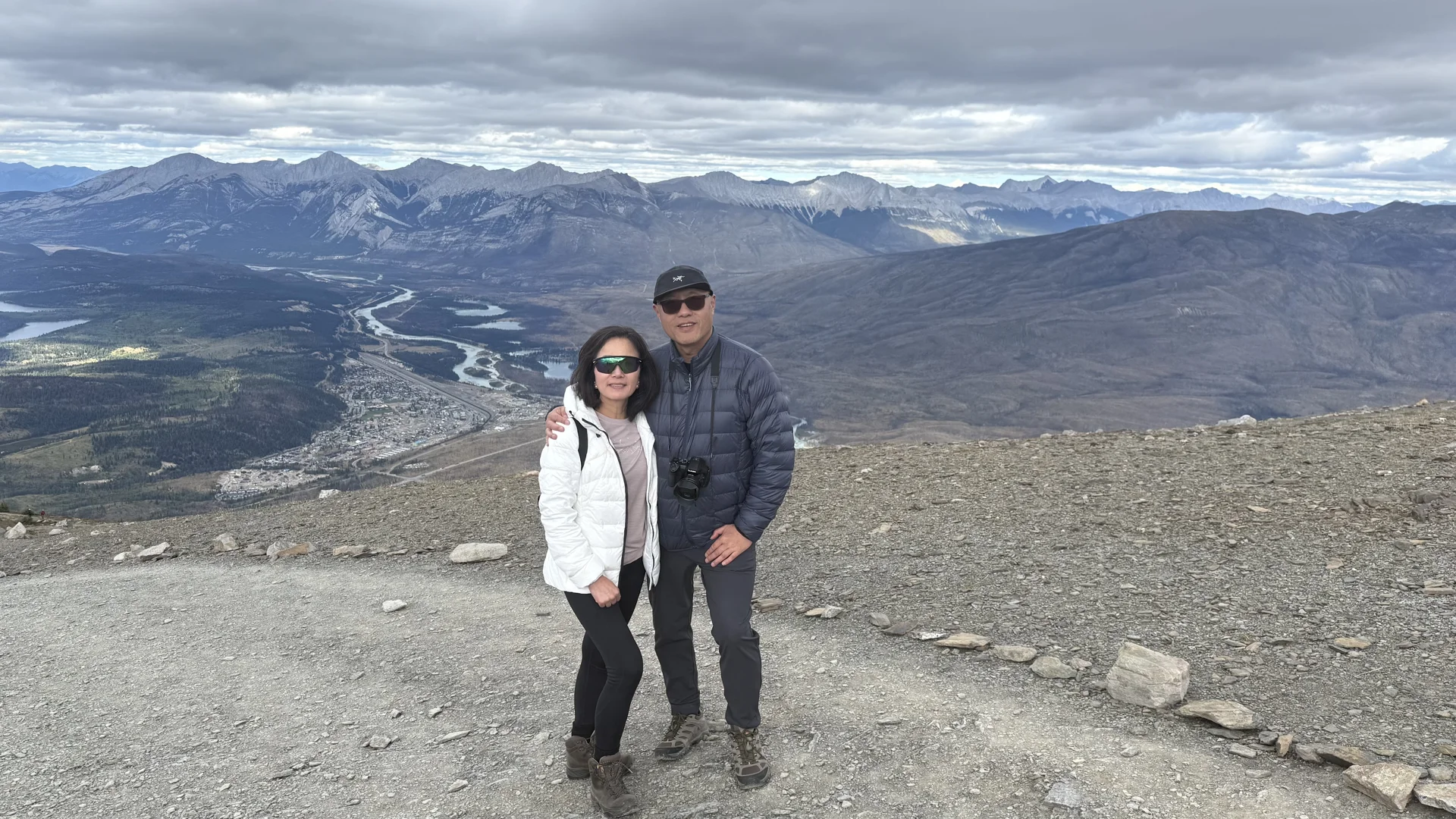
Back in Jasper, we traded lake views for mountain ones on the Jasper SkyTram, opened in 1964 to put a mountaintop view within reach of anyone who couldn’t climb one themselves. From the upper terminal (2,287 m), we could see the Colin and Maligne Ranges, Maligne Canyon, and the Icefields Parkway threading south past the Jasper townsite far below. We didn’t have time to hike to the true summit — the round trip takes about 3 hours — so we made it about a third of the way up before turning back, but even that partial climb into the alpine tundra above treeline delivered a spectacular view.
We capped the day with a birthday dinner (lunar calendar, July 19th) at Raven Bistro.
Columbia Icefield Parkway/Athabasca Glacier/ Jasper
Aug 30, 2026 – Day 7
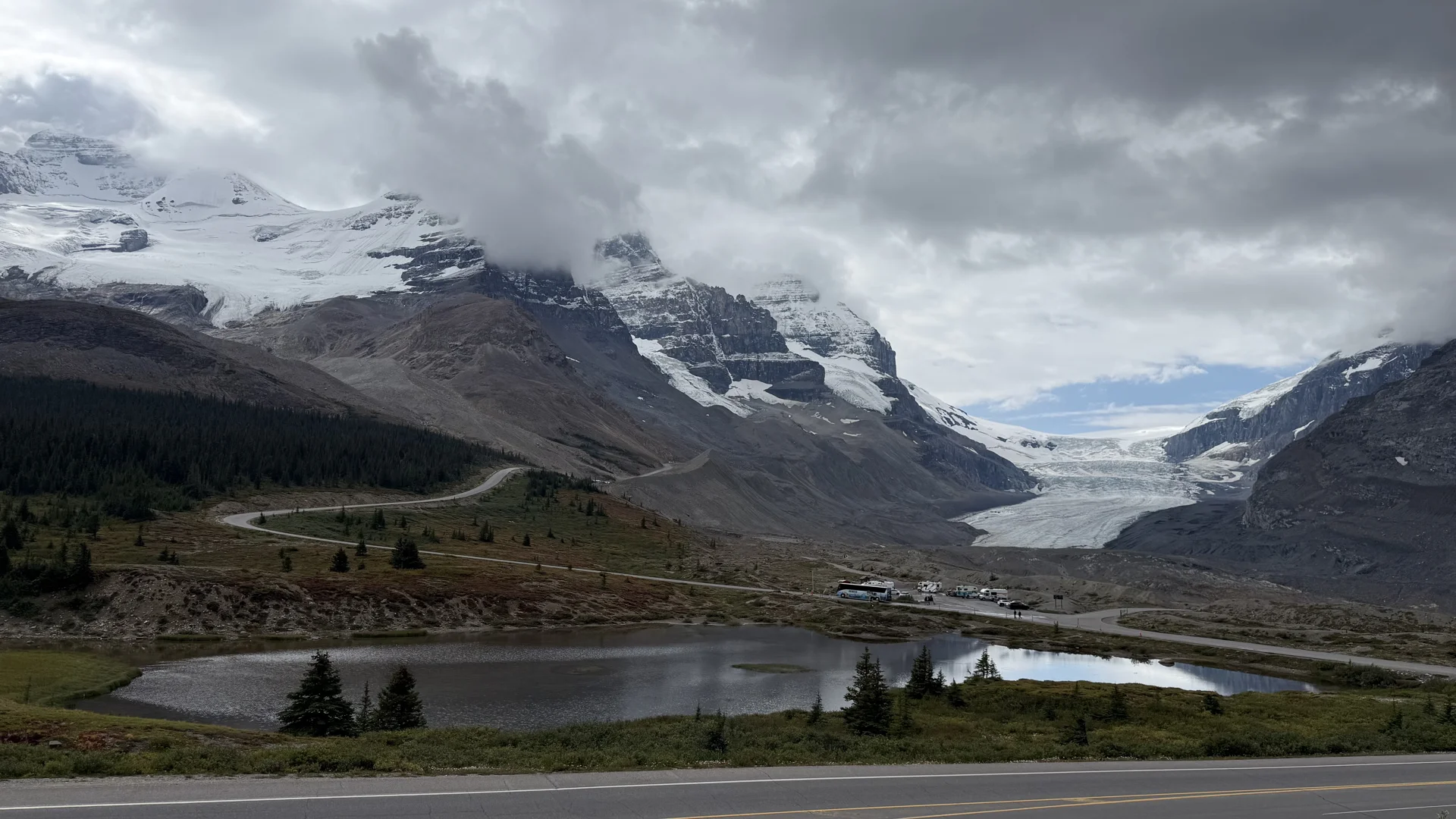
We departed the Columbia Icefield Parkway for the drive to the Columbia Icefield in Banff National Park, a UNESCO site. At an elevation of nearly 10,000 feet, this 125-square-mile tract of snow and ice — up to 1,200 feet deep in places — is the largest ice field in the Rocky Mountains, formed during the Great Glaciation roughly 126,000 to 238,000 years ago. It’s remote enough that Europeans didn’t record it until the 1800s. Interestingly, the Columbia Icefield marks a triple Continental Divide point — meaning waters originating here ultimately flow into the Atlantic, Pacific, and Arctic Oceans. Six major glaciers spill off the icefield, including Athabasca, Columbia, Dome, and Stutfield.
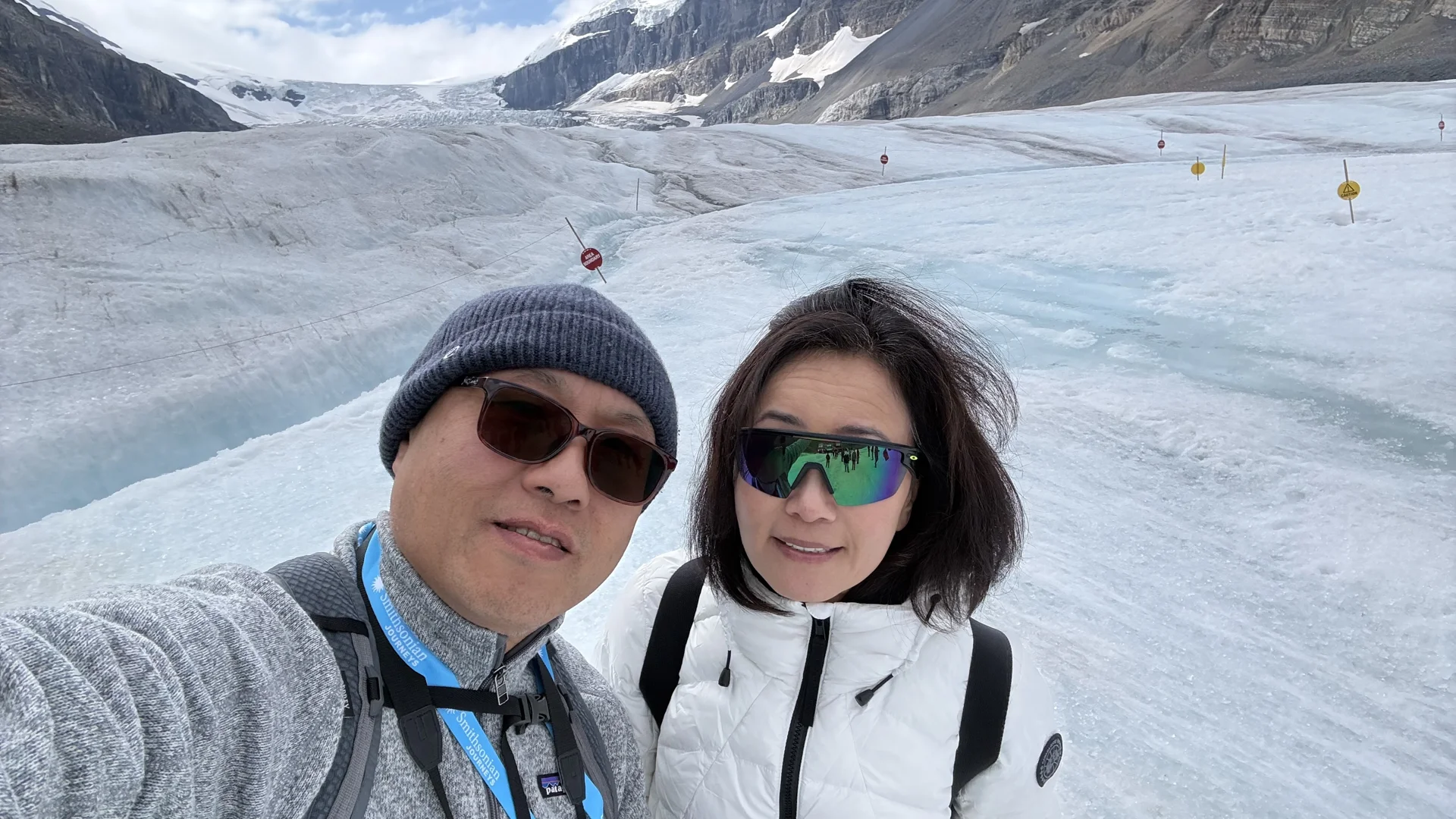
Here came a tour highlight: we bundled up and boarded the Ice Explorer — a monster all-terrain vehicle with tires built specifically to crawl right onto glacier ice — for the ride out to Athabasca Glacier, the most-visited glacier in North America. The glacier itself is 10,000–12,000 years old, though the ice we were actually walking on at the toe was a comparatively young 150–200 years — it takes about two centuries for a snowflake landing on the icefield above to compress into ice, travel the six-kilometer length of the glacier, and finally melt out at the bottom. Once there, we hopped out to explore — keeping an eye out for exposed blue ice, meltwater streams, and crevasses — snap photos, and warm ourselves from the inside out with a shot of Canadian Maple Rye. Along the glacier’s edge we could see the terminal and lateral moraines the ice has left behind as it’s retreated roughly a mile since the mid-1800s.
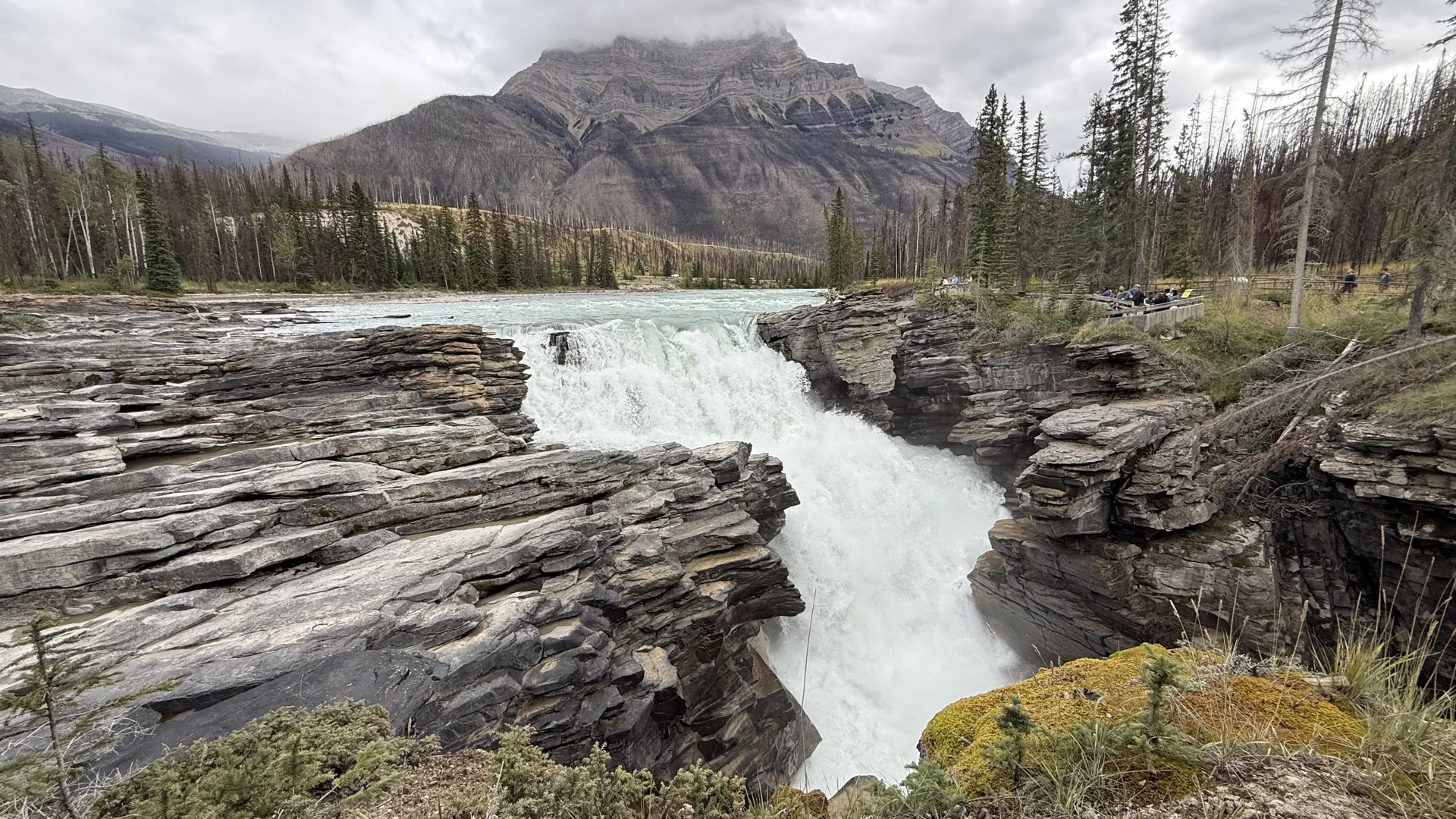
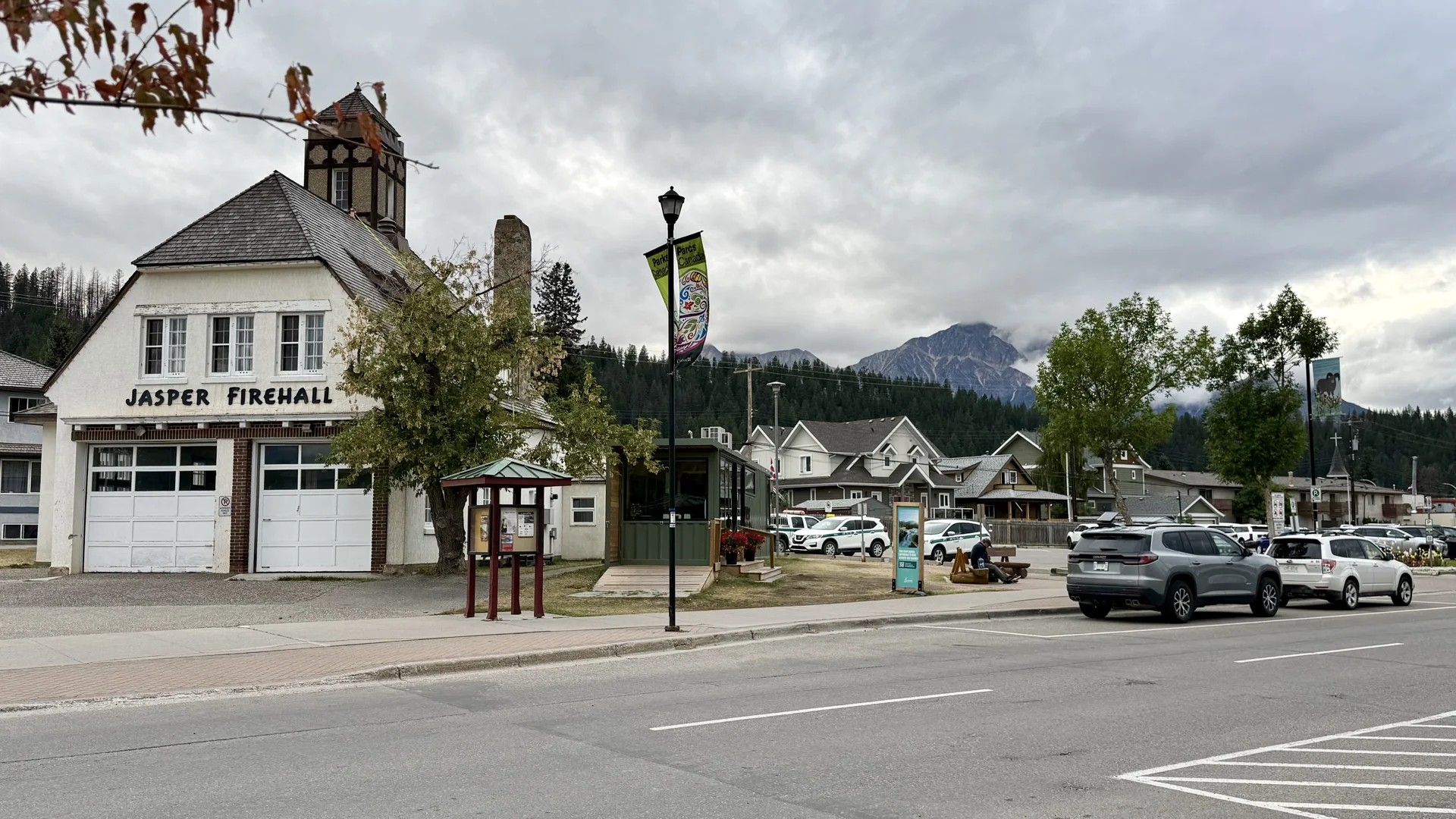
We then descended to the base station for lunch before beginning our drive northward again, visiting breathtaking Athabasca Falls along the way, and arrived at our centrally located hotel in the town of Jasper, within Jasper National Park (also a UNESCO site) — Whistlers Inn.
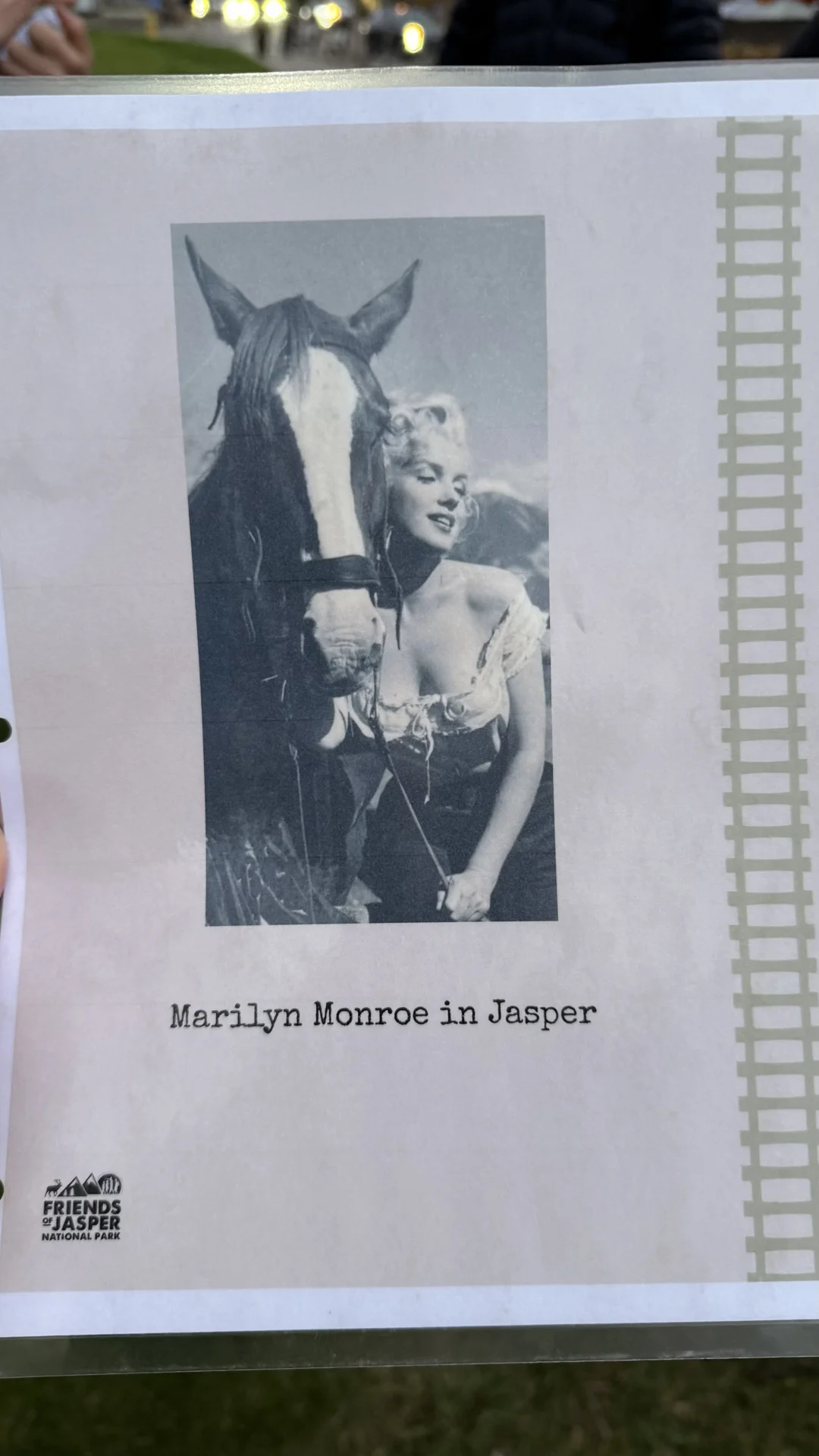
After dinner, we joined a free Jasper walking tour and learned the town’s history, including two Hollywood tales: Marilyn Monroe spent three weeks in Jasper in 1953 filming River of No Return, and famously slipped into the icy Maligne River, spraining her ankle before Robert Mitchum and crew rushed to save her. Bing Crosby, meanwhile, fell so hard for the Jasper Park Lodge golf course while filming The Emperor Waltz in 1948 that he came back the next year just to play in a tournament — and won. One photo on display was a reminder of very different wildlife etiquette back then: Bing casually feeding a bear, something you’d never see (or do) in the park today.
Lake Louise, Banff National Park, Canada
Aug 29, 2026 – Day 6
Our day kicked off with another lecture from Dr. Maria Banks — this time on the geology of Banff and Jasper, tracing 600 million years of history from ancient seabed to thrust-faulted mountains to glacier-carved valleys. (Fun fact: the famous Burgess Shale, discovered nearby in 1909, preserves some of the best-ever fossils of early soft-bodied life — over 65,000 specimens now sit in the Smithsonian’s collection.)
She spent extra time on Banff itself: the accessible Front Ranges (Cascade Mountain, Mount Rundle), the Bow, Sawback, and Vermilion Ranges along the Continental Divide, and the Valley of the Ten Peaks near Moraine Lake. The highlight was Lake Louise — formed when the retreating Victoria Glacier dammed meltwater behind a terminal moraine. She traced the rock layers above it, from the Cathedral and Stephen Formations up to the Eldon Formation — dolomite, limestone, and shale laid down in Cambrian seas long before any glacier existed. That whole glacial landscape is the product of nearly 2 million years of ice repeatedly advancing and retreating, leaving only the highest peaks poking through at its max extent.
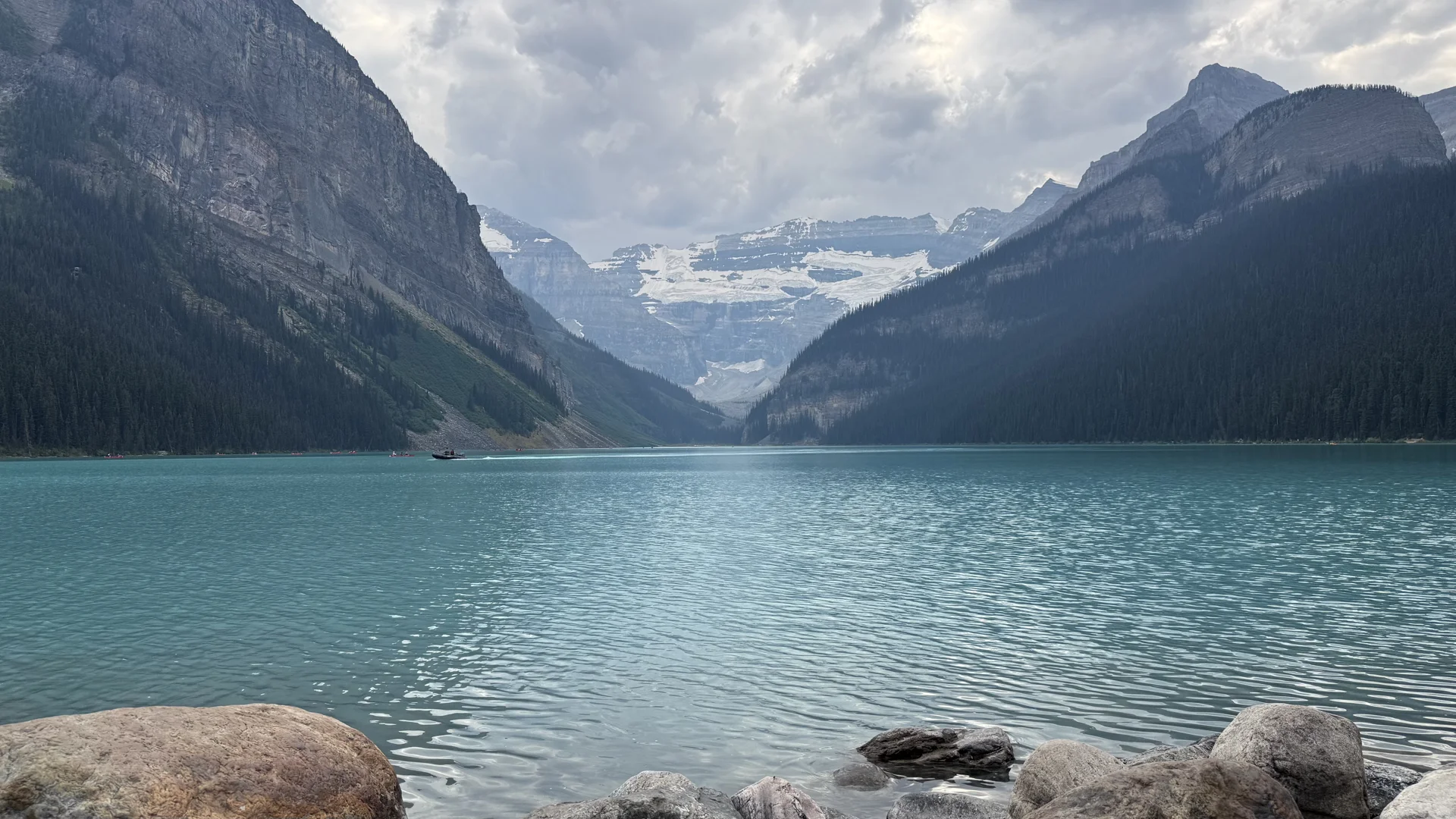
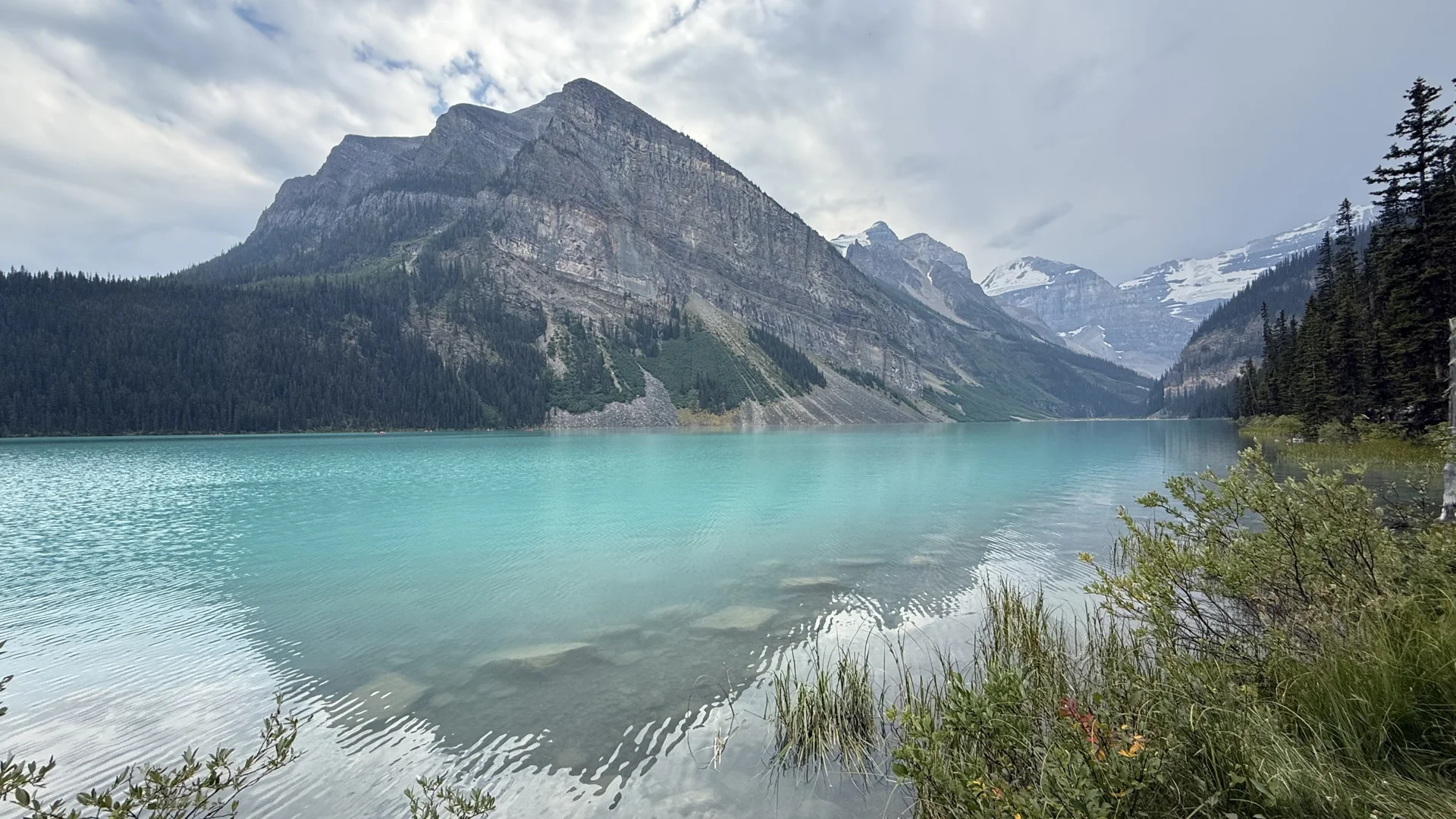
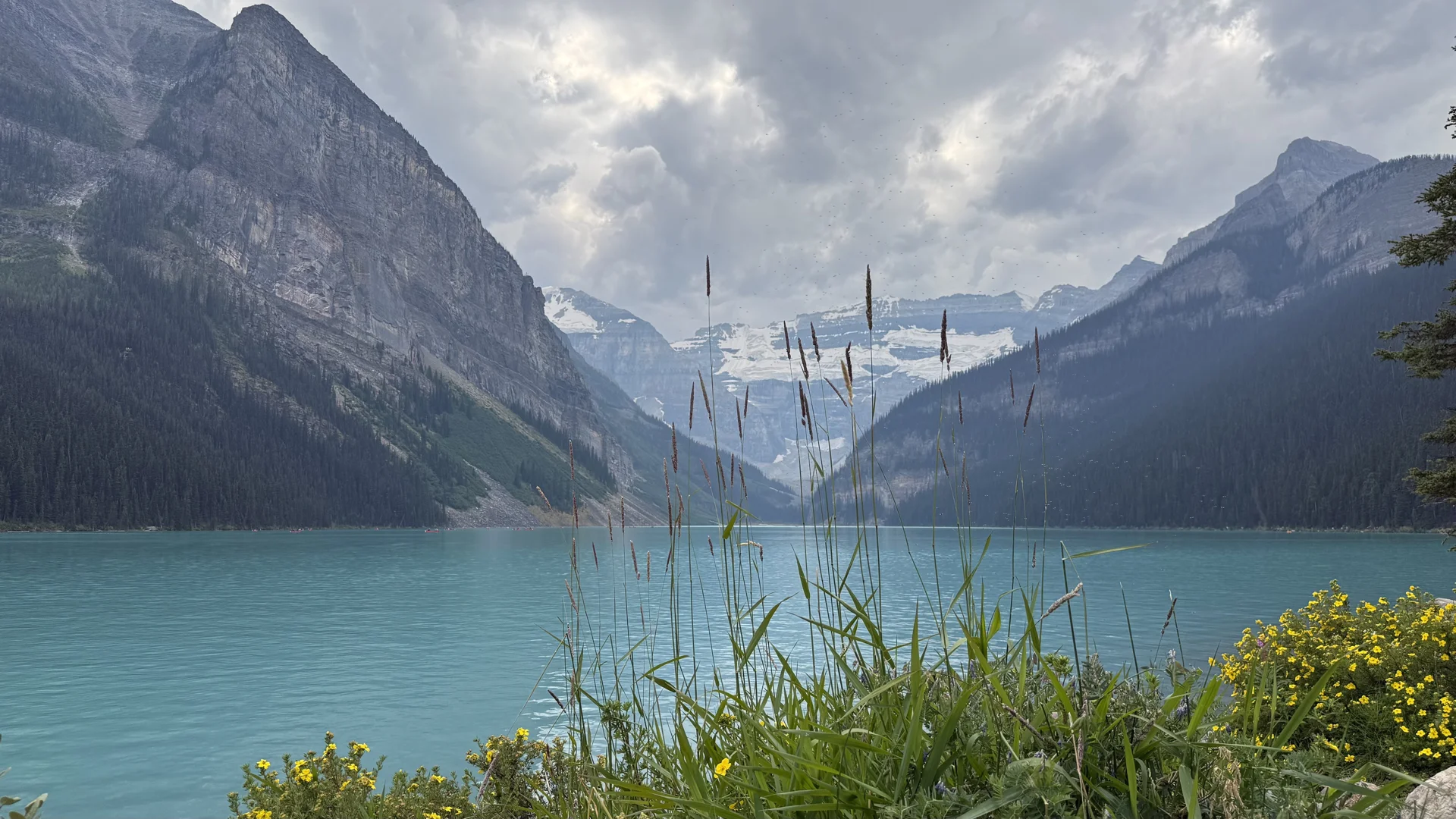
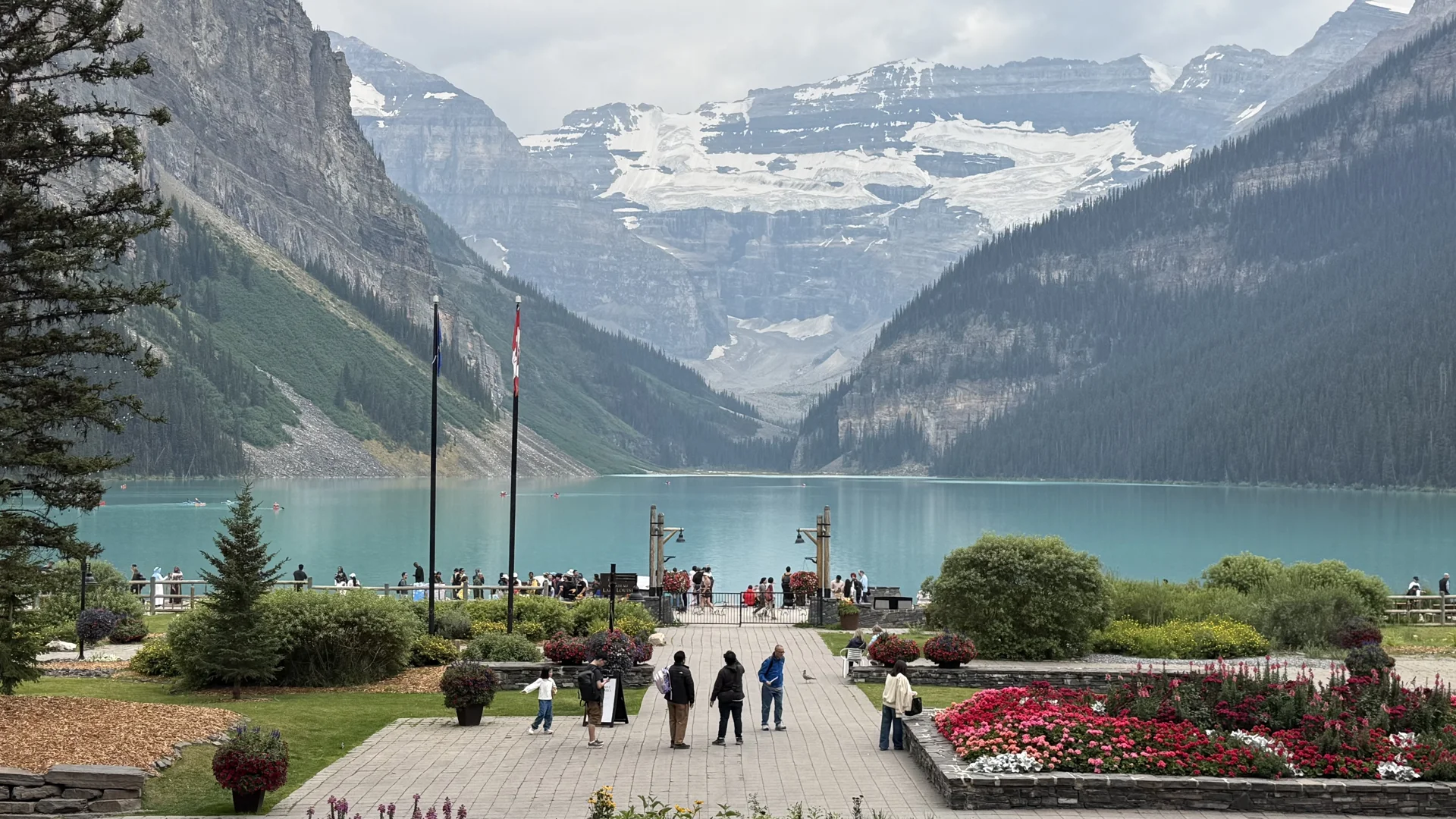
After lunch and a scenic drive along the Canadian Rockies’ western edge, we rolled into world-famous Banff National Park and got to see it all in person. Just a mile long and half as wide (2.4 km by 1.2 km, 70 meters deep), Lake Louise punches way above its weight — its aquamarine color comes from rock flour, fine glacial sediment suspended in the meltwater, which is also why it was originally called Emerald Lake. We wandered the lakefront for our first postcard-worthy glimpse, then David and I snuck in a quick peek at the iconic Fairmont facing the lake — the hotel we’d hoped to stay at. Smithsonian Journeys booked us into Lake Louise Inn instead: acceptable, not spectacular, but hey, we still got our Fairmont moment.
Whitefish
Aug 28, 2026 – Day 5
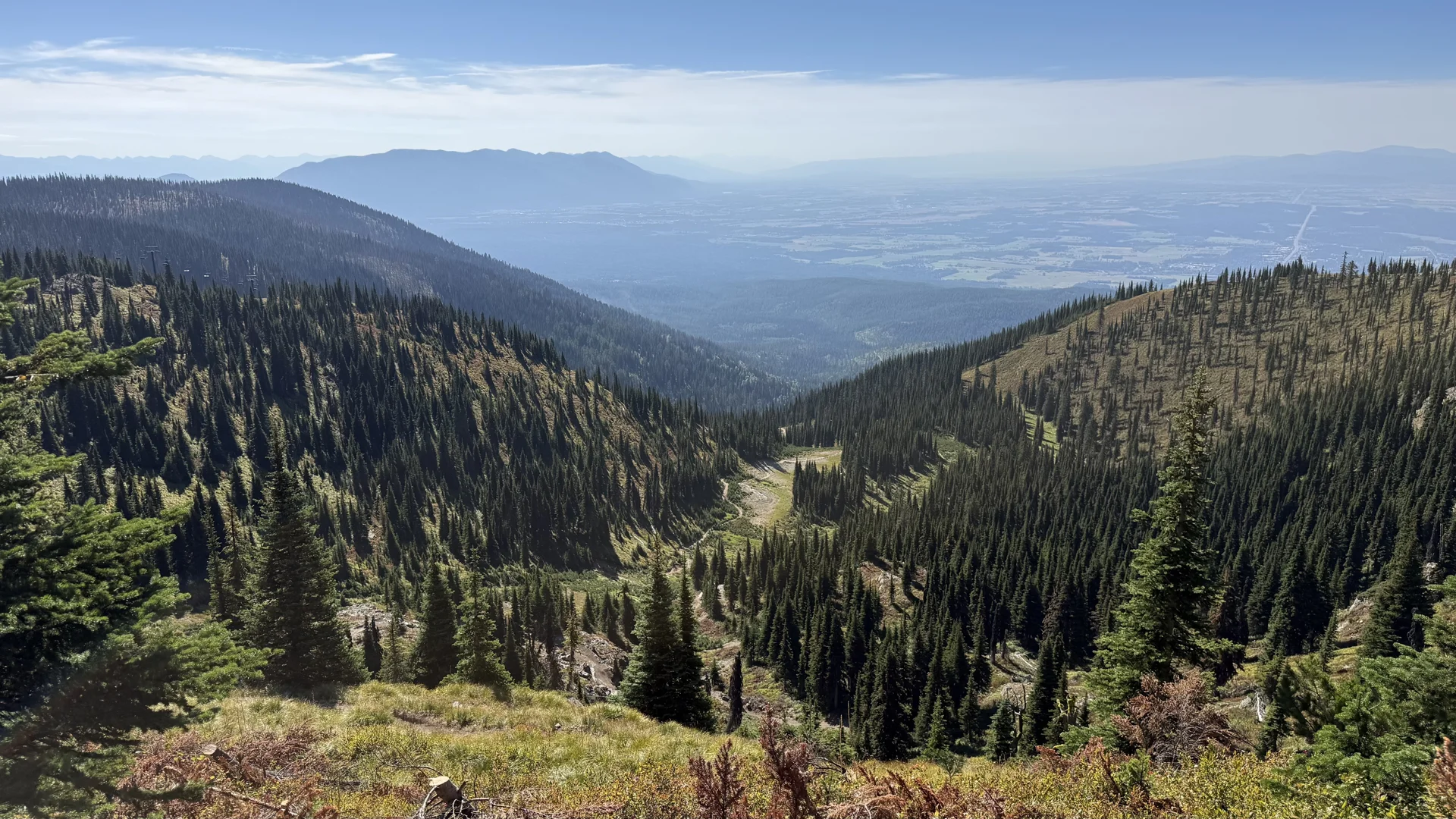
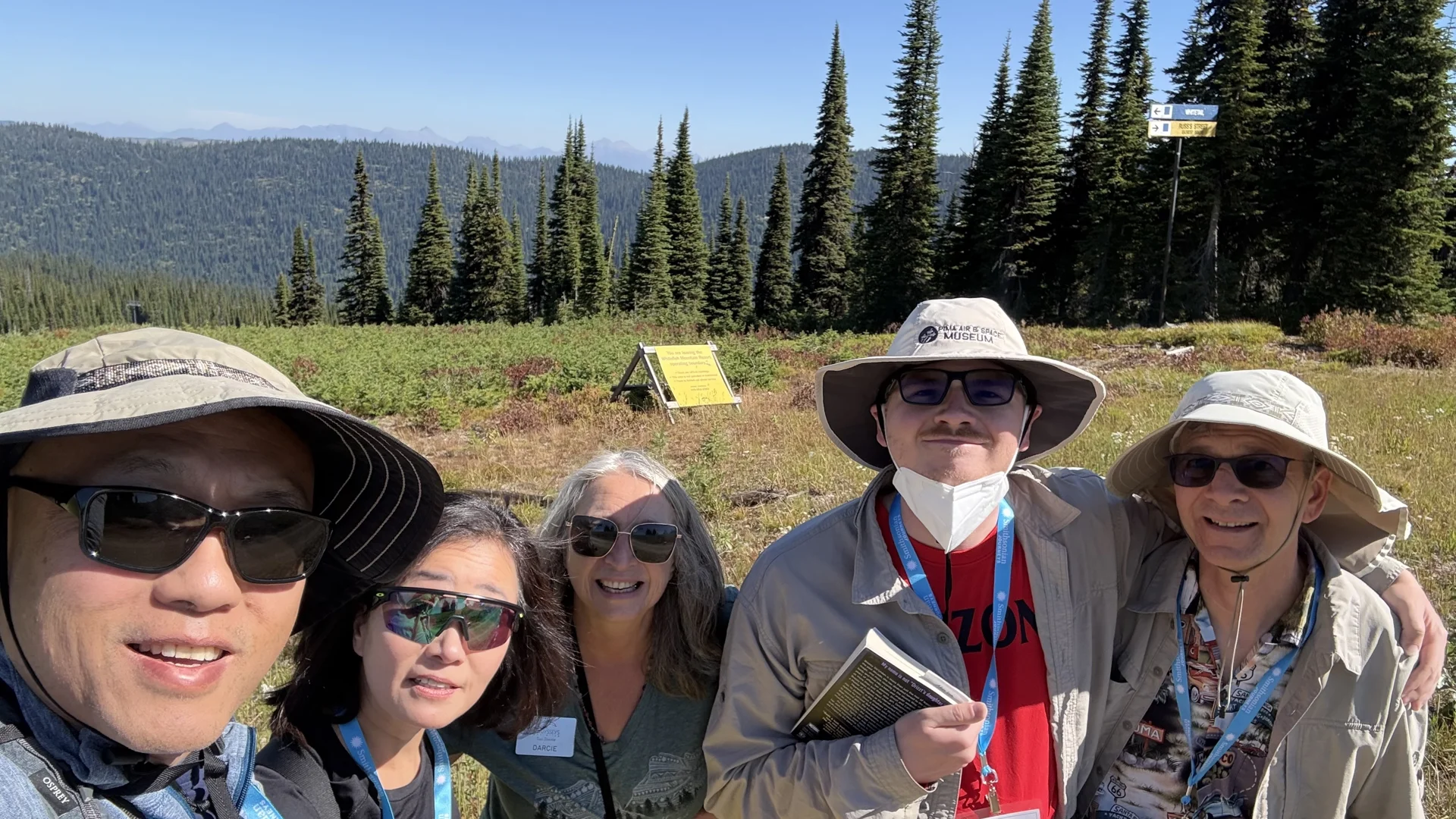
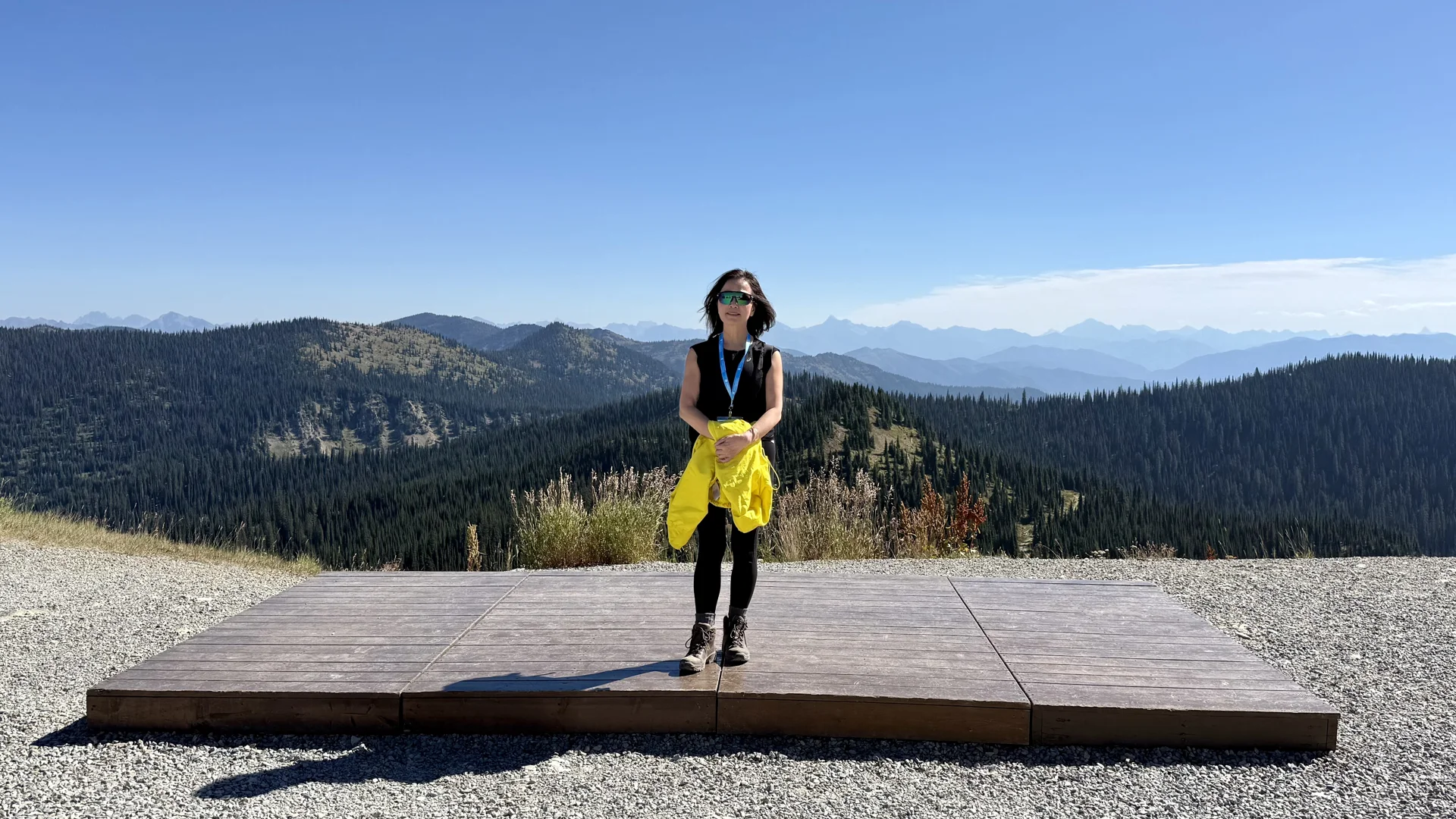
This morning we rode chairlifts up Whitefish Mountain Resort’s “Big Mountain” — nearly 7,000 feet up, and host of the 2001 U.S. Alpine Skiing Championships. At the summit, 360-degree views and crisp mountain air awaited, along with the Summit Nature Center, where we dug into the mountain’s local ecology. Only 4 of the 25 in our group (plus our guide Darcie) took on the 1-mile hike — a brisk 20 minutes and a nice little workout. From there, it was the gondola to the bottom — and, because why not, a spin down the mountain slide. Highly fun.
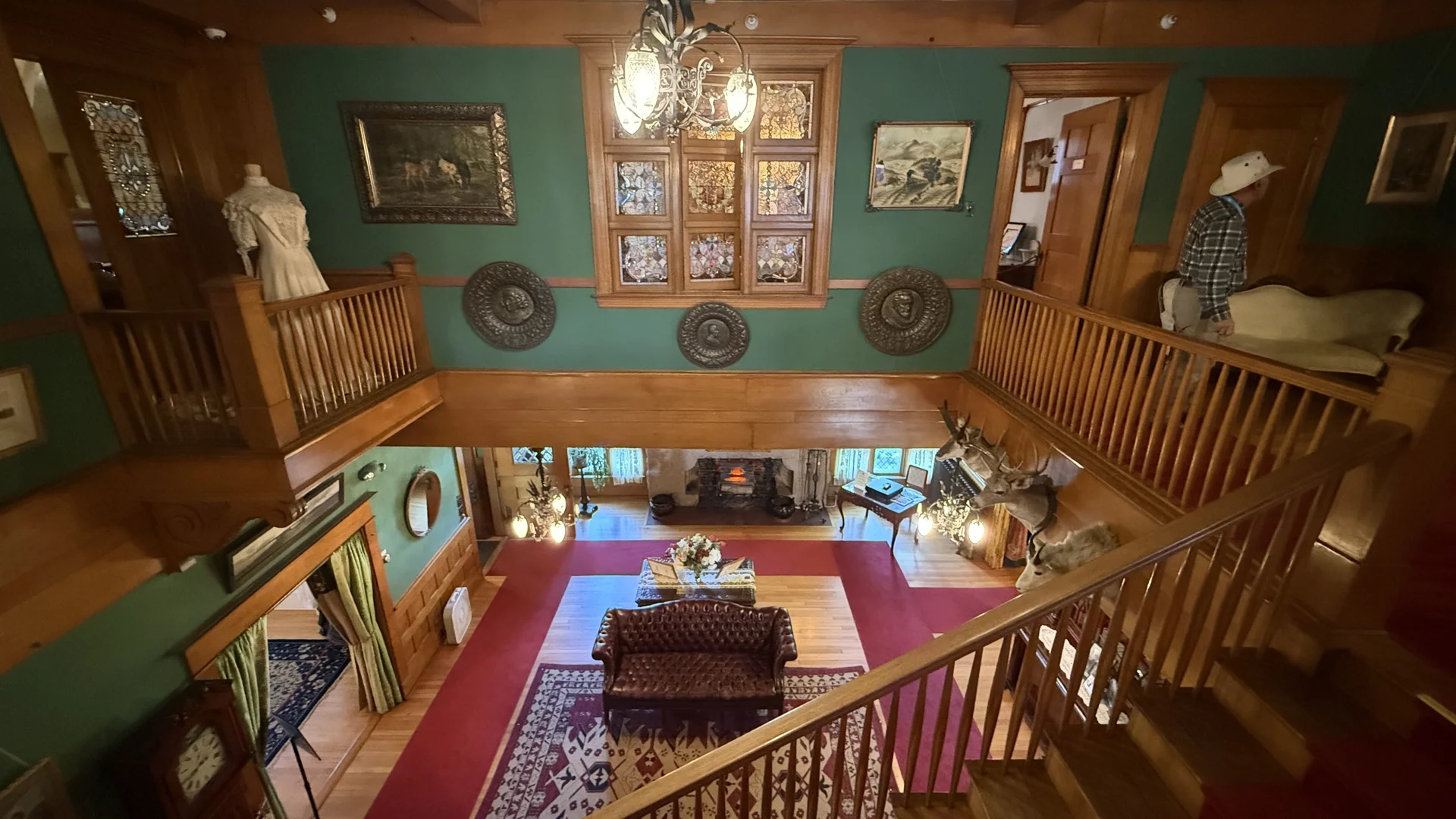
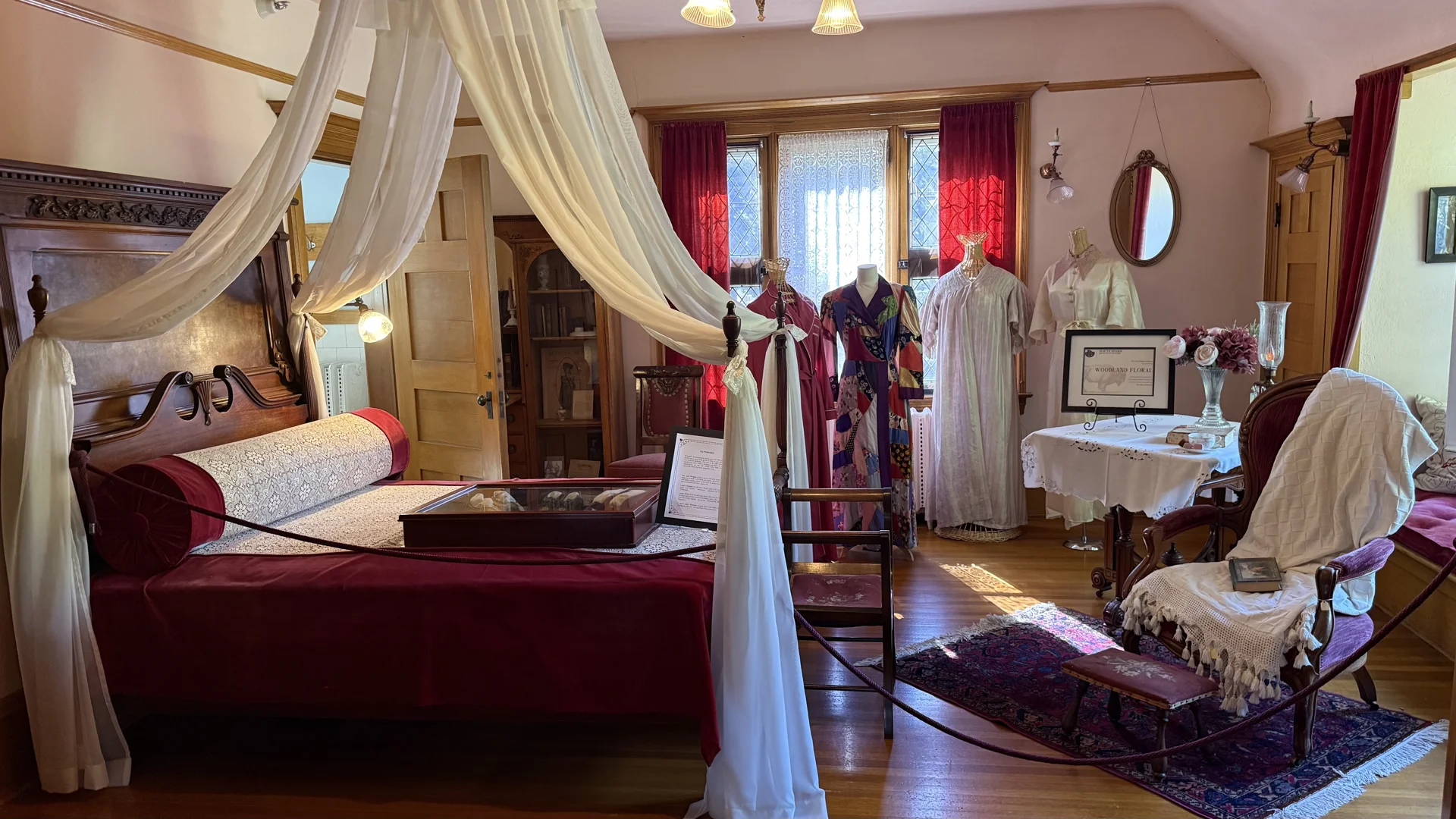
After lunch on our own, we headed to Kalispell for a guided tour of Conrad Mansion — one of the Northwest’s finest examples of pioneer-era luxury living. Built in 1895 for Kalispell founder Charles E. Conrad and his wife Alicia, the mansion has stayed virtually frozen in time ever since. The Conrad family lived there until 1974, when youngest daughter Alicia Conrad McCutcheon Campbell gifted the home and its contents to the city, preserved forever as a tribute to her parents.
What stood out for me was the architect behind this mansion: Kirtland Cutter (1860–1939), who had zero formal architectural training. He set out to be a painter, studying art in New York, Dresden, and Florence — but his European travels sparked a fascination with architecture, and he simply taught himself from journals and the buildings he saw abroad.
In 1886 he moved to Spokane Falls, Washington, betting that ambition would outweigh credentials — and it did. Commissions poured in, especially after a massive 1889 fire leveled 32 blocks of downtown and left Cutter designing three major bank buildings almost overnight. From there his career snowballed: an acclaimed building at the 1892 World’s Columbian Exposition, the Conrad Mansion in Kalispell, homes for Spokane’s elite, the Rainier Club, and eventually a seat on the jury selecting the architect for the Washington State Capitol.
Self-taught, self-confident, and clearly self-made — an untrained eye that outbuilt the credentialed competition.
Glacier National Park / Whitefish
Aug 27, 2026 – Day 4
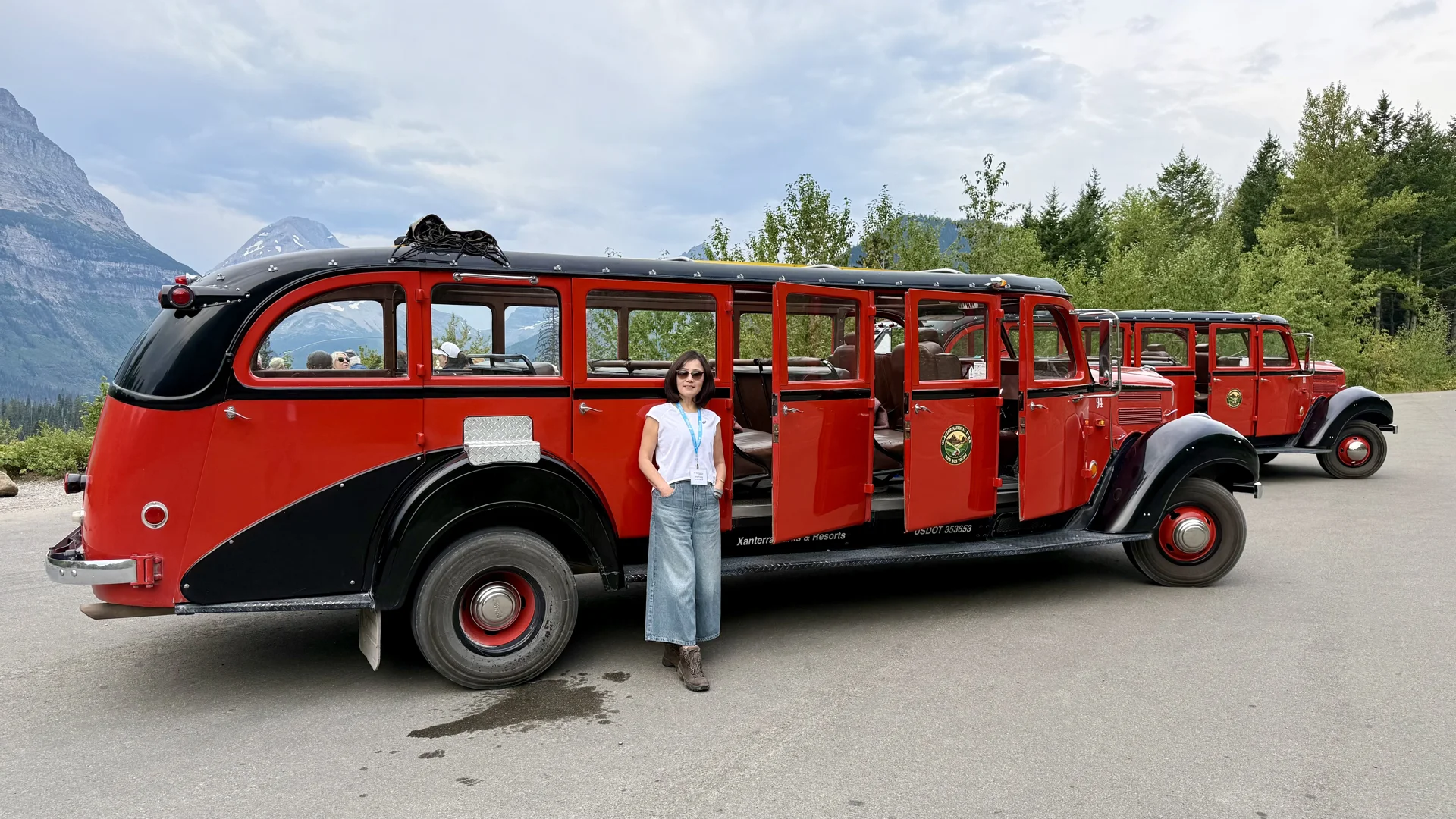
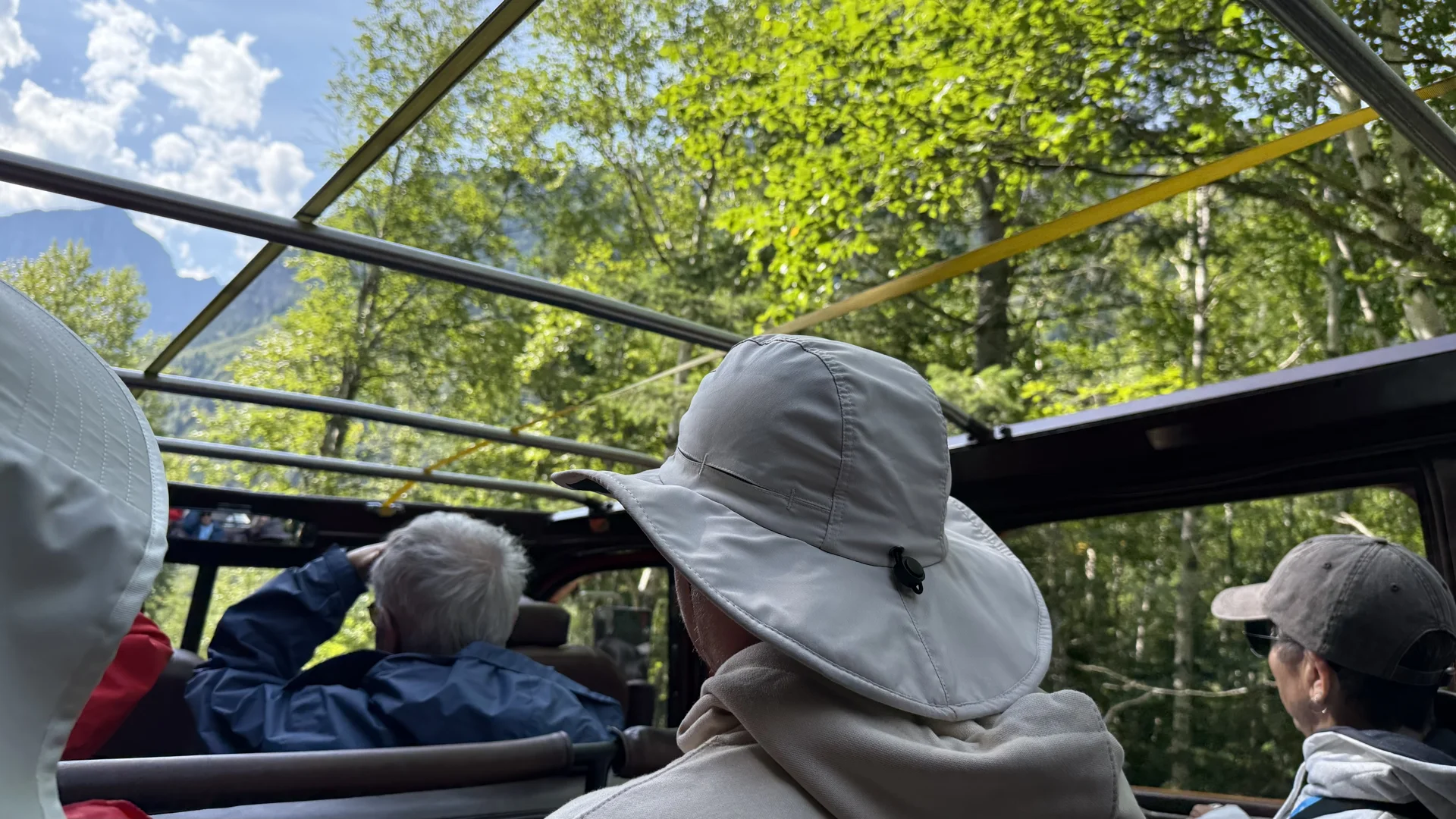
Today was a bucket-list day: we boarded one of Glacier’s legendary Red Jammers — vintage buses rolling since the 1930s, roll-back canvas tops and all, named for the sound early drivers made jamming the manual transmission into low gear on the steep grades. Our ride: the fabled Going-to-the-Sun Road, 50 miles of twisting, breathtaking, hair-raising mountain pass, and the first road ever crowned a National Historic Place, Landmark, and Civil Engineering Landmark all at once.
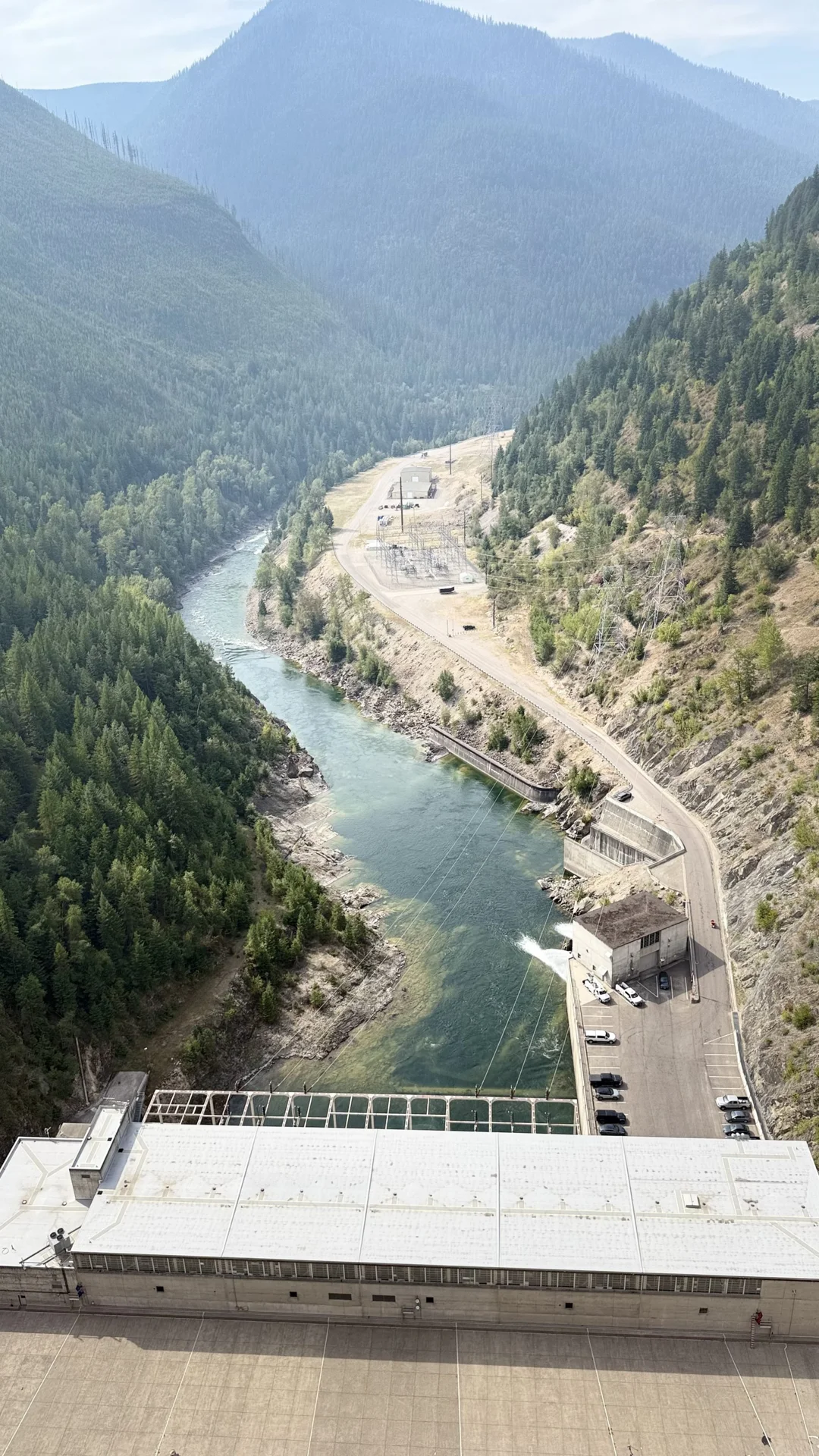
After lunch we regrouped with the motorcoach at Lake McDonald Lodge and pressed on southwest across the Continental Divide — the line where the continent decides which ocean your water is headed to, Atlantic east, Pacific west. Along the way, we passed Hungry Horse Dam: a 564-foot concrete arch with the world’s tallest spillway (490 feet), built in 1953 and named for two horses who beat impossible odds to survive a brutal lost winter. These days it keeps the lights on in Kalispell, Whitefish, and Columbia Falls, and helps manage water all the way down to the Grand Coulee and Bonneville dams.
We crested the continental high point and rolled into Whitefish, Montana by late afternoon — still a working railroad town, and gateway to the park and the slopes. Our hotel, Grouse Mountain Lodge, was built in the 1980s to welcome rail passengers making their way to this mountain outpost. A leisurely dinner at the lodge capped off the day.
Glacier National Park
Aug 26, 2026 – Day 3
We kicked off the day with a crash course in all things ice, courtesy of Dr. Maria Banks — what glaciers are, how they’re born, and how these slow-motion giants carve their way across the land. We got schooled on the landforms they leave behind (U-shaped valleys, arêtes and horns, hanging valleys, moraines — turns out glaciers are prolific sculptors) and learned the secret behind those impossibly turquoise lakes: rock flour, suspended in the water, scattering light like tiny prisms. We left with a new mission — spend the rest of the trip as geology detectives, reading the landscape for clues the ice left behind.
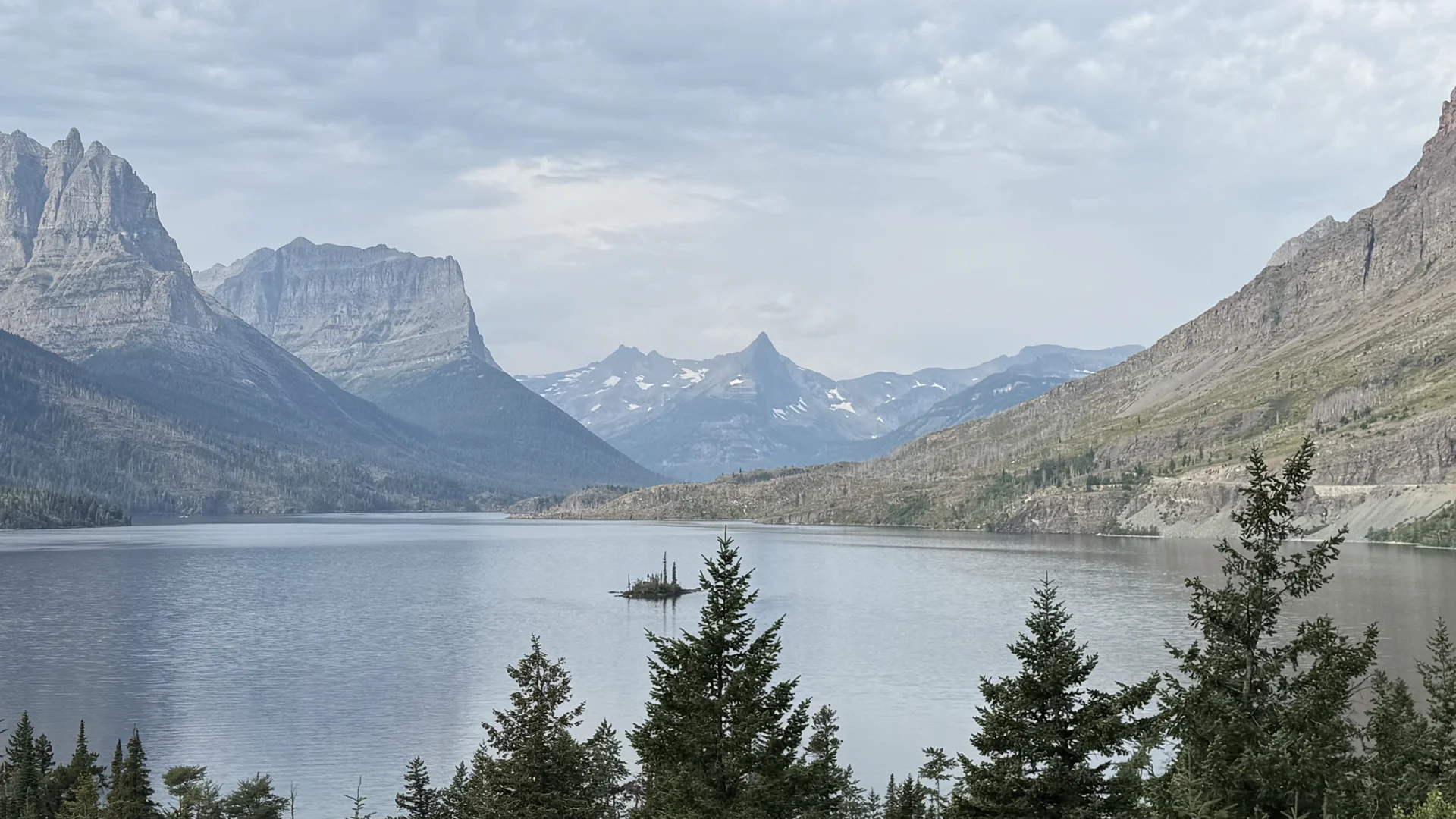
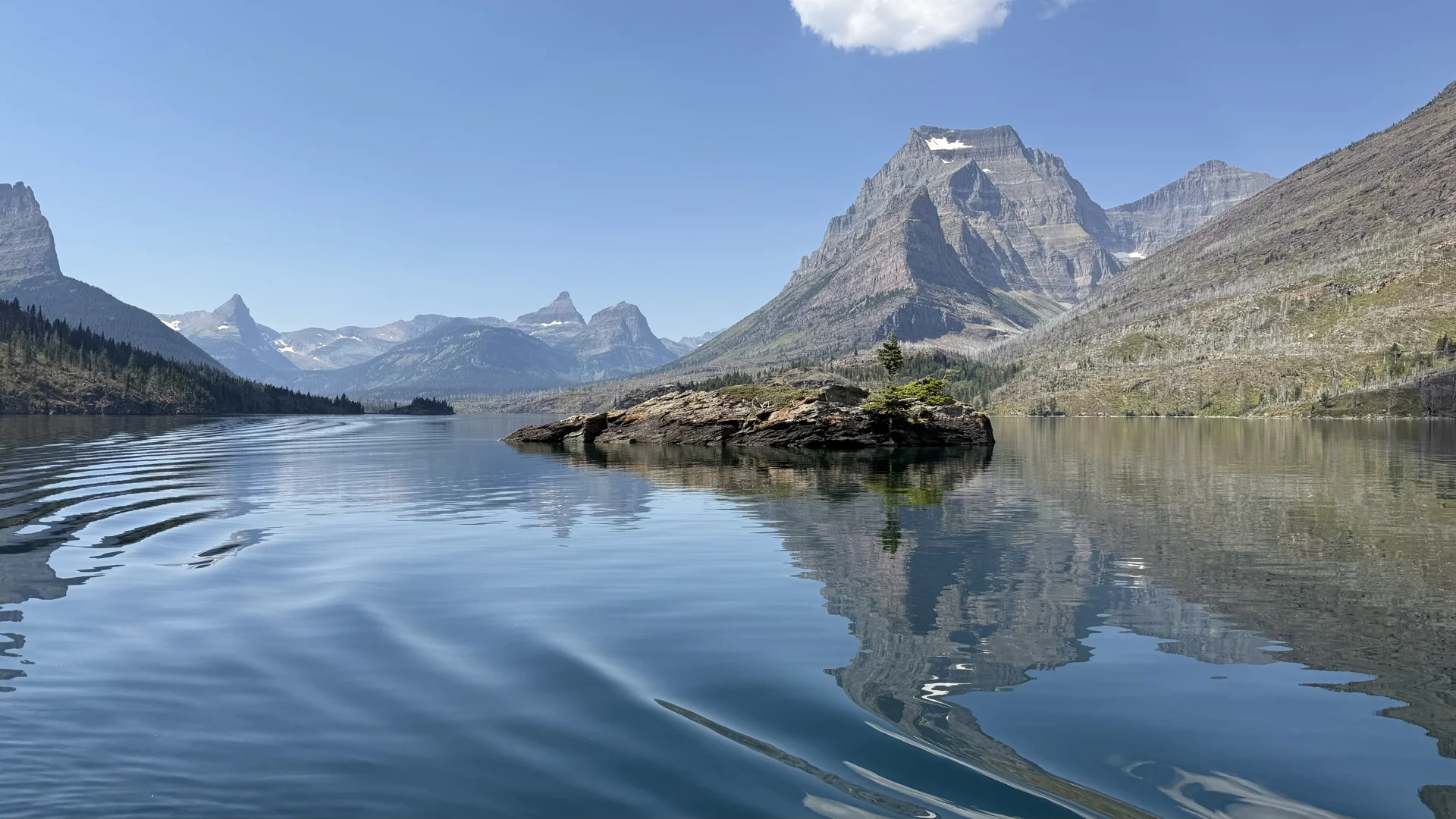
Mission started early: we hopped on the St. Mary Lake cruise, gliding across one of Glacier’s largest and most scenic lakes, fed by meltwater from the peaks above. Going-to-the-Sun Road traces its northern shore, serving up some of the park’s most photographed views — especially of tiny Wild Goose Island. The road itself is an engineering flex: the only route crossing the park, topping out at 6,646 feet at Logan Pass, it took laborers nearly 20 years to carve into the mountainside before finally opening to cars in 1932. Long before any road existed, though, this land was — and remains — the territory of the Blackfeet Nation, for whom these mountains hold deep spiritual and cultural significance.
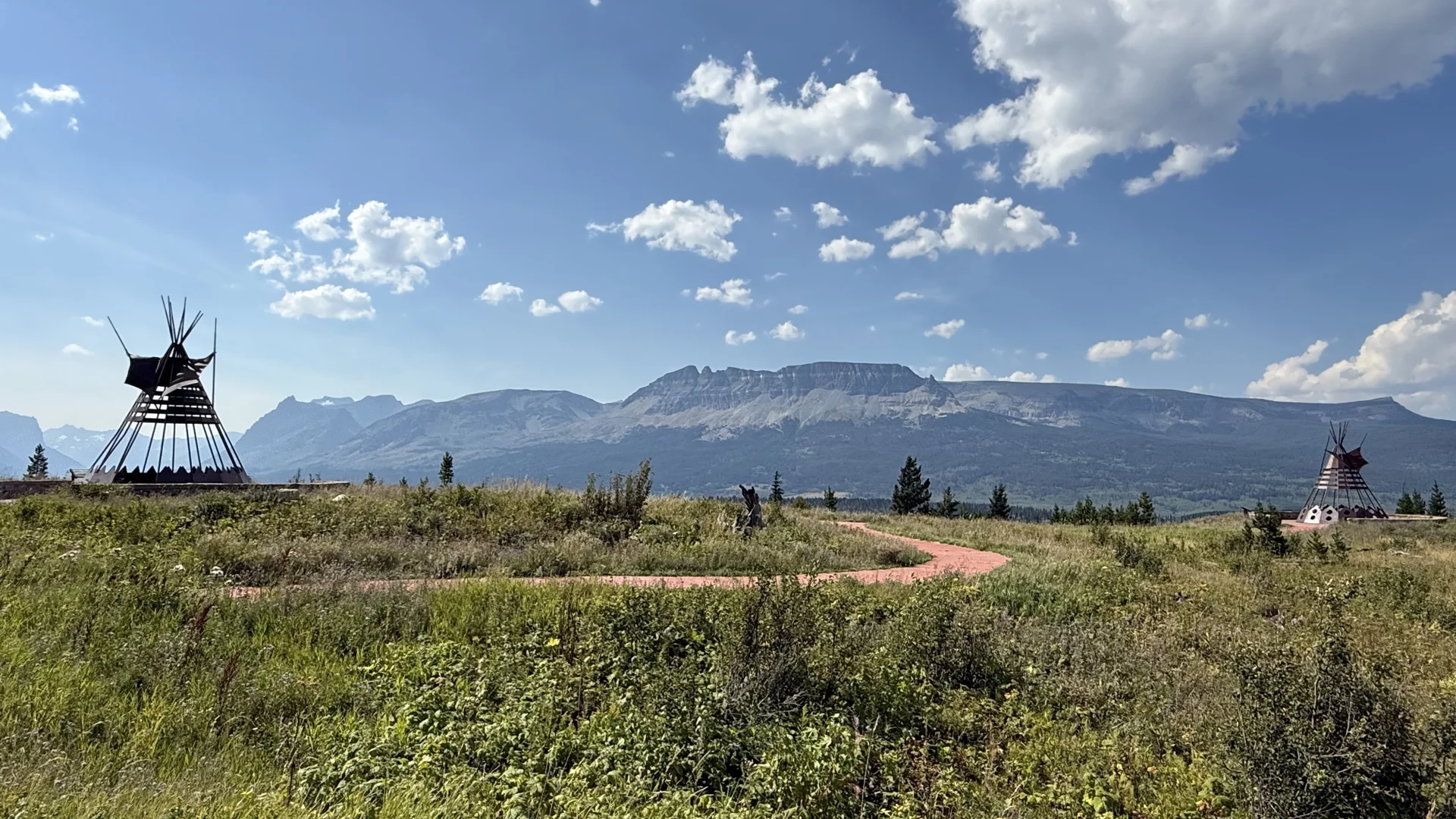
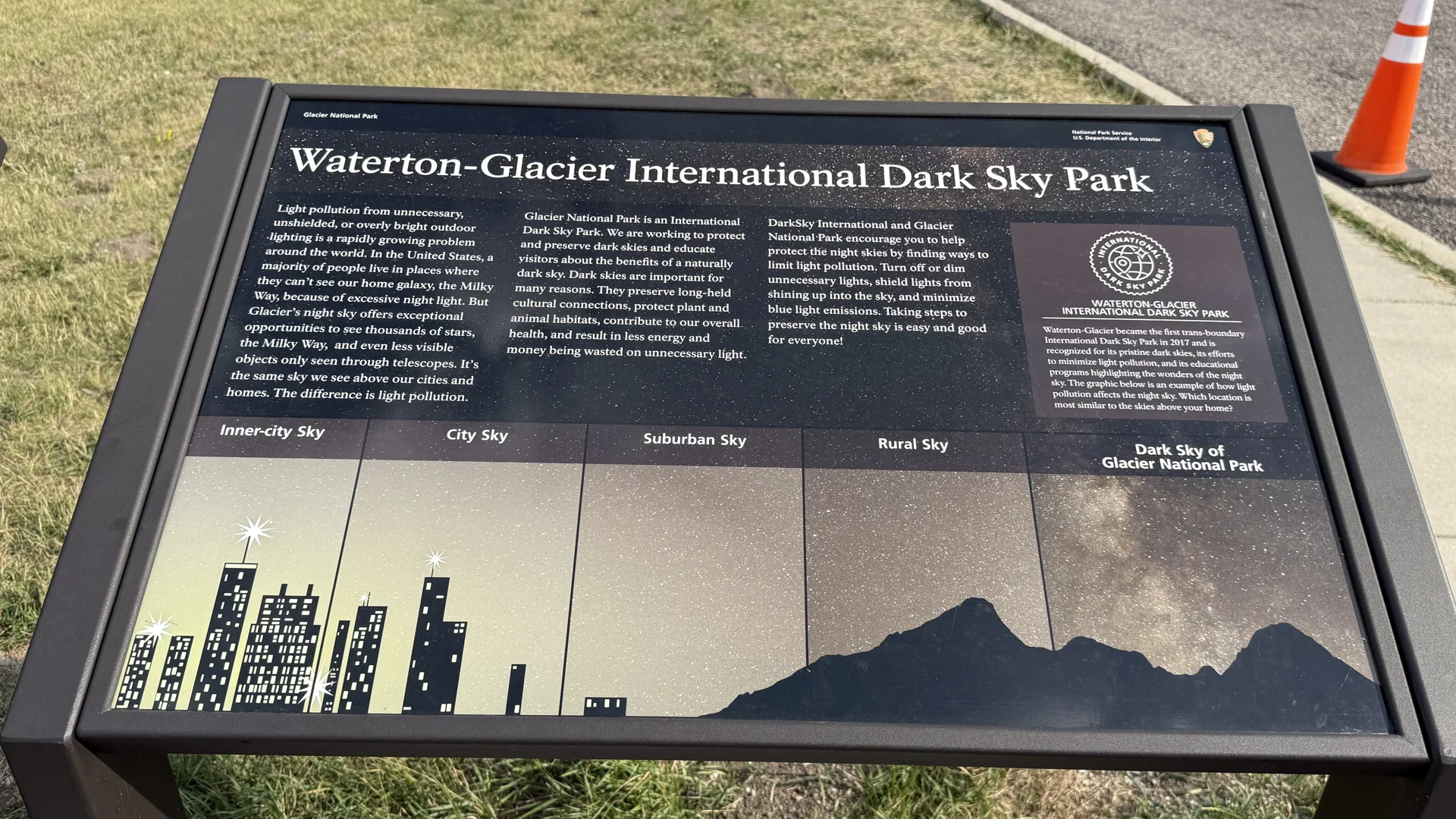
Back to St. Mary for a quick refuel before heading out to the Iron Teepee installation, hiking another 1.7 miles with our guide Darcie. Highlight of the trail: an osprey feeding fish to its chick in a nest built higher than the high-voltage line — that tiny, demanding whine left no doubt about how hungry that baby was! We’d hoped to cap the night with Dusty Star Observatory, but the clouds rolled in during dinner and stole the show.
Waterton Lakes National Park/Glacier National Park, Montana, U.S.
Aug 25, 2026 – Day 2
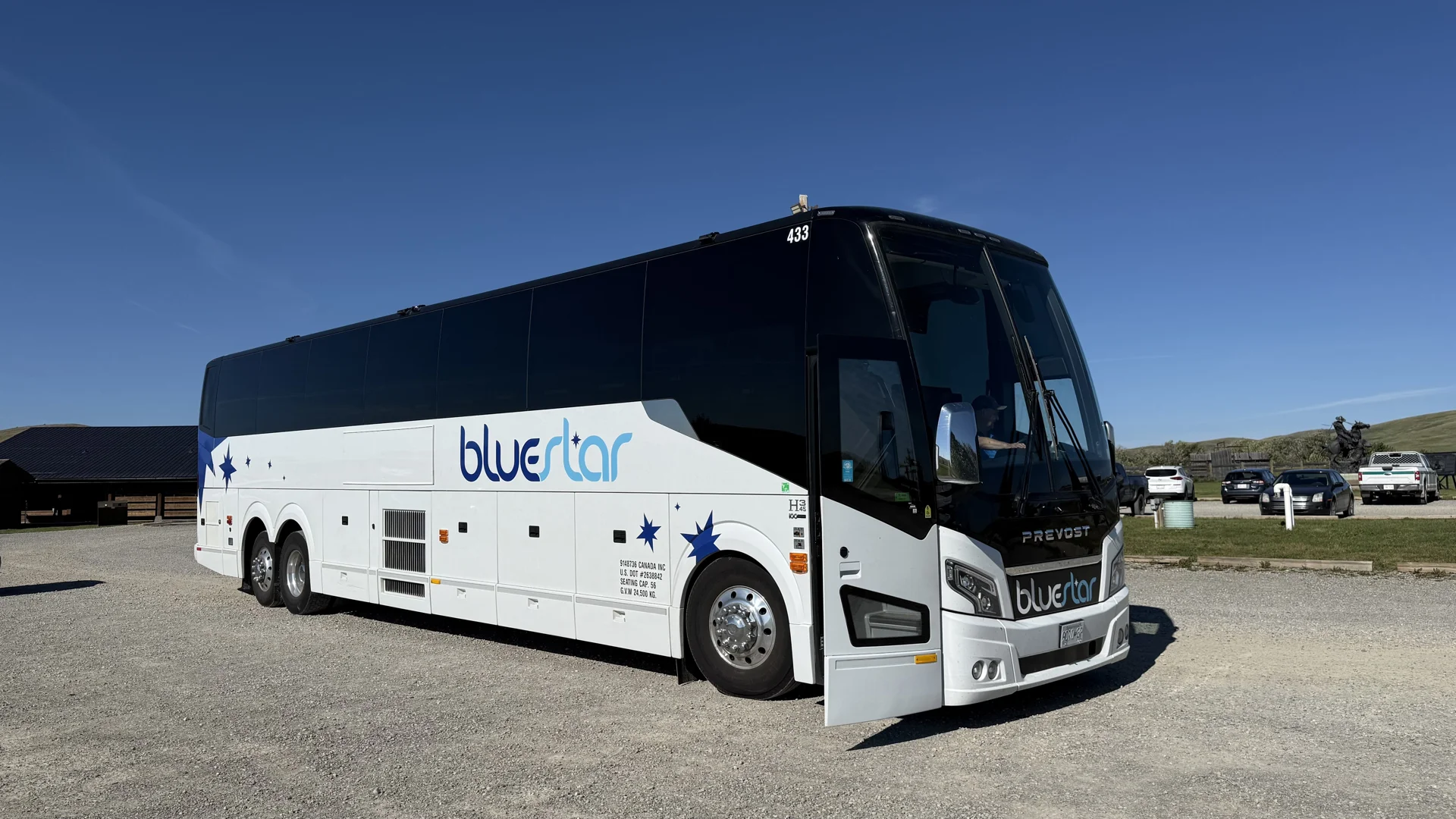
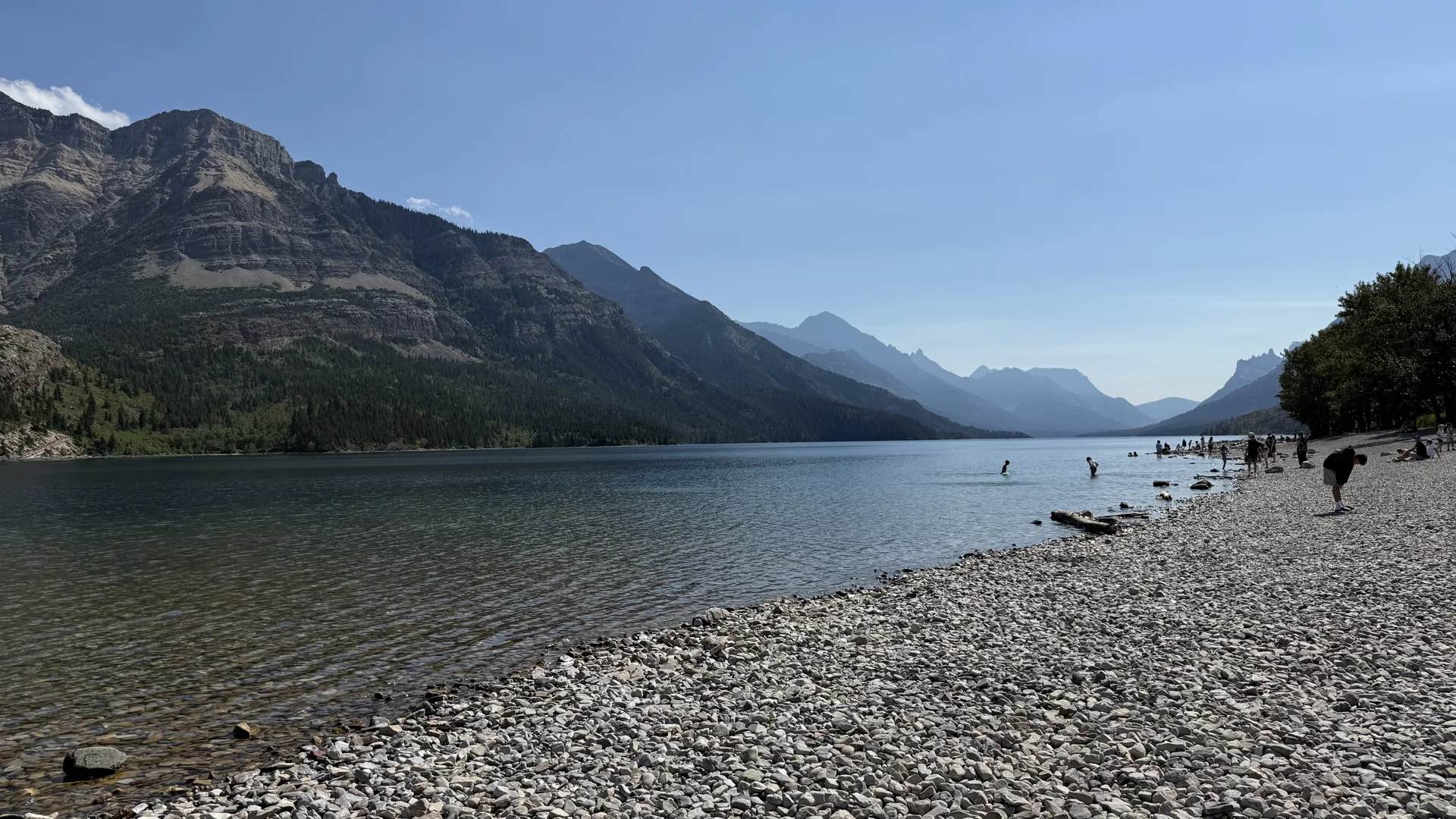
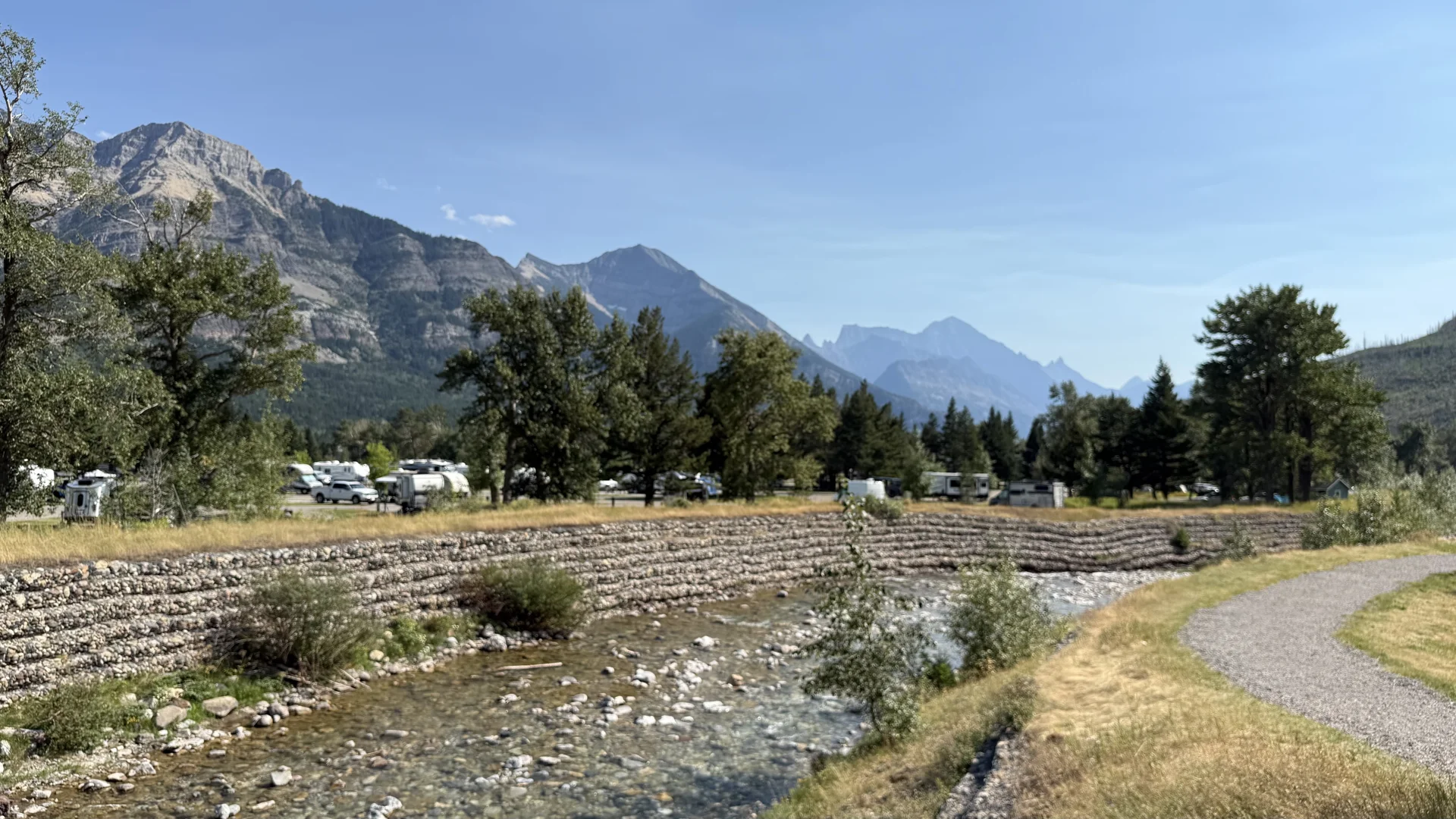
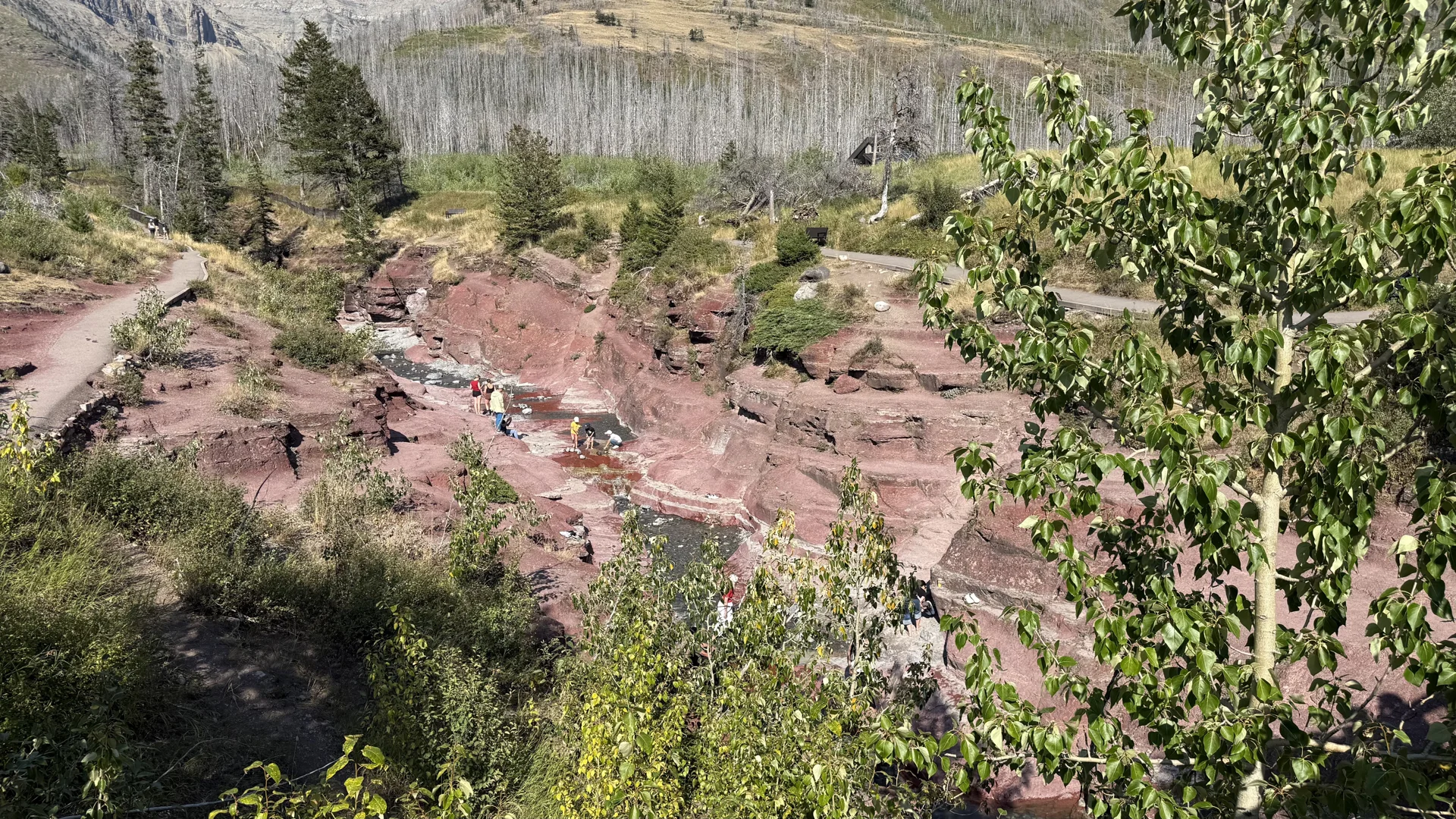
We traveled straight south to Waterton National Park before crossing into Montana. Along the way, we reflected on the travellers who came before us — the Aboriginal peoples and early explorers who also experienced Waterton’s mountains and prairie, its red and green rock, its wildlife, wind, and water. We owe it to them, and to those who come after us, to protect this special place.
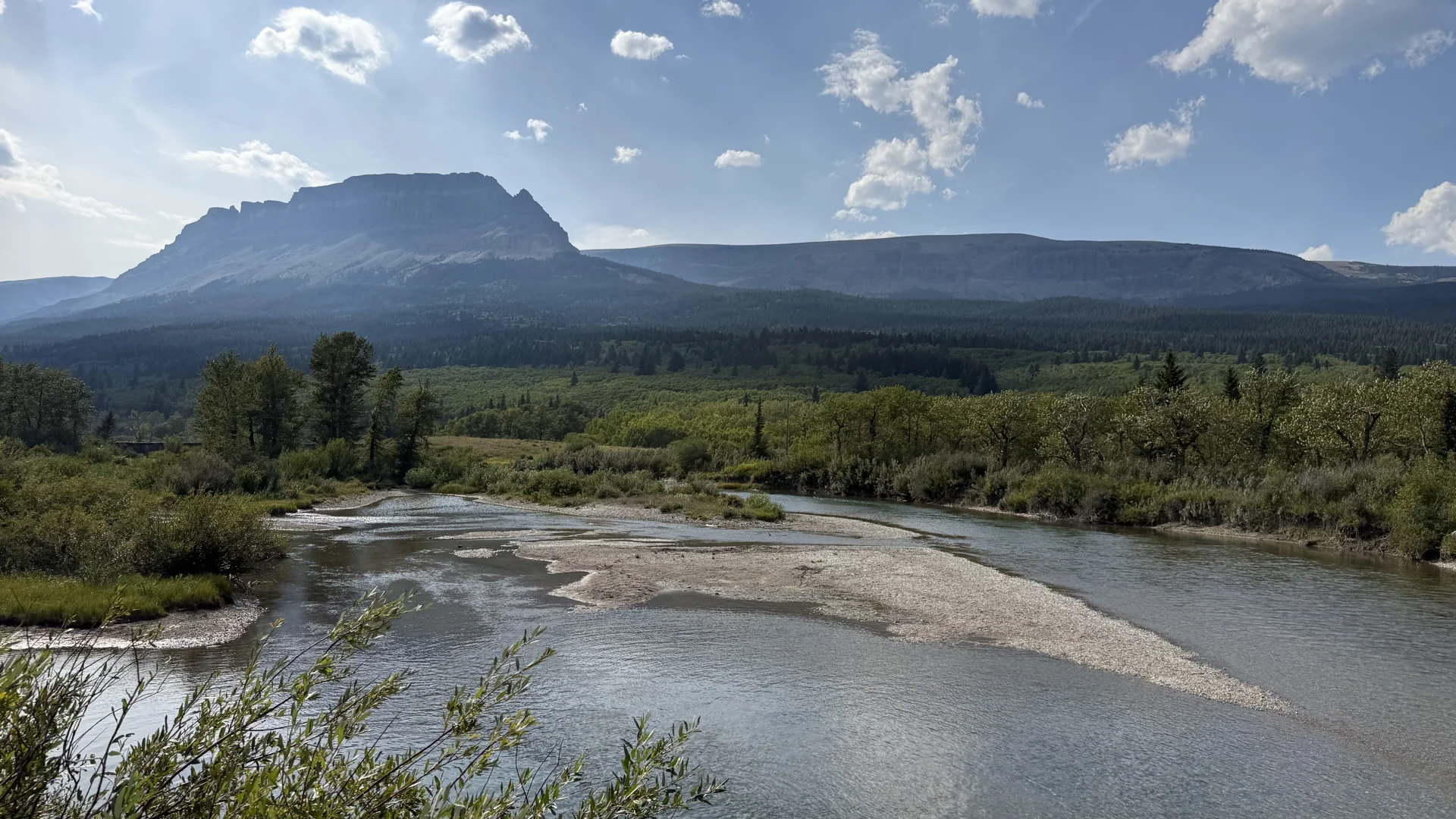
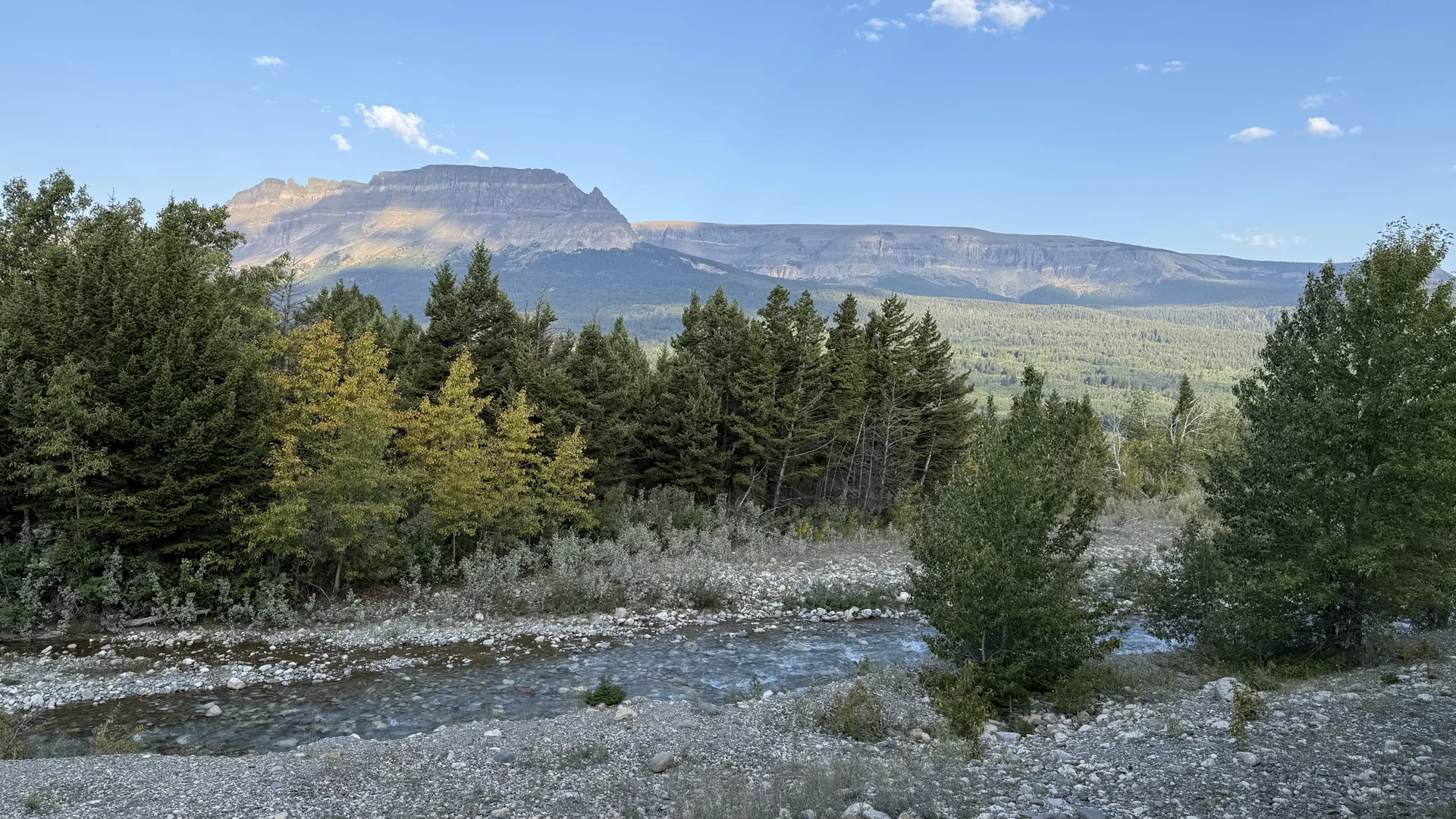
We stayed at St. Mary, a Park Lodge–style hotel originally built by the Black family for the traffic that began flowing over Going-to-the-Sun Road when it opened in 1932. Expanded gradually over the decades, it now belongs to Glacier Park. A babbling brook runs behind the lodge, and you can sit on your room’s balcony or deck and watch it wind blissfully on its way to the sea.
Calgary – The Start of Our Northern Rockies Adventure
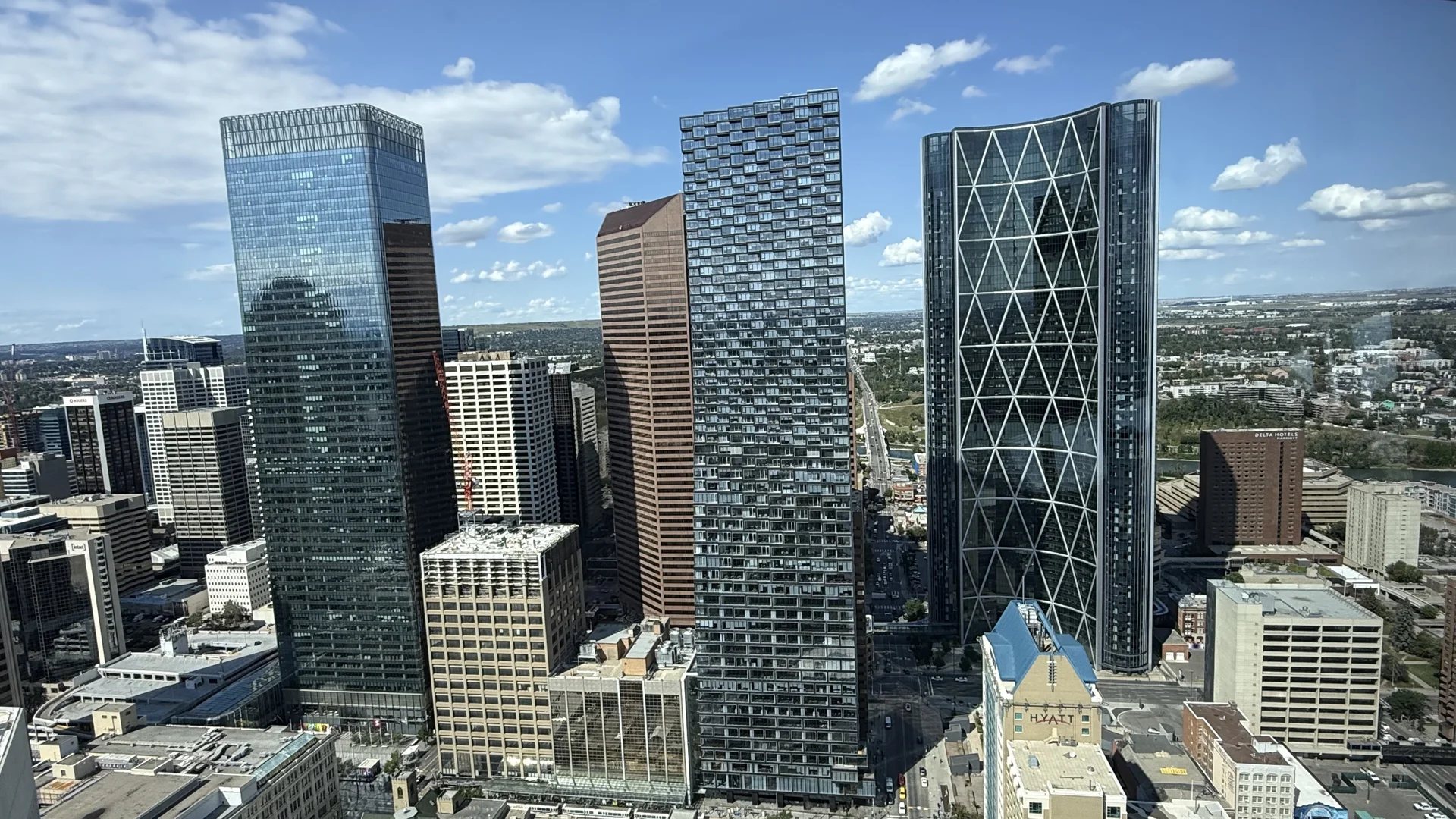
Aug 24, 2026 Day 1 – Hyatt, Calgary, Canada
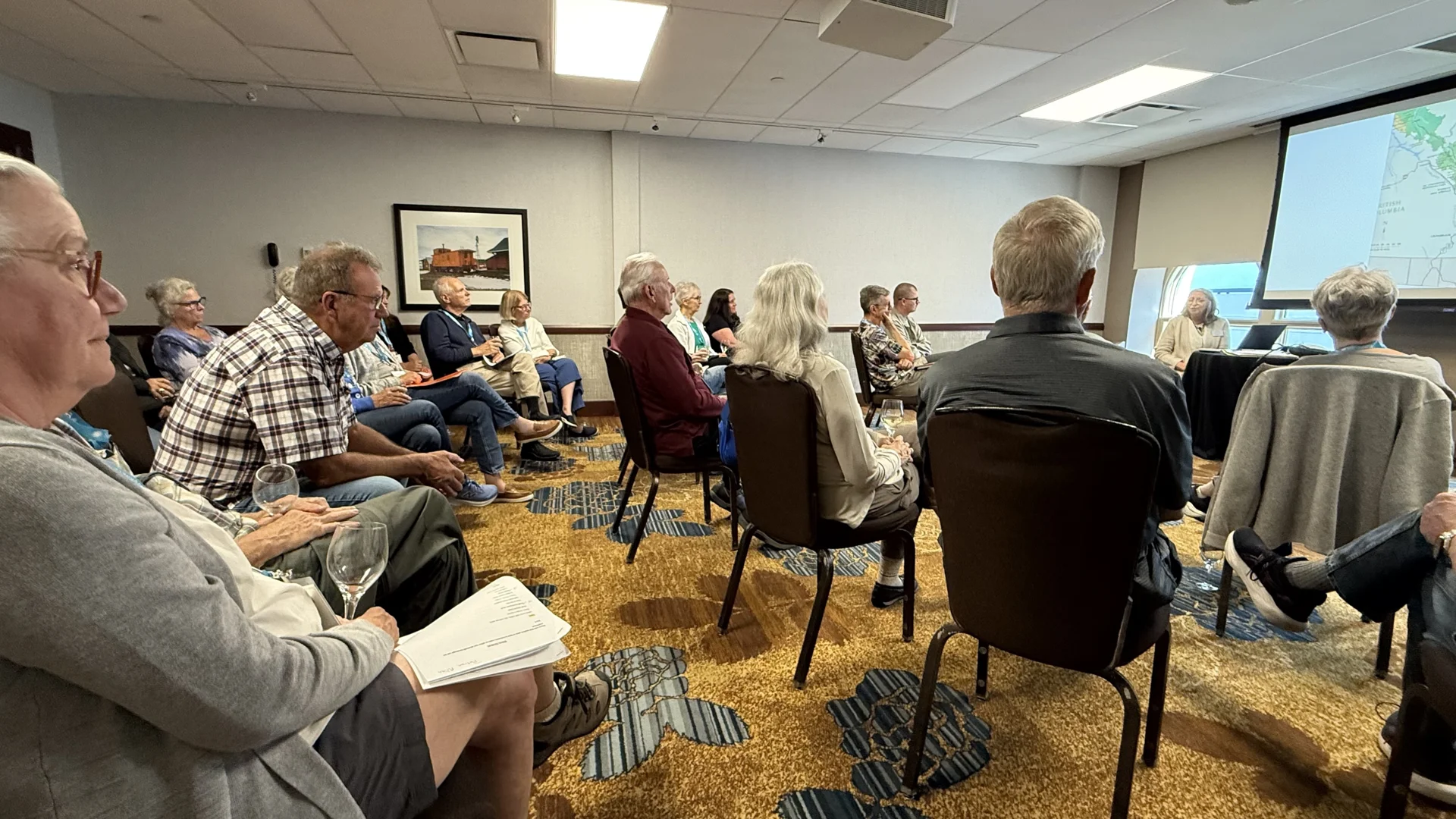
We arrived in Calgary on August 24th to begin The Northern Rockies tour with Smithsonian Journeys, guided by Darcie Reynolds of Odyssey and Maria Banks — a contract educator for Smithsonian who is also a NASA scientist by day and a Broadway harpist by night and weekends.
This magnificent tour carries us through nearly 1,000 miles of wilderness — not pristine, but wild. It is not groomed to our desires; its beauty lies in its boundless space, its isolation, and its quiet struggle to survive and stay in balance. To experience it fully, in all its multifaceted splendor, you need flexibility and a sense of wonder.